Thryv-alternative-Method-CRM

9 Thryv alternative platforms for small businesses (2026)

Discover the best Thryv alternative for your business. Compare CRM, automation, email marketing, pricing, onboarding, and more in this comprehensive guide.

9 Thryv alternative platforms for small businesses (2026) Read More »

If you’ve ever tried running your business with a mix of apps and tools, you know how messy things can get. Platforms like Thryv became popular by promising to bring everything together, from customer communication and scheduling to invoicing and marketing, all in one place. 👩🏻‍💻📓✍🏻💡

But as your business grows, those all-in-one systems can start to show their limits. Pricing becomes harder to justify, some tools feel restrictive, and automation doesn’t always work the way you need it to.🙅🏻⛔

Many small businesses eventually start exploring Thryv alternatives that offer more flexibility, transparent pricing, and a smoother CRM experience tailored to their goals. 😎🤙🏻

In this guide, we’ll look at some of the top alternatives to Thryv in 2026, compare features and pricing, and help you choose a solution that fits your unique business needs. 🙌

Here at Method CRM, we’ve been supporting QuickBooks-based businesses since 2010. Method is trusted by small businesses for its two-way QuickBooks sync, customization services, and end-to-end workflow automation, which help teams stay organized without adding complexity. 🔄🎨🤩

By the end, you’ll have a clear picture of what to look for in a CRM or business management platform and why Method could be the right fit for your growing team. 💯🚀🎯

Can’t find the CRM features you need? Let Method build them for you.

Table of Contents

Why businesses look beyond Thryv 👀

Thryv offers a wide range of tools for marketing, listings, appointments, messaging, and CRM features, making it an appealing all-in-one solution for small businesses. But as teams grow, some business owners may start to notice limitations.

Pricing can become a concern, as Thryv’s costs can rise quickly with extra users or add-ons. Flexibility can be another pain point. While Thryv offers many features, some users find its automation, CRM workflows, and reporting lack depth. Others mention that managing everything through one dashboard can feel cluttered rather than streamlined.

These challenges lead many small businesses to explore Thryv alternatives that offer clearer pricing, easier onboarding, and customizable automation designed to fit their specific business needs.
thryv-alternative

Key criteria for evaluating a Thryv alternative 🔎

When comparing Thryv alternatives, focus on how well each platform aligns with your business needs. Many claim to do it all, but small businesses benefit most from tools that combine automation, ease of use, and transparent pricing.

Automation and workflow 🔀

Look for strong automation features that reduce manual work. The right CRM should streamline workflows like follow-up emails, notifications, and customer reminders, helping you stay organized and save time.

CRM functionality 💻

A good CRM keeps customer data, sales activity, and communication history in one place. Check how each system manages your sales pipeline and whether it gives real-time visibility into your customer relationships.

Email marketing and communication tools 📣

Choose a platform that supports email marketing campaigns, SMS, and chat. Built-in templates and marketing automation tools make it easier to engage customers and improve response times.

Social media and online presence 📱

Thryv alternatives often include social media management and reputation tools to help you post consistently, manage reviews, and strengthen your online presence and SEO.

Dashboard and reporting 📝

Clear dashboards and reports help you track performance metrics without extra effort. Look for a CRM with customizable dashboards that simplify data analysis and decision-making.

Onboarding and learning curve 🧠

Software should be easy to adopt. A user-friendly interface and guided onboarding can shorten the learning curve and ensure your team sees value quickly.

Pricing and add-ons 💰

Transparent pricing is key. Review how each platform handles user limits, add-ons, and payment processing fees. The best systems provide flexible plans that scale with your business.

Integrations and ecosystem 🔗

Your CRM should integrate smoothly with tools you already use, like QuickBooks, Mailchimp, and Zapier. Strong integrations keep workflows connected and data accurate across platforms.

Ultimately, the best Thryv alternative balances automation, CRM functionality, and pricing to match your growth plans and day-to-day workflow.

Can’t find the CRM features you need? Let Method build them for you.

Top Thryv alternatives ⚙️

There’s no shortage of Thryv alternatives for small businesses. Each platform offers a different balance of CRM functionality, automation, marketing tools, and pricing. The right choice depends on your goals, team size, and how hands-on you want to be.

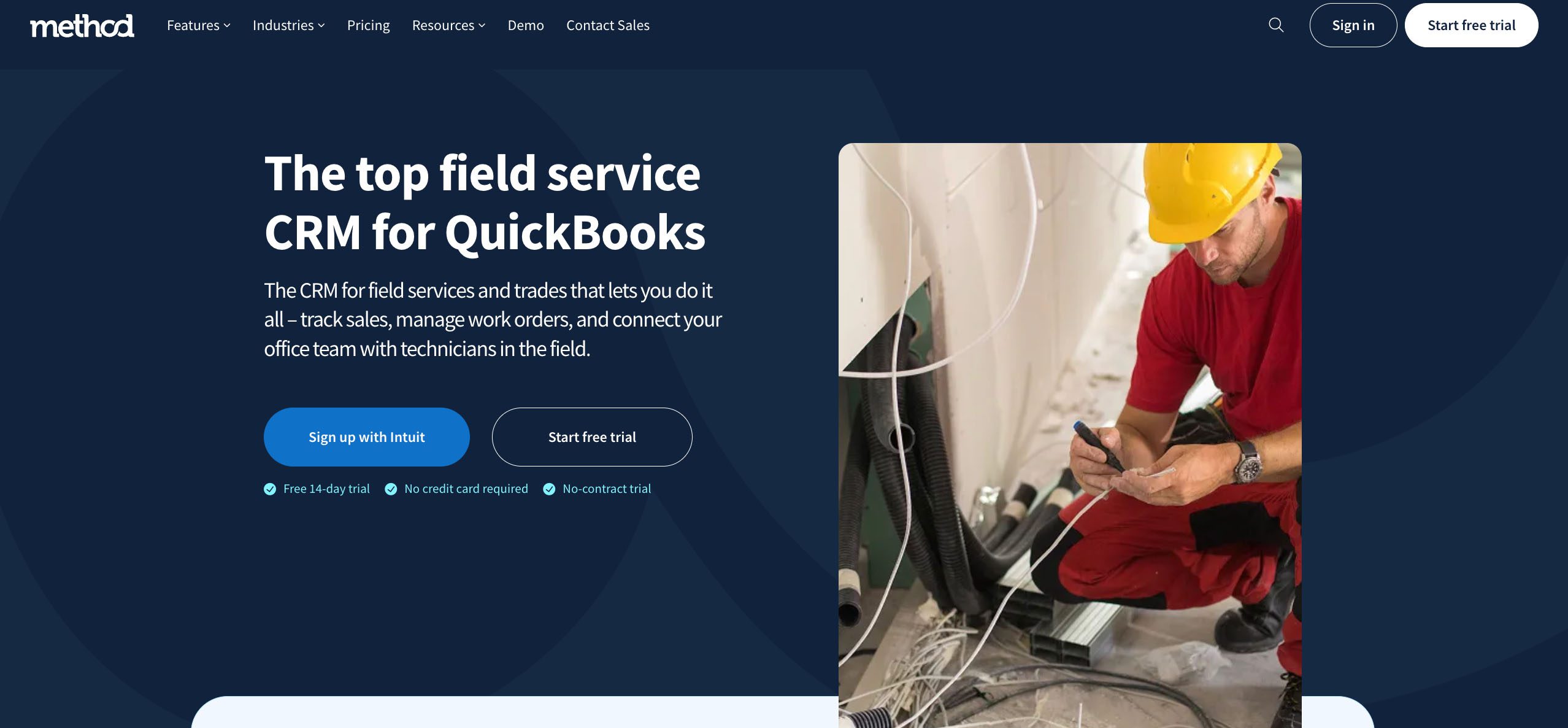
Method CRM
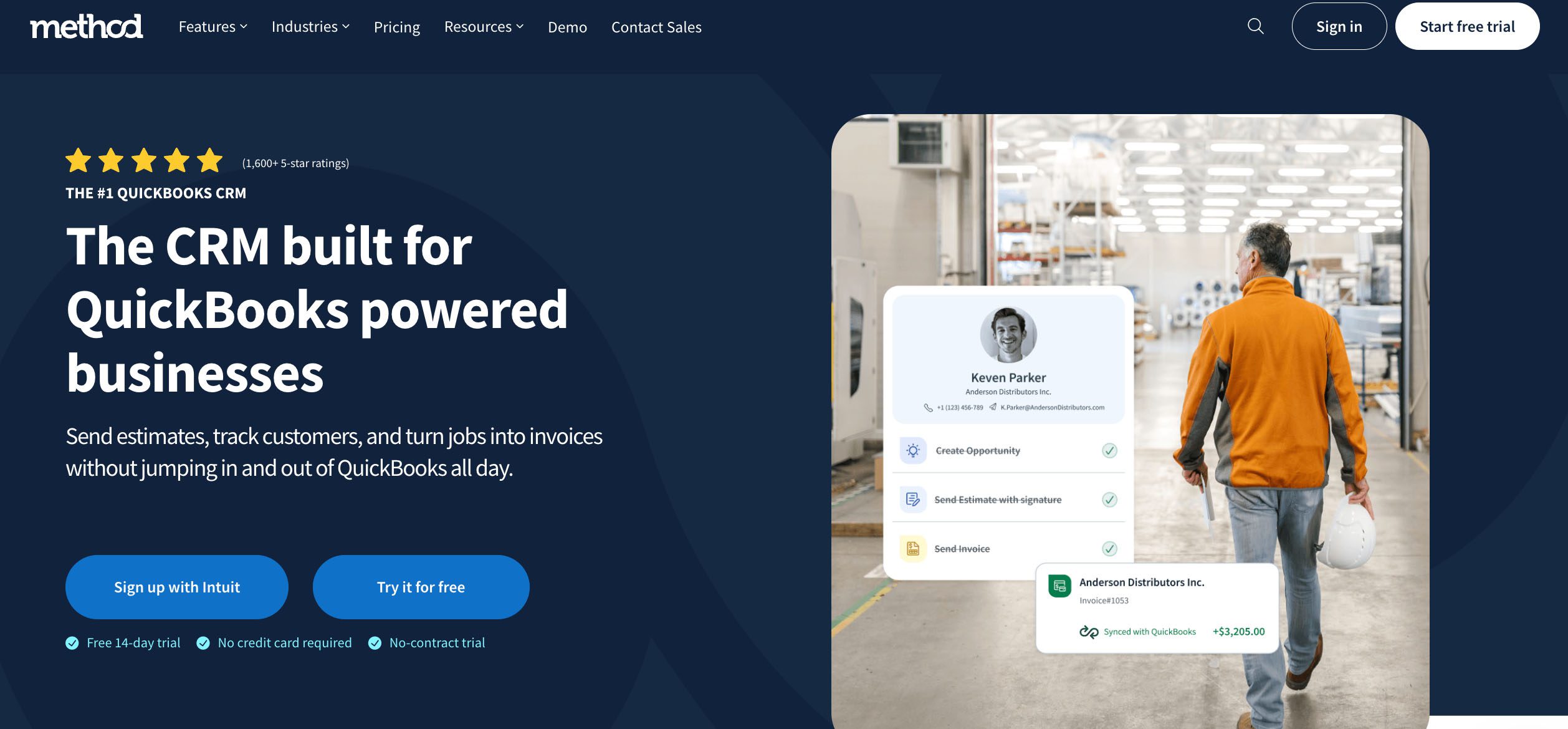
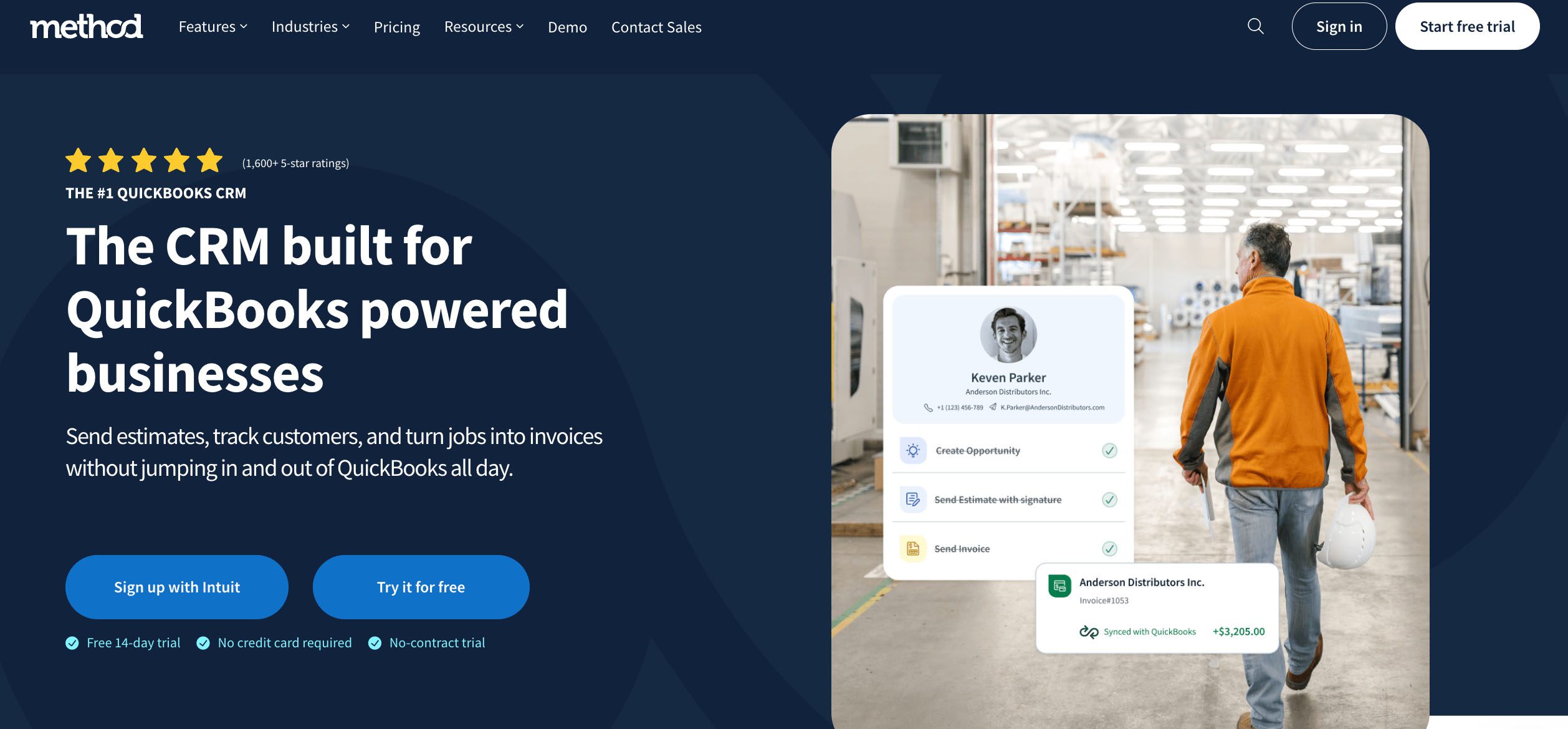
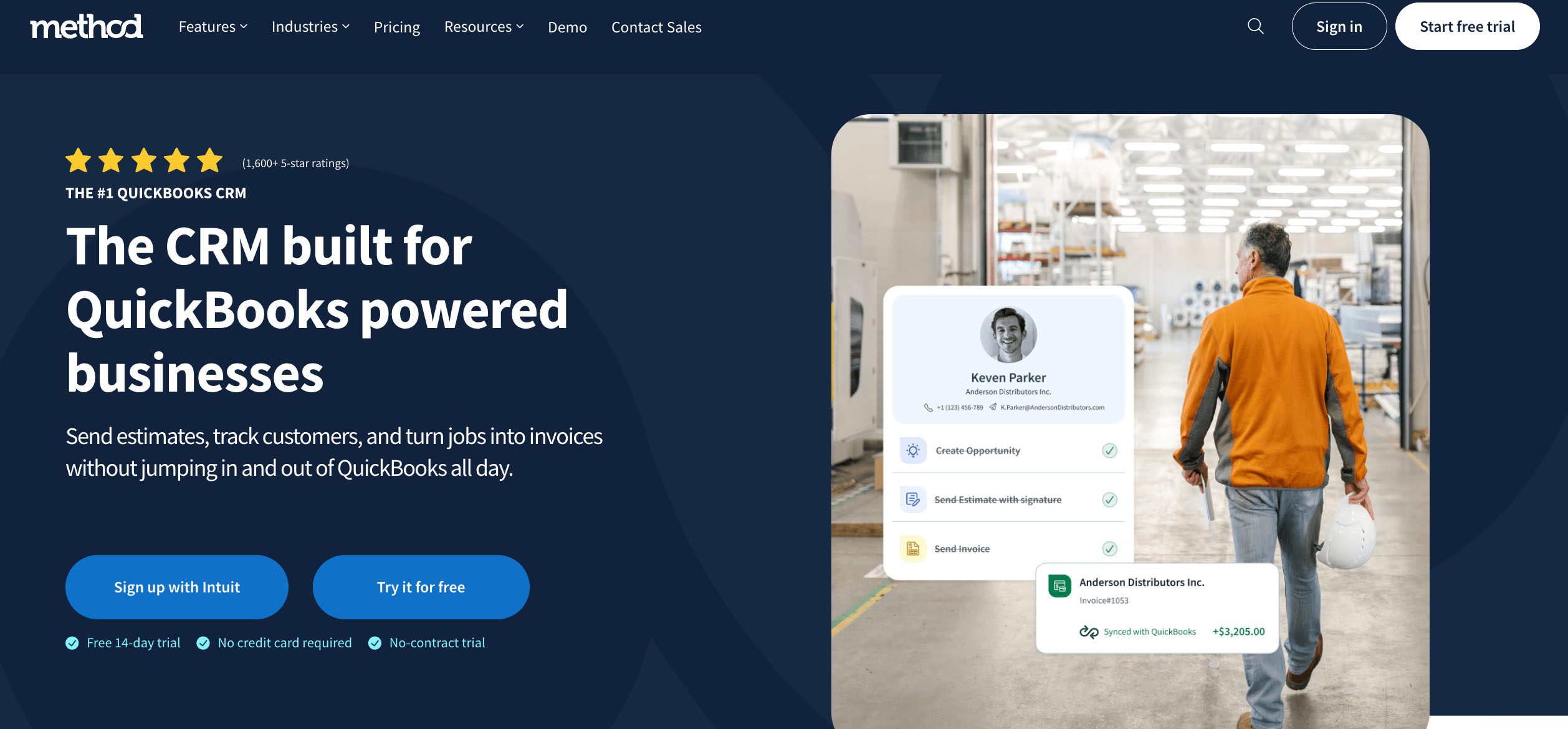
thryv-alternative-method-crm


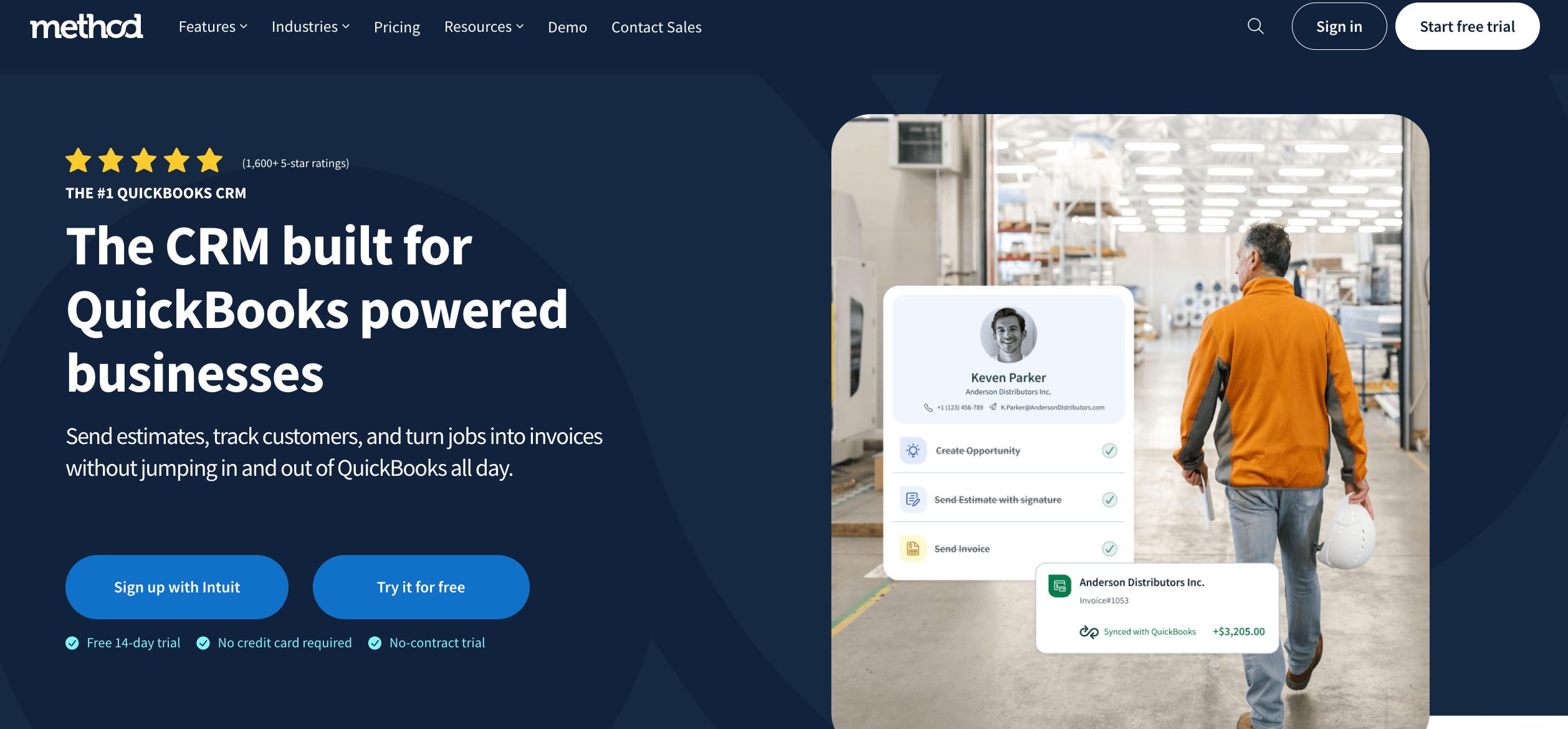
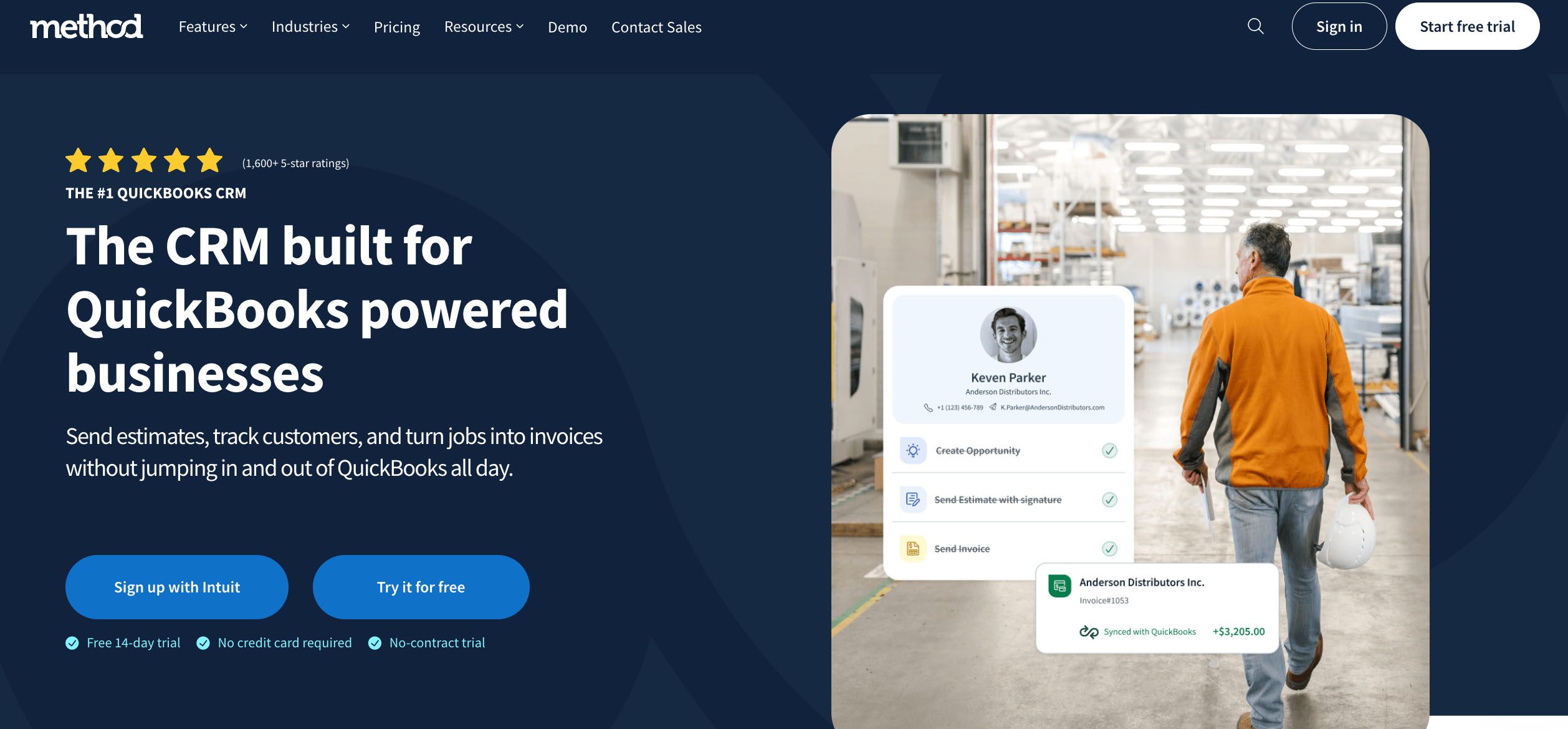
Method CRM is purpose-built for small and mid-sized businesses that use QuickBooks. It combines automation, workflow management, and CRM tools in a simple, customizable platform that keeps everything connected. 

Highlights: Real-time two-way QuickBooks sync, custom workflows, customer communication tools, payment processing, and integrations with Gmail, Outlook, and Mailchimp. Method also offers specific features for field service businesses. 

Pricing: From $27 USD per user monthly, with modular packs so you only pay for what you need. Method CRM for field services starts at $15 per field crew technician per month. 

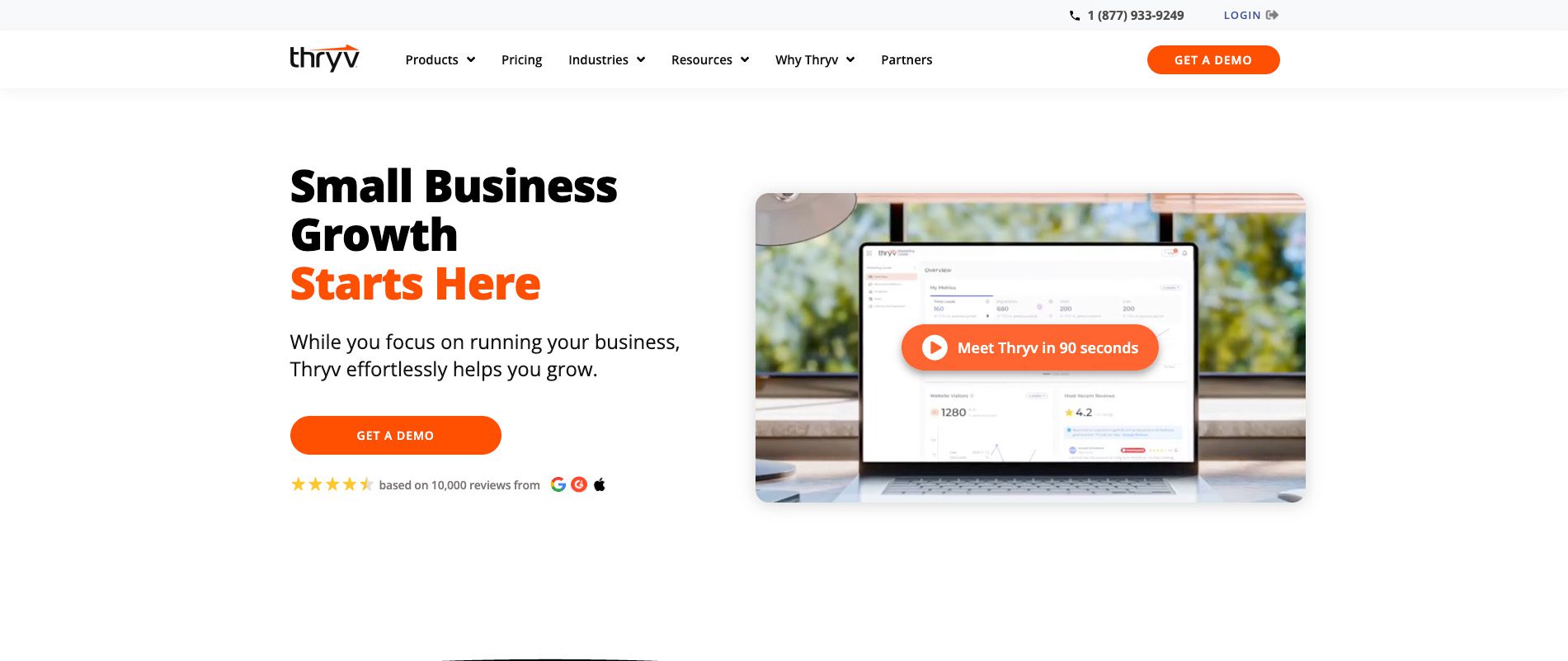
Best for: Small businesses that want deep QuickBooks integration, strong automation, and clear pricing without unnecessary add-ons.

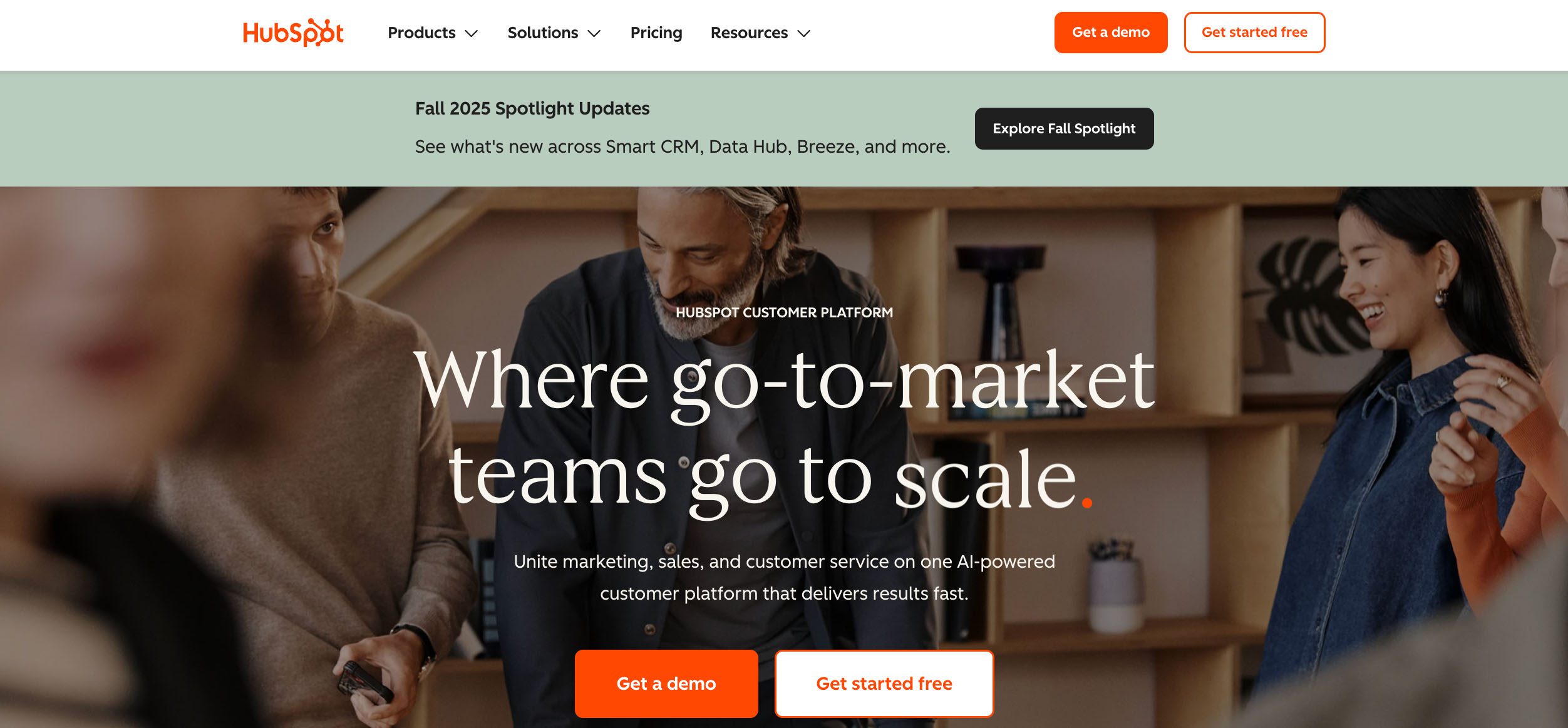
HubSpot CRM
thryv-alternative-buspot-method-crm


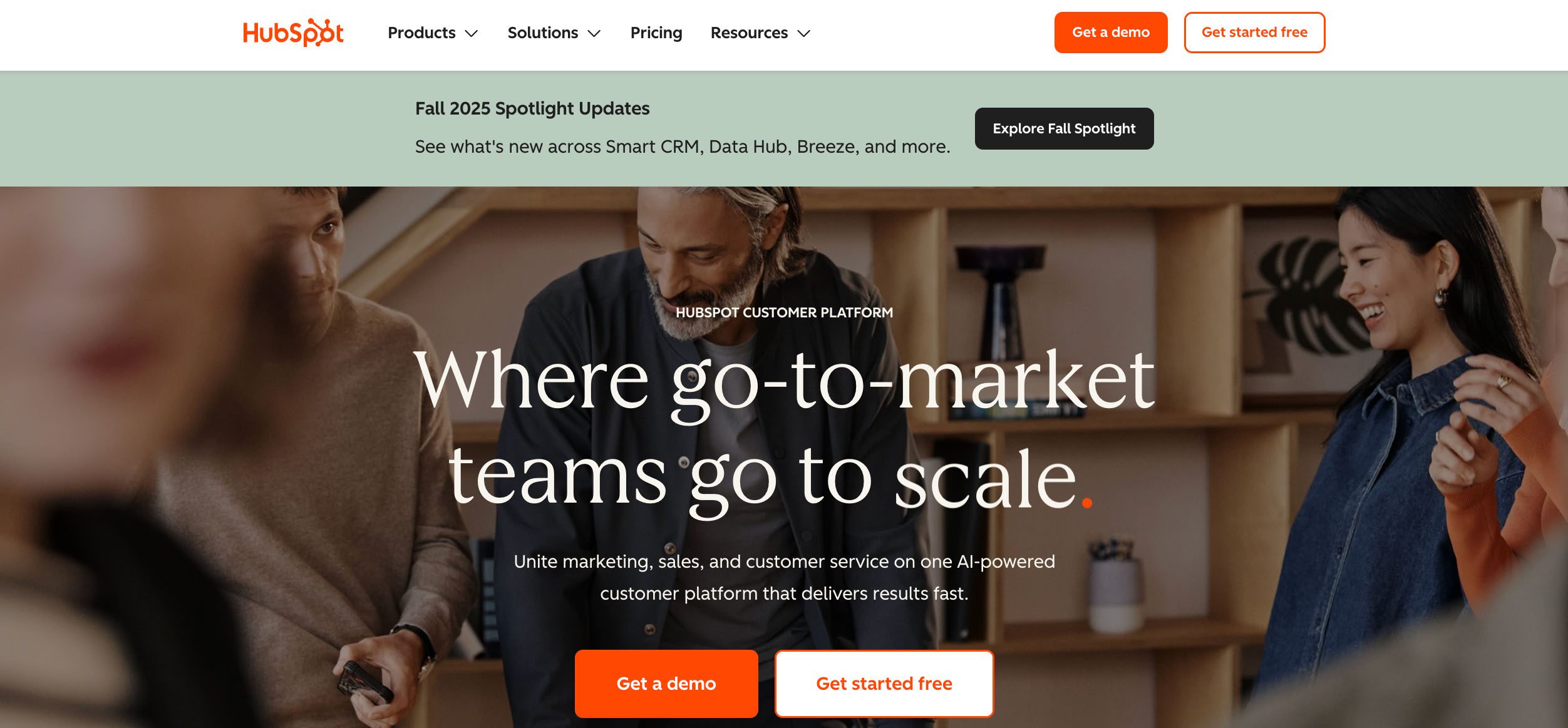
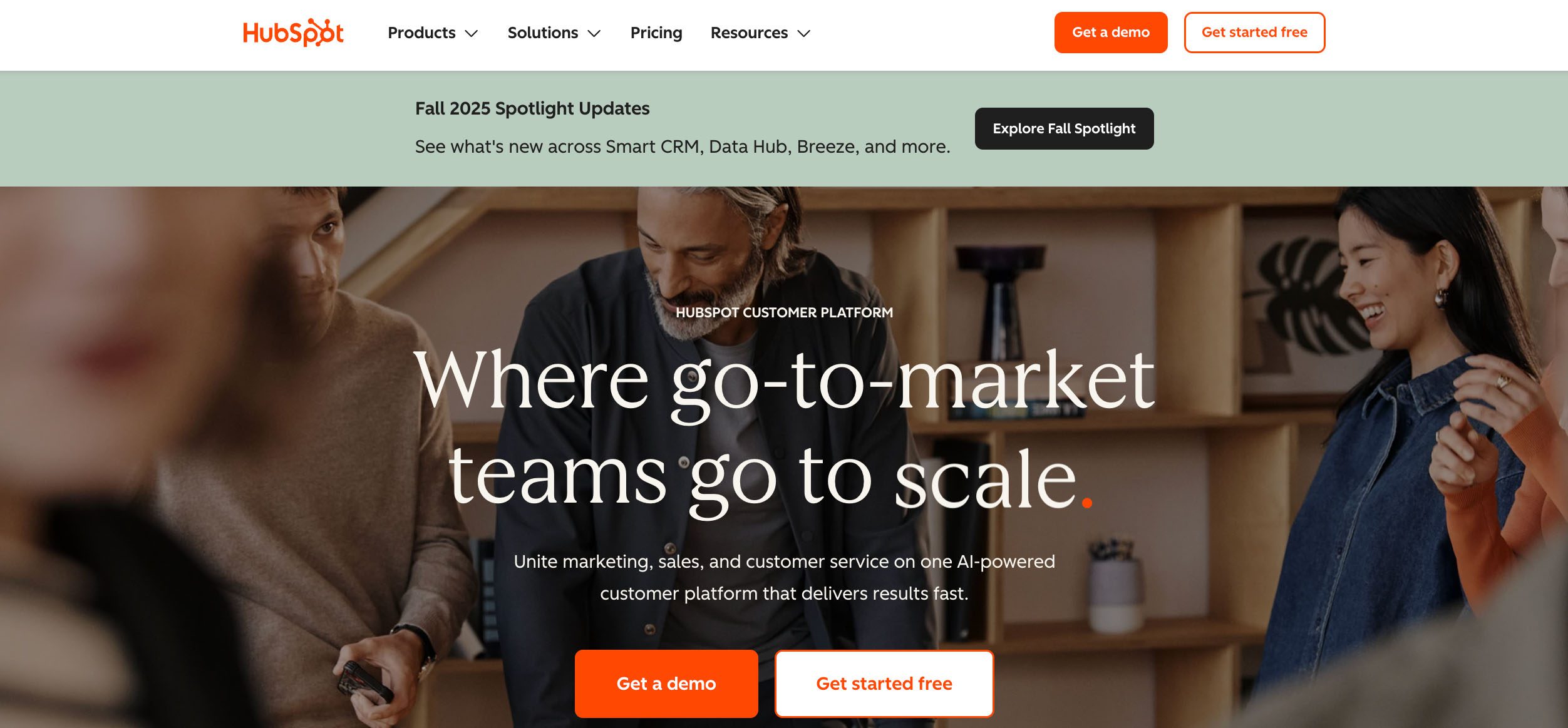
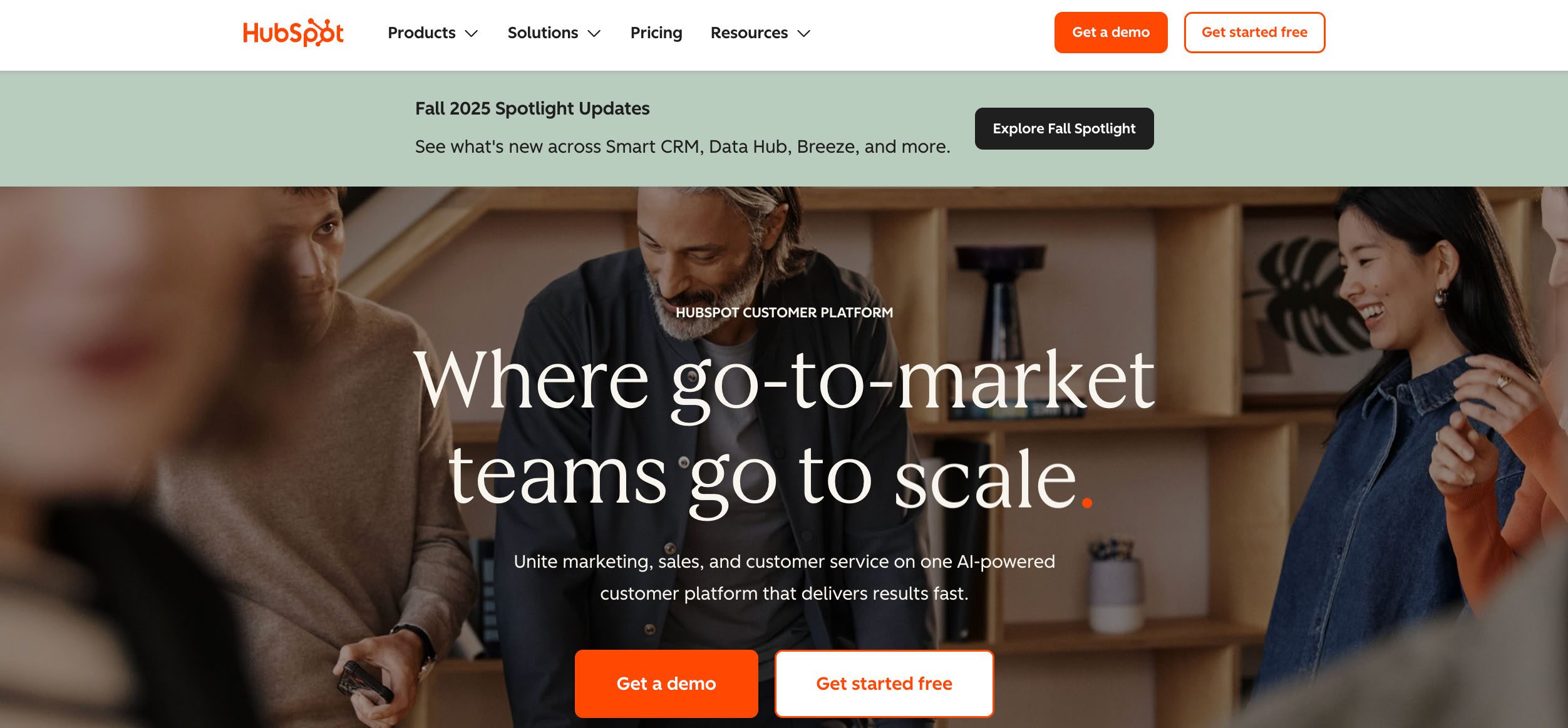
HubSpot CRM is one of the best-known customer relationship management platforms with a strong free plan for startups and growing businesses.

Highlights: Email marketing, deal tracking, built-in marketing automation (in paid plans), and integrations with tools like Zapier and Slack.

Pricing: Free plan available. Starts at $9/mo/seat. Read more about Hubspot pricing plans here. 

Best for: Businesses focused on marketing automation and scalability, though costs can climb quickly as features expand.

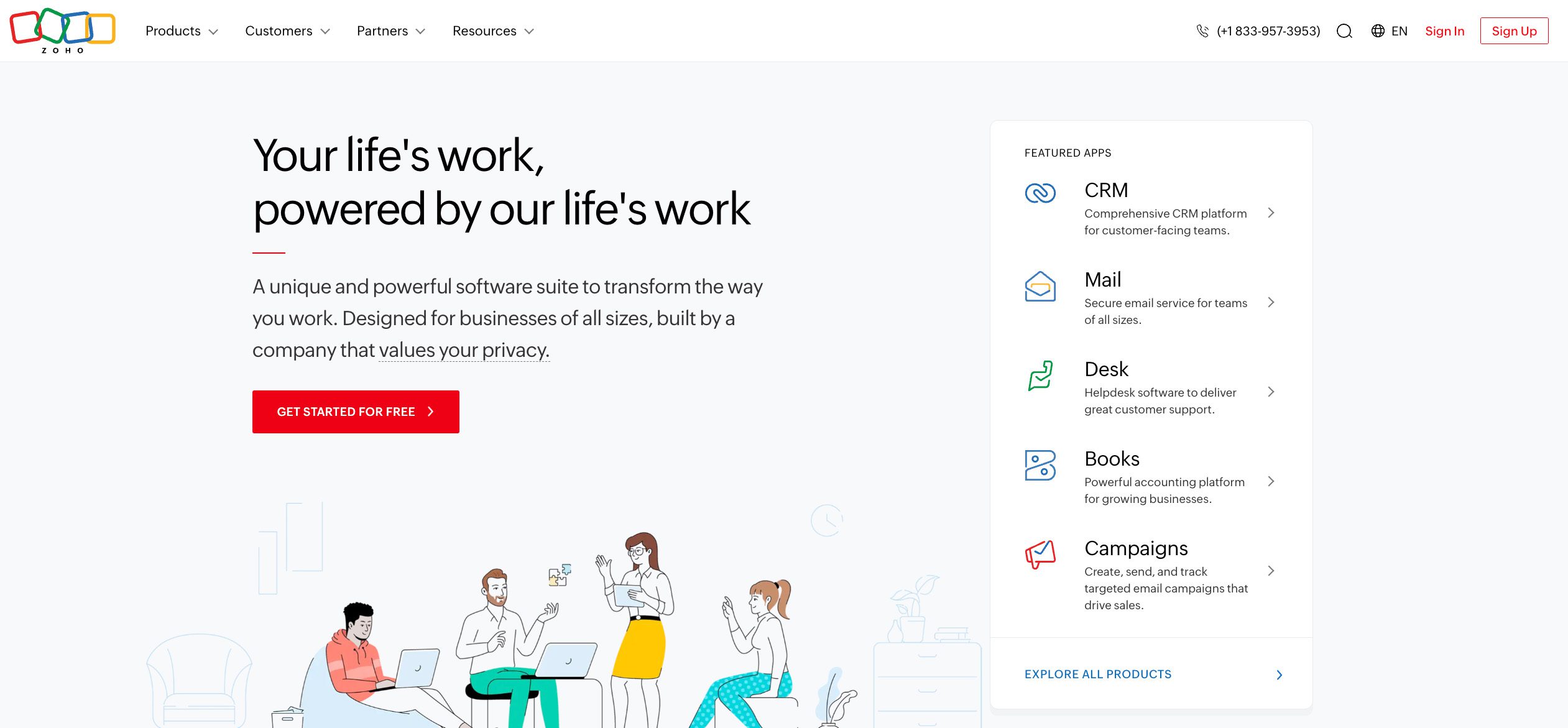
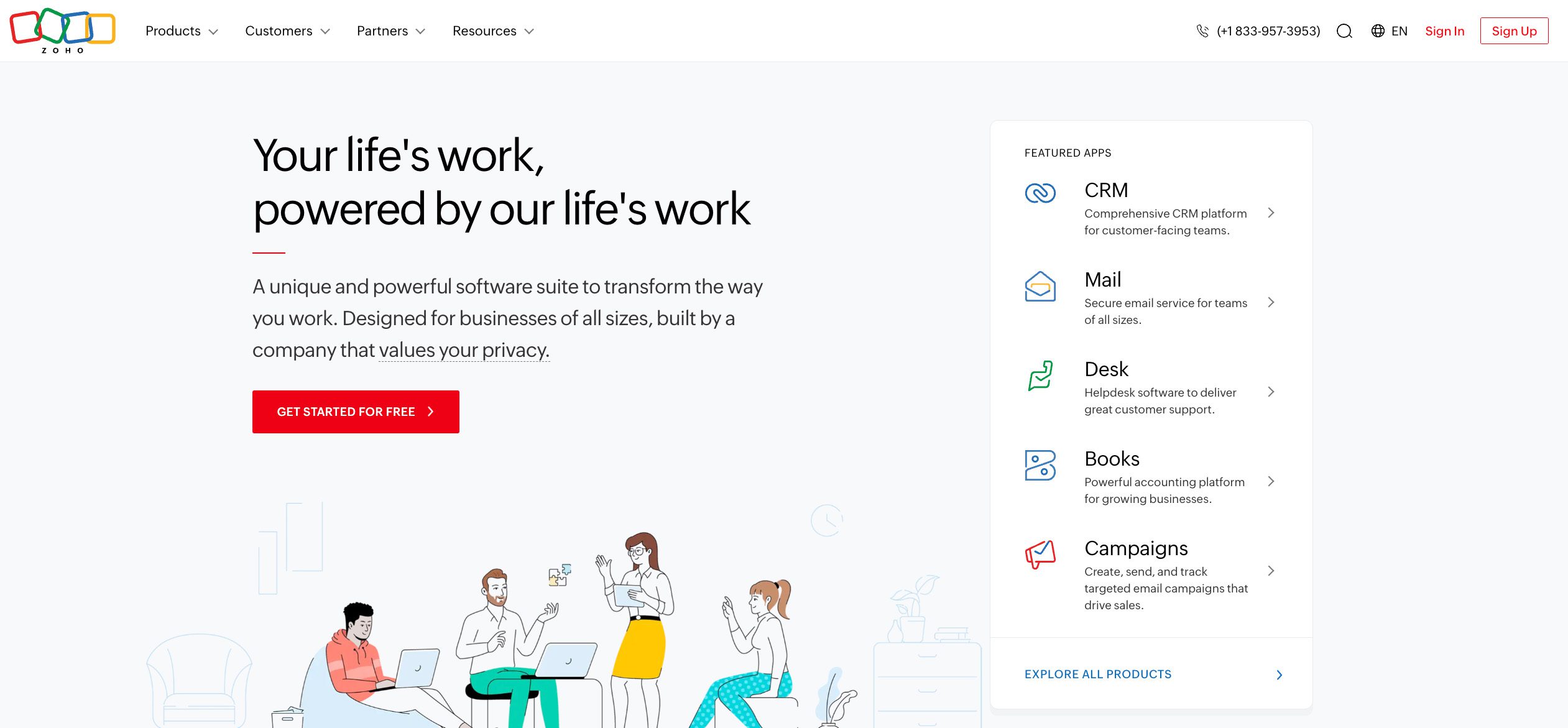
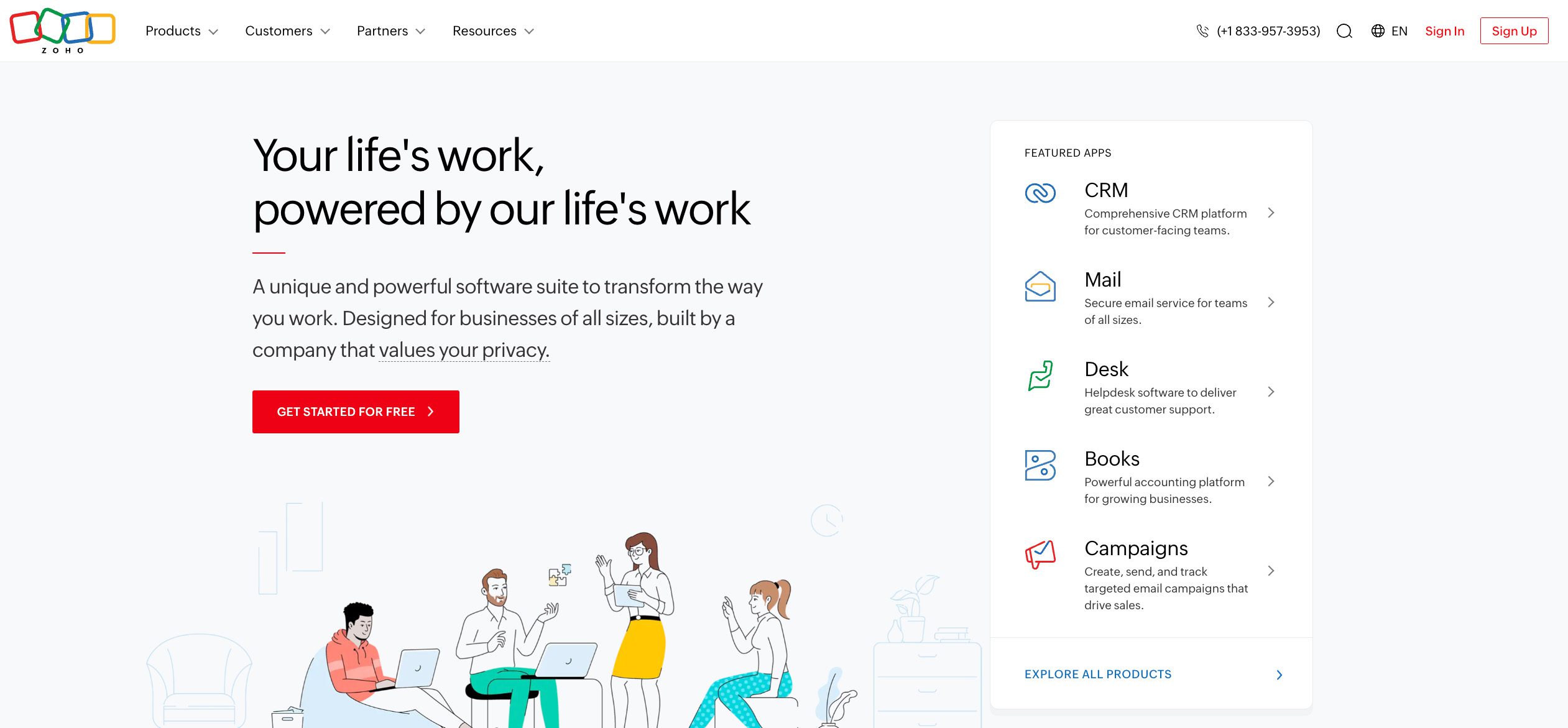
Zoho CRM
thryv-alternative-zoho-method-crm


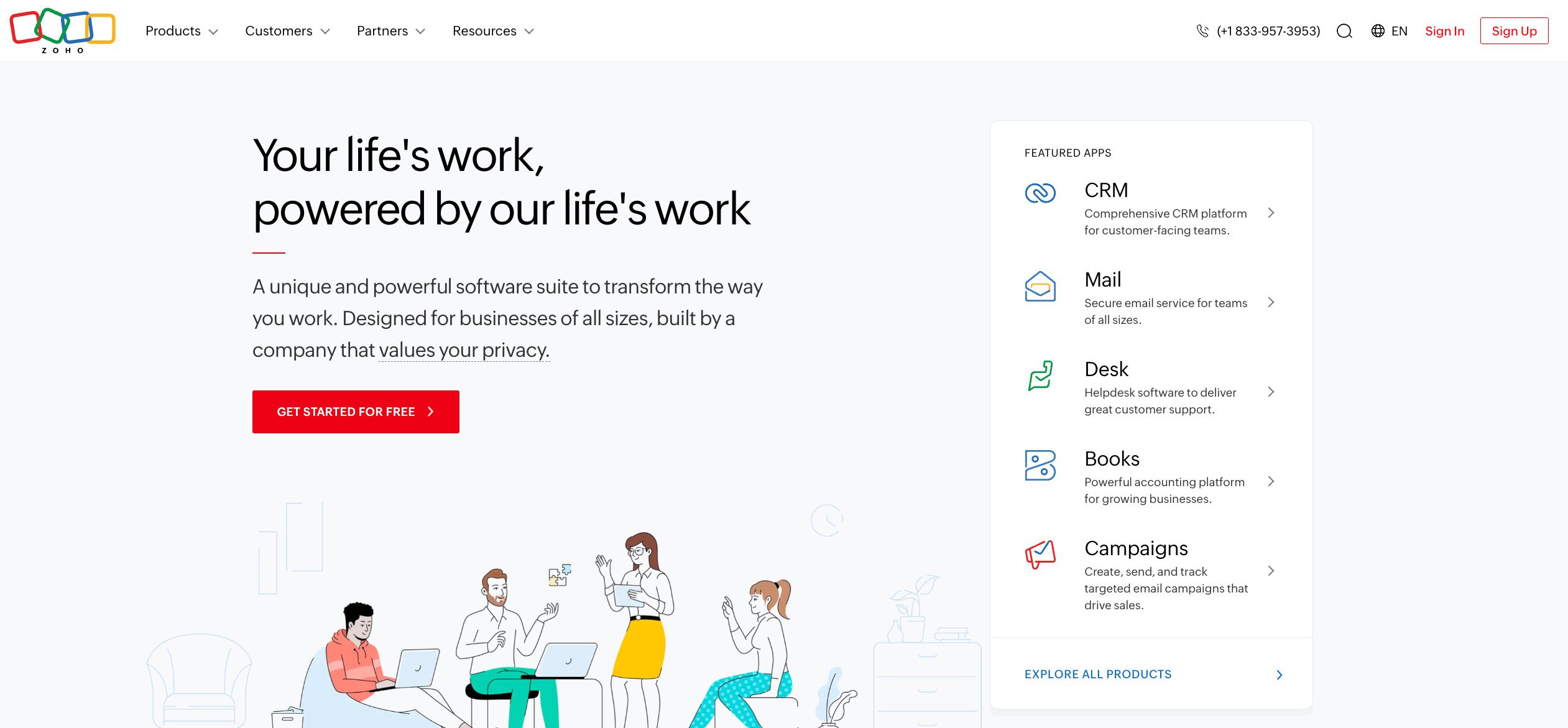
Zoho CRM is a flexible, AI-powered platform that suits businesses that are ready to grow.

Highlights: Automation features, AI assistant Zia, analytics dashboards, workflow tools, and connections to Zoho’s wider business management suite.

Pricing: Starts at $14/user/month; free plan available for 3 users. Learn more about what you get with Zoho’s free version

Best for: Small businesses that want robust CRM functionality and advanced automation at an affordable price.

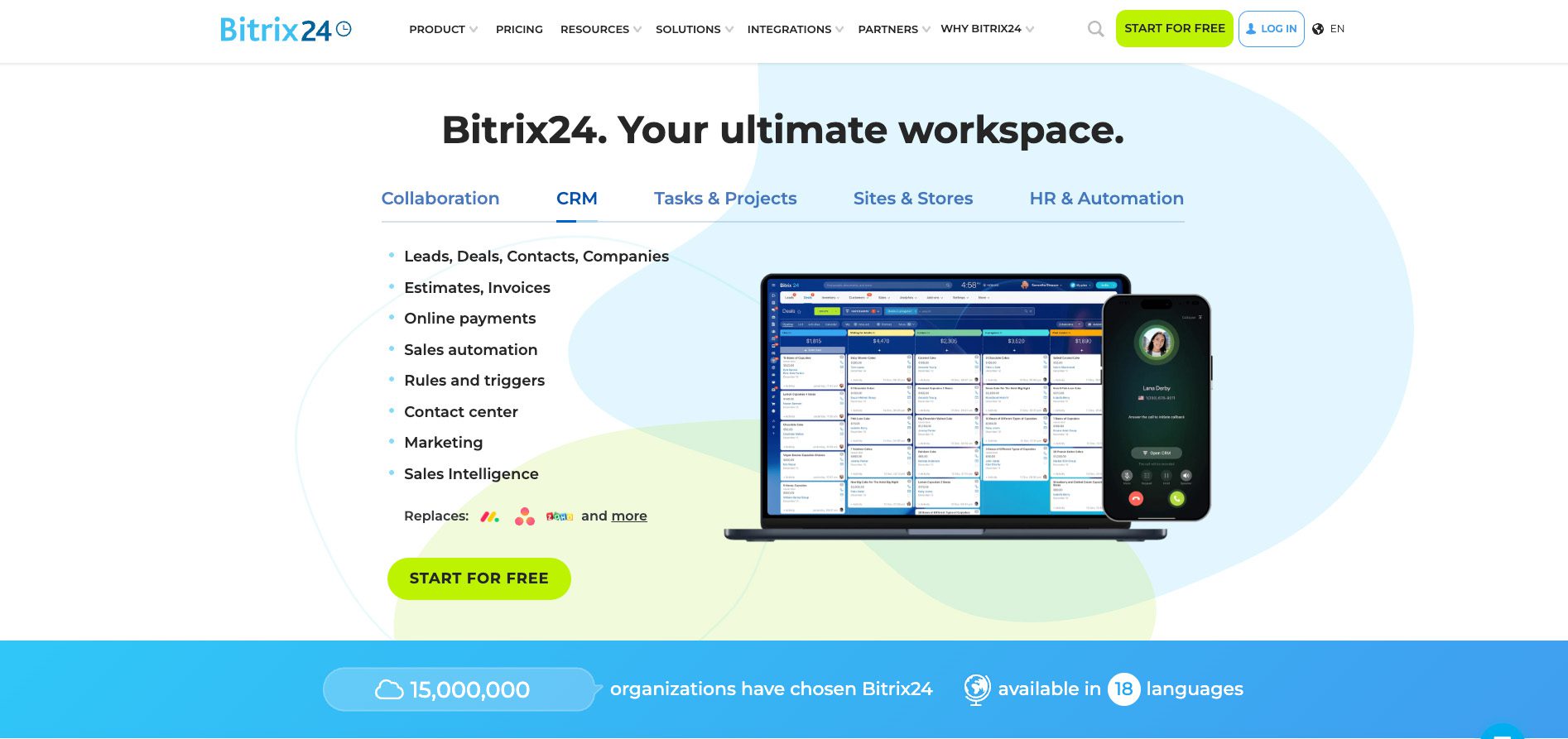
Bitrix24
thryv-alternative-bitrix24-method-crm


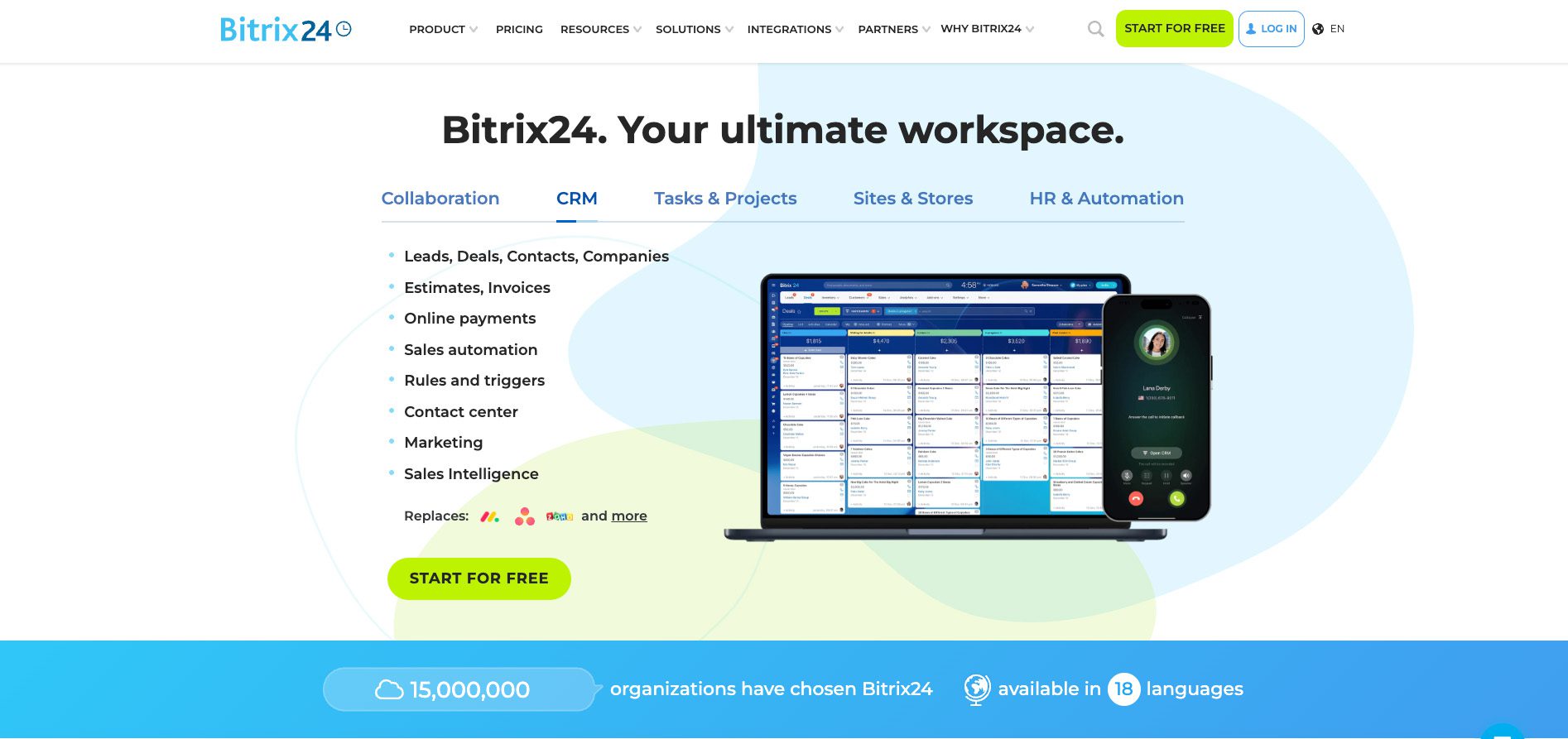
Bitrix24 is an all-in-one business management and communication tool that blends CRM, project management, and collaboration.

Highlights: Task management, video calls, social media management, and customer support tools.

Pricing: Free plan available; paid plans start at $99 USD monthly.

Best for: Teams that need CRM and collaboration tools in one platform. The interface can feel busy, but it’s great for hybrid or remote setups.

Not sold on this option? Check out these Bitrix24 alternatives.

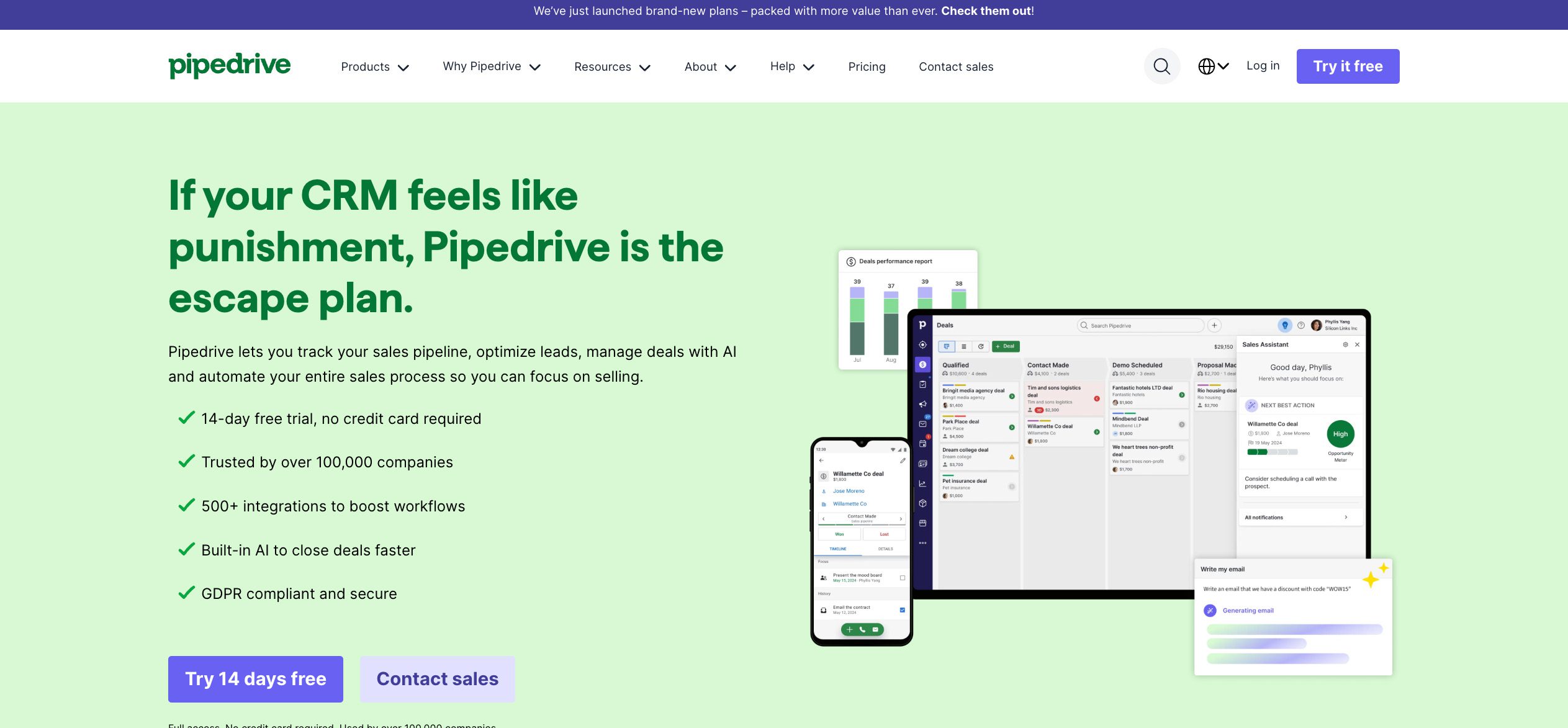
Pipedrive
thryv-alternative-pipedrive-method-crm


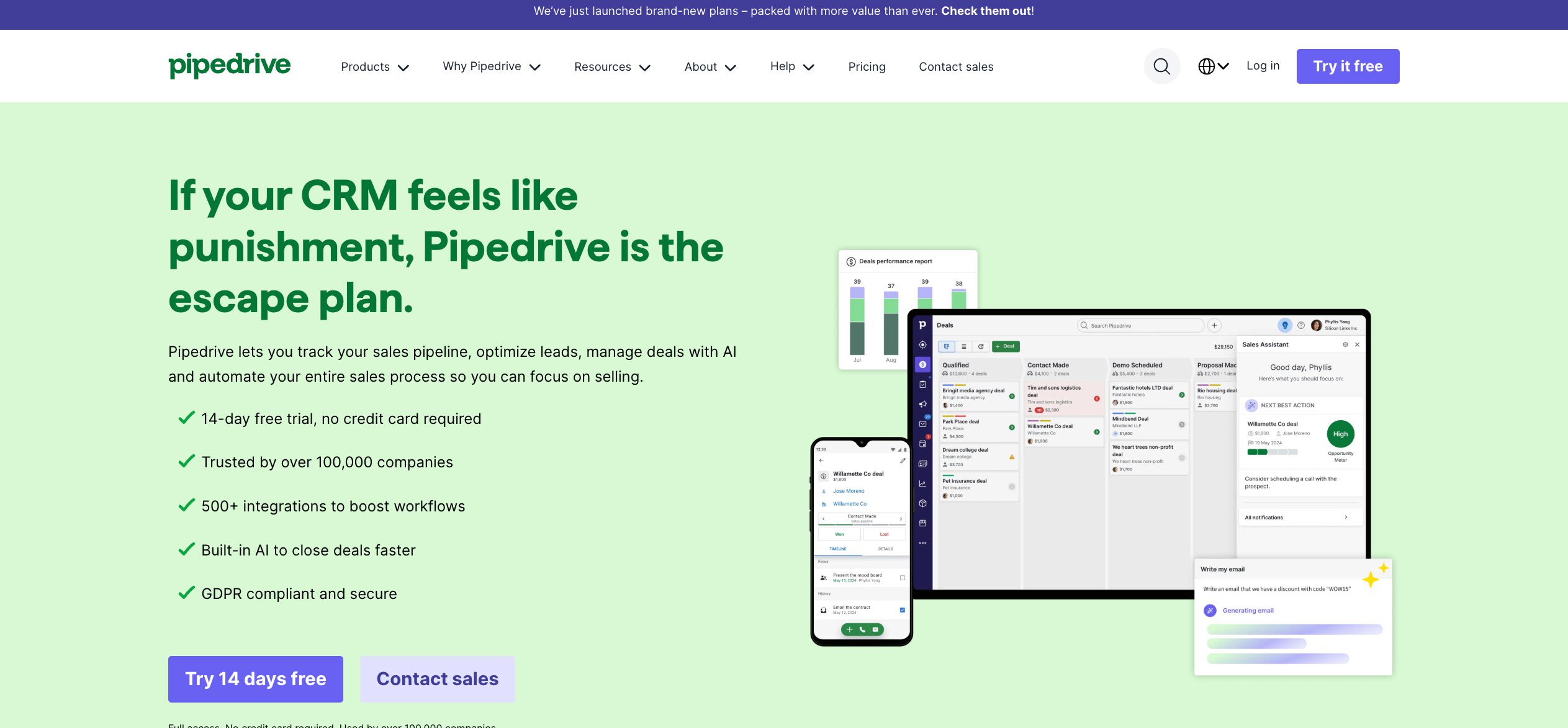
Pipedrive is a simple, visual CRM designed around the sales pipeline.

Highlights: Drag-and-drop sales tracking, workflow automation, real-time dashboards, and integrations with marketing tools.

Pricing: Starts at $14/user/month; free trial available. Learn everything you need to know about Pipedrive pricing

Best for: Sales-focused small businesses that value simplicity and automation without the clutter of broader business management software.

EngageBay
thryv-alternative-engagebay-method-crm


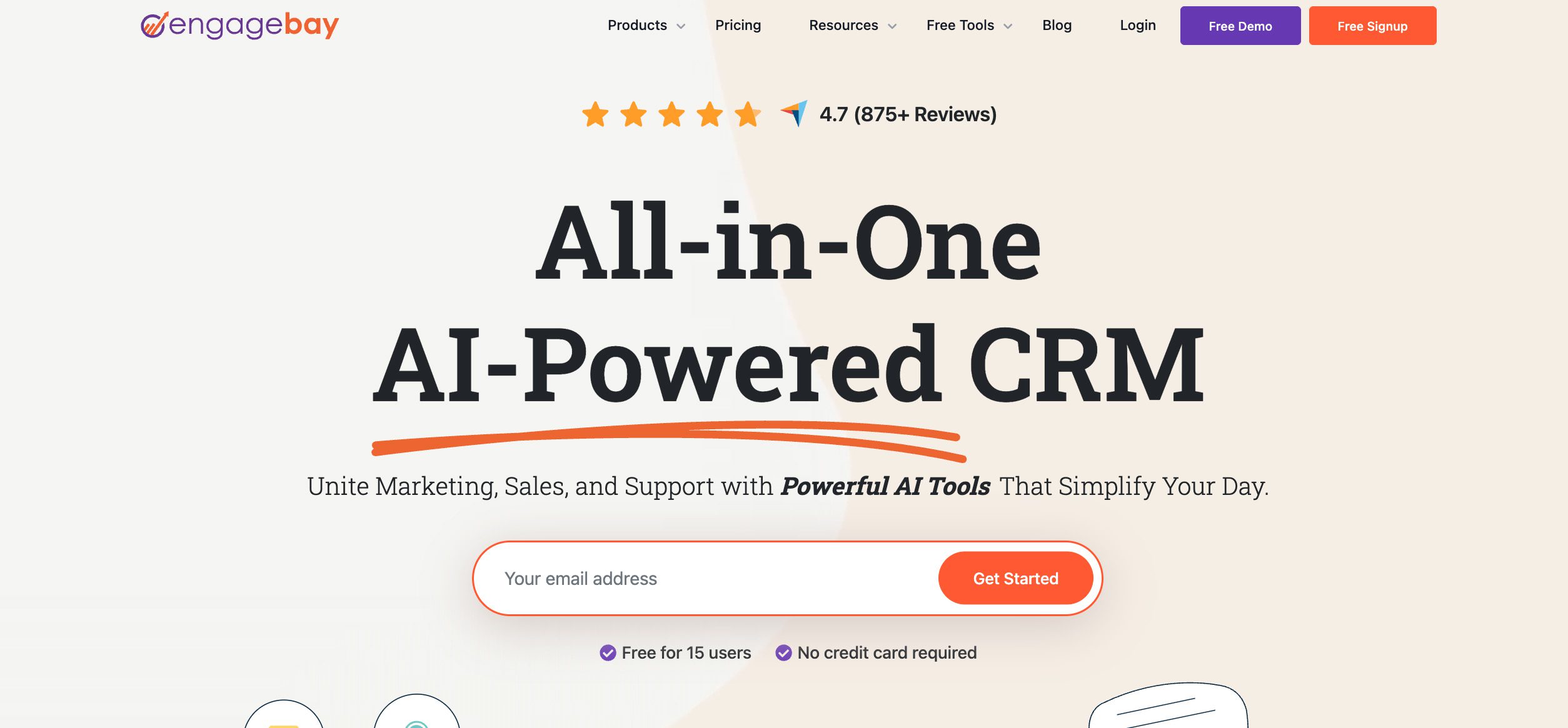
EngageBay combines CRM and marketing automation in one affordable platform for small business owners.

Highlights: Email marketing campaigns, templates, lead management, automation workflows, and customer support tools.

Pricing: Free plan available; paid tiers start at $11.04 USD monthly.

Best for: Budget-conscious teams that want an all-in-one marketing and CRM platform.

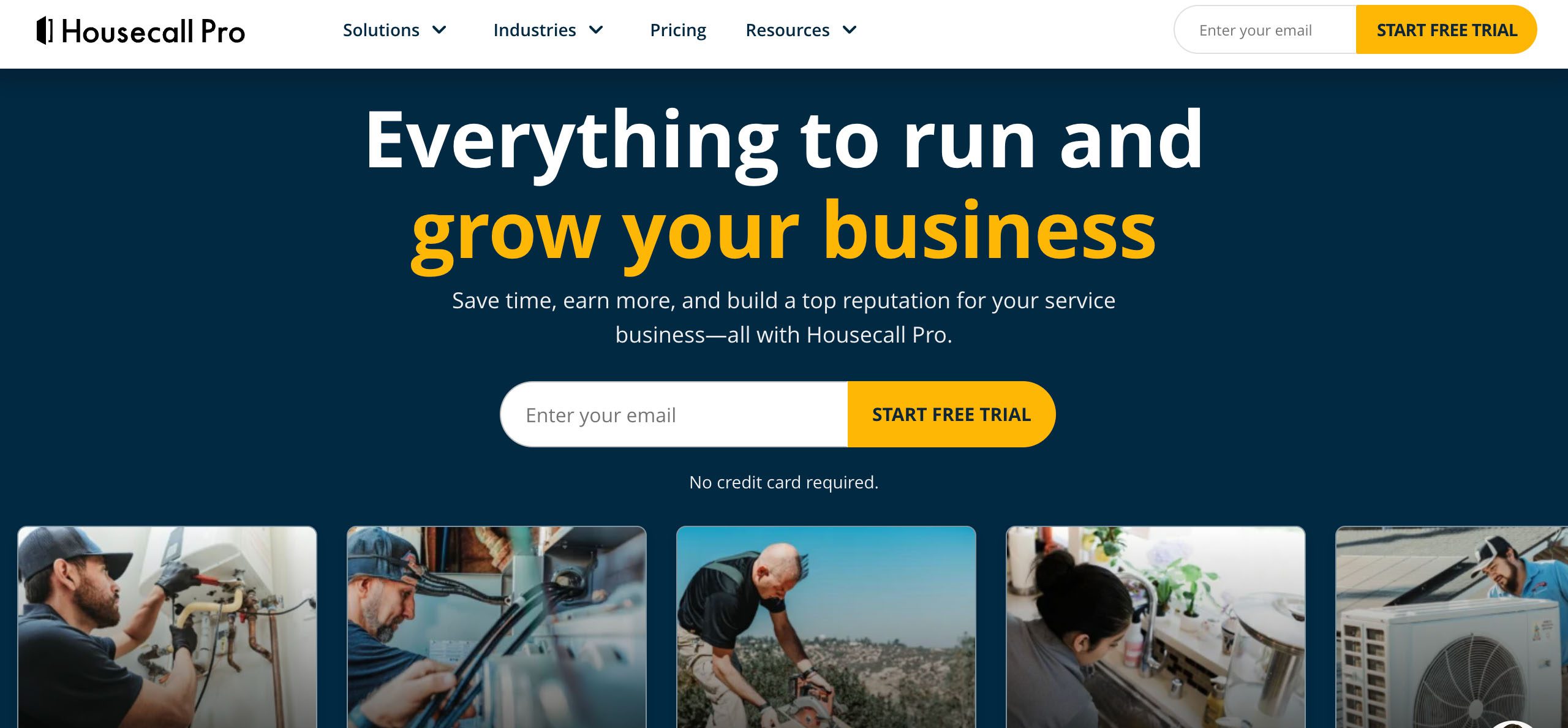
Housecall Pro
thryv-alterntive-housecall-pro-method-crm


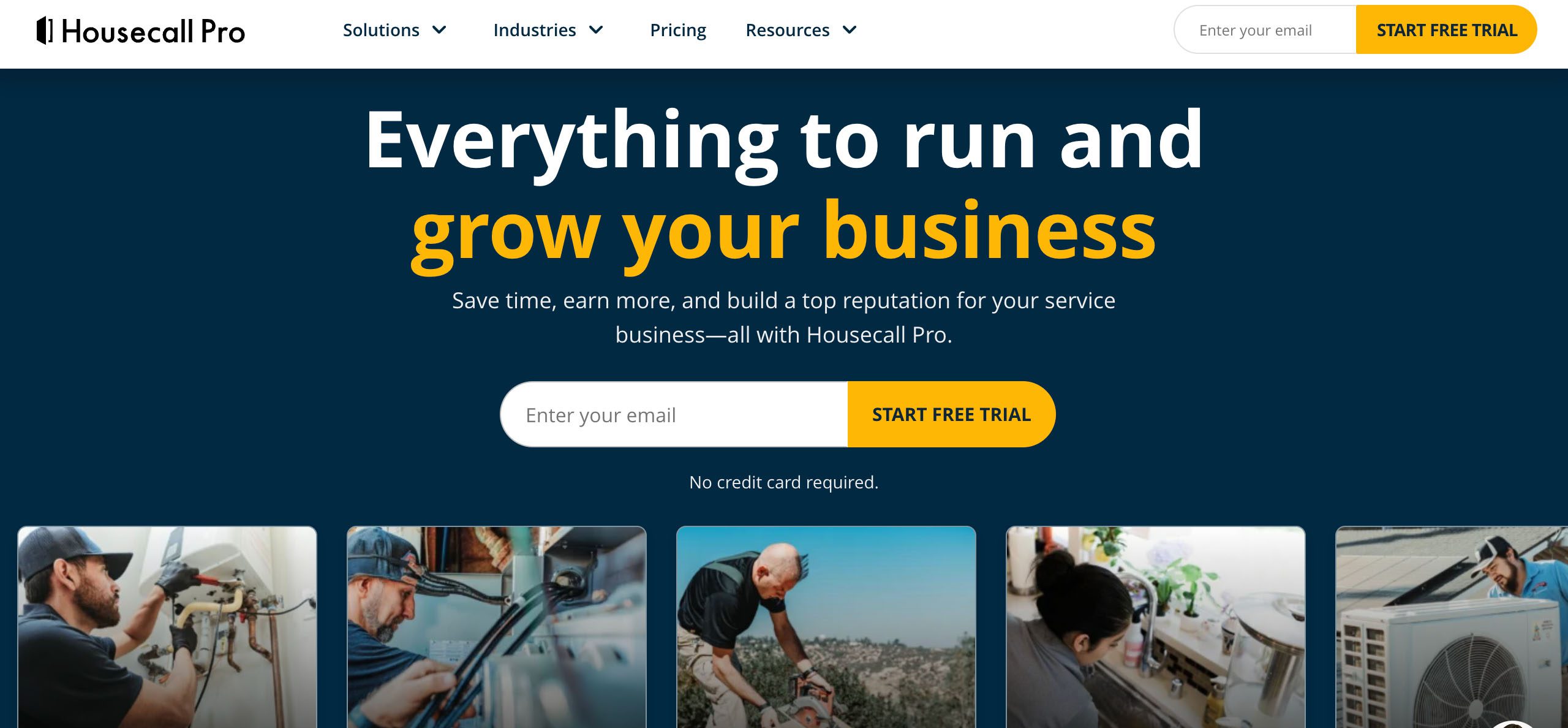
Housecall Pro is built for field and service-based businesses that need more than just CRM functionality.

Highlights: Job scheduling, mobile apps, online payments, customer communication, and notifications.

Pricing: Free trial available. Plans start at $59 USD monthly.

Best for: Trades and service businesses that want to streamline scheduling, invoicing, and customer data management.

Unsure about Housecall Pro? Check out these alternative options

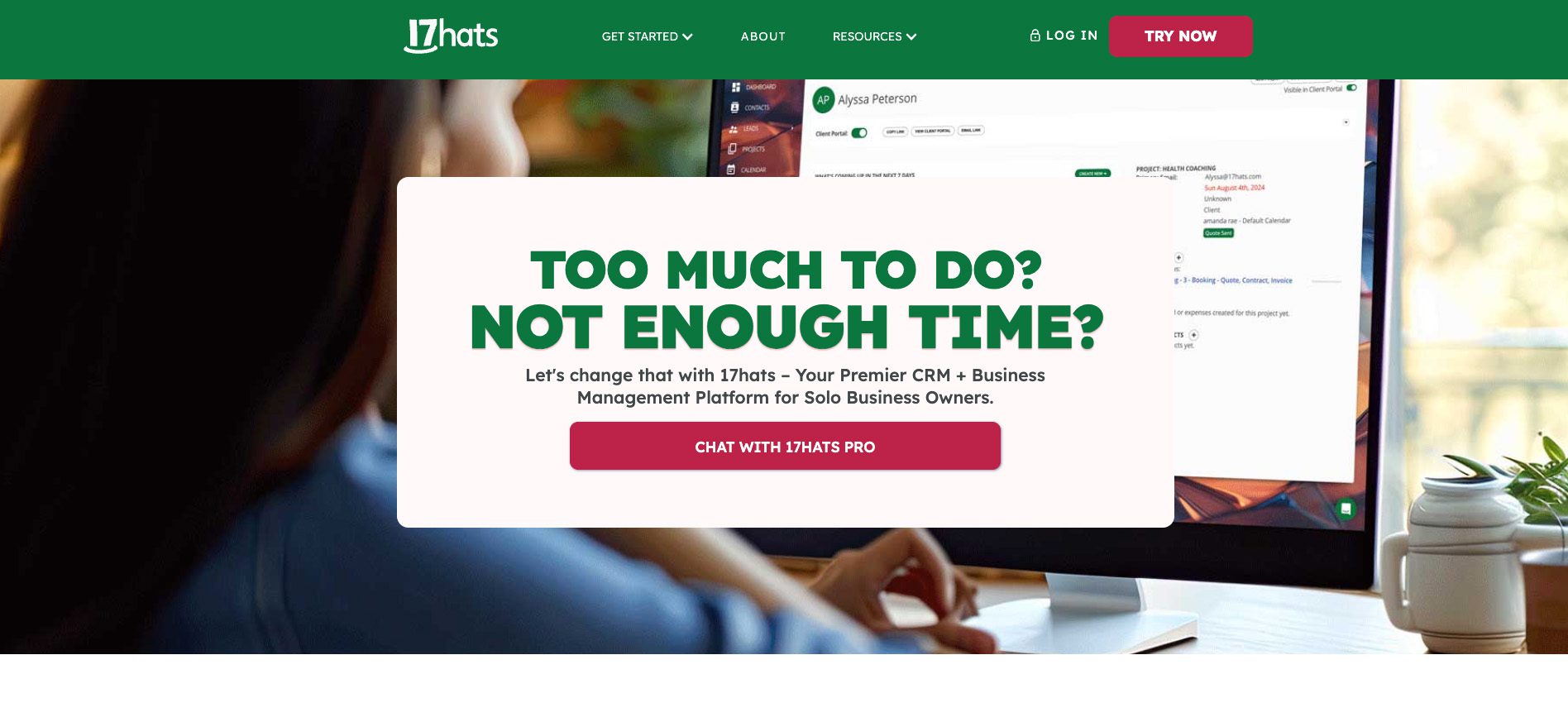
17hats

thryv-alternative-17hats-method-crm


17hats is designed for freelancers and solo business owners who need simple business management tools in one place.

Highlights: Invoicing, contracts, payment processing, email automation, and workflow templates.

Pricing: Free trial for 7 days with plans starting at around $60 USD per month.

Best for: Freelancers and creative professionals who want to streamline admin work and customer communication.

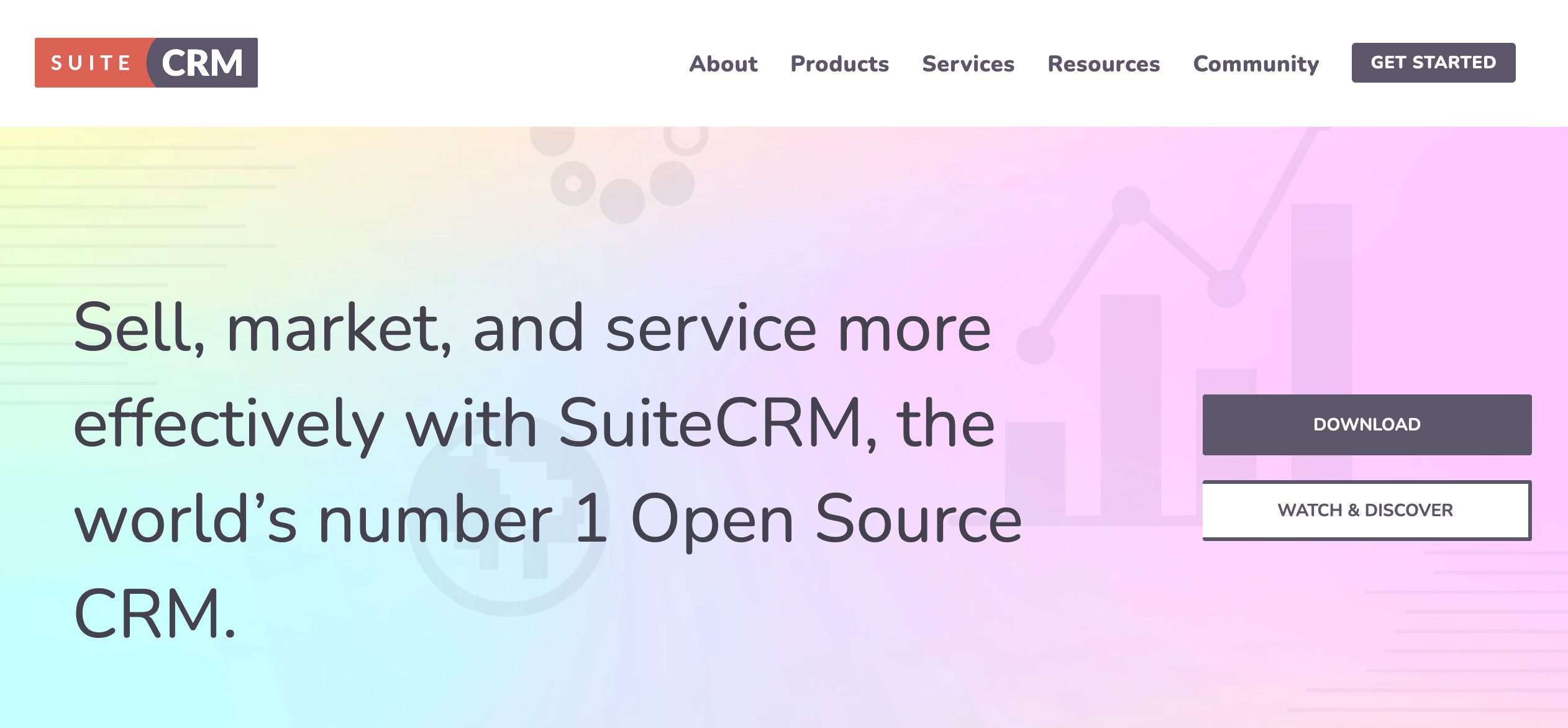
SuiteCRM (open-source)
thryv-alternative-suite-crm-method-crm


SuiteCRM is a self-hosted, open-source CRM that offers full control over your setup and customer data.

Highlights: Sales management, marketing automation, and customer support tools.

Pricing: Free and open-source. Hosted plans start at $175.20/month (£130).

Best for: Tech-savvy teams that want a customizable CRM without licensing fees.

Can’t find the CRM features you need? Let Method build them for you.

Pricing comparison and additional costs ⚖️

Cost is one of the biggest reasons business owners start looking for a Thryv alternative. Thryv’s pricing can be confusing, especially once you factor in add-ons or higher-tier packages. To make your search easier, here’s a quick look at how leading platforms compare on cost and value.

PlatformStarting price (USD/month)Best for
Method CRMFrom $27 per user per monthService-based small businesses using QuickBooks
HubSpot CRMFree basic plan; paid plans from $9 per userBusinesses focused on marketing automation
Zoho CRMFrom $14 per user per monthSmall to mid-sized teams needing advanced functionality
Bitrix24Free tier; paid from $99 per userTeams that need CRM, projects, and collaboration in one place
PipedriveFrom $14 per userSales-driven small businesses
EngageBayFree tier; paid from $11.04 per userBudget-conscious teams needing marketing automation
Housecall ProFrom $59 per userField service and trade businesses
17hatsFrom $60 per userFreelancers and solo business owners
SuiteCRMFree (self-hosted)Tech-savvy teams comfortable with setup and maintenance


Understanding hidden costs
💸

When comparing Thryv alternatives, always look past the base pricing. Many CRMs add extra costs that aren’t obvious at first.

  • Add-ons and upgrades: Advanced automation, email marketing, or reputation management tools often come at an extra charge.
  • User limits: Some CRMs cap the number of users or customer data records before forcing an upgrade.
  • Onboarding and setup: Platforms with a steep learning curve may charge for training or professional implementation.
  • Support and migration: The base plan doesn’t always include personalized customer support or help moving your data.
  • Payment processing fees: If your CRM handles online payments, transaction costs can add up quickly.

Cost versus value 💎

Free or low-cost CRMs can seem appealing, but they often limit automation, reporting, or customer support. Investing in a secure, scalable system that fits your workflow will save time and reduce frustration in the long run.

Method CRM keeps pricing straightforward. You only pay for the features you use, helping small businesses avoid unnecessary add-ons while benefiting from automation and real-time QuickBooks sync.

Can’t find the CRM features you need? Let Method build them for you.

Migration and onboarding considerations 🌐

Switching from Thryv to a new CRM can feel like a big move, but with the right plan, it doesn’t have to disrupt your business.

Most modern CRMs make it easy to import customer data, contacts, and communication history using built-in migration tools or CSV uploads. Some, like Method CRM, even offer hands-on onboarding support to guide you through setup and data transfer.

The key is to plan your transition carefully. Try running both systems in unison for a short time to ensure nothing gets lost and your team can adjust to the new workflow. Keep training simple, focus on the essentials first, and schedule downtime for migration outside of peak hours.

Once your data is imported and your team is confident using the new system, you can switch over fully with minimal downtime and fewer surprises.

How to choose the best alternative for your business 🤔

The best Thryv alternative depends on your goals, team size, and daily workflow. Start by identifying what matters most among automation, CRM functionality, pricing, and ease of use.

Create a simple checklist of must-have features and compare how each platform delivers on those priorities. For example, if your business runs on QuickBooks, a CRM like Method that syncs in real time will save hours of manual work.

It also helps to think ahead. Choose a platform that fits your business today but can scale as you grow. Before committing, test the software with a free trial or demo to see how it handles your data and day-to-day tasks.

The right CRM should feel intuitive, reduce admin time, and give you confidence that your customer data is secure and well organized.

Can’t find the CRM features you need? Let Method build them for you.

Frequently asked questions about switching from Thryv

Will I lose data or features when switching?

Most Thryv alternatives include import tools to bring over customer data, contacts, and notes. Some minor formatting or tag details may need manual adjustment, but the core information usually transfers smoothly.

Can I revert to Thryv if the new system doesn’t work out?

Yes. Keep your Thryv account active until you’re fully comfortable with the new CRM. Running both simultaneously for a short time helps prevent data loss and ensures an easy fallback option.

Which alternative is the most affordable?

For smaller teams, EngageBay and Bitrix24 offer generous free or low-cost plans. Method CRM provides transparent, pay-for-what-you-need pricing that’s ideal for small businesses wanting flexibility without extra add-ons.

How long does migration usually take?

It depends on your data size and setup complexity. Simple migrations can take a few hours, while more customized transitions might need a few days. Method’s onboarding team can help you plan this process to minimize downtime.

Closing thoughts and next steps 💬

Finding the right Thryv alternative comes down to understanding your priorities. Maybe you need more automation, a simpler CRM, or pricing that scales with your business instead of against it. Whatever your goals, the best choice will be the one that saves time, supports your growth, and keeps customer data organized and secure. 🔐

Take time to compare a few options and shortlist two or three that best fit your needs. Use free trials, explore the dashboards, and see which platform feels most natural for your team.

If you’re looking for a flexible, QuickBooks-friendly CRM that’s built with small businesses in mind, try Method CRM. You’ll get real-time data sync, customizable workflows, and automation that helps you run your business more smoothly without the complexity of an all-in-one system. 🎯

Ready to take a closer look? Start your free trial of Method CRM and see how it can simplify your day-to-day operations while helping your business grow. 🌱

how-much-does-salesforce-cost-method-crm

How much does Salesforce cost? (2026 pricing breakdown)

Avoid pricing surprises — learn the true salesforce cost: license fees, add‑ons, support, AI, and hidden charges in this comprehensive guide.

How much does Salesforce cost? (2026 pricing breakdown) Read More »

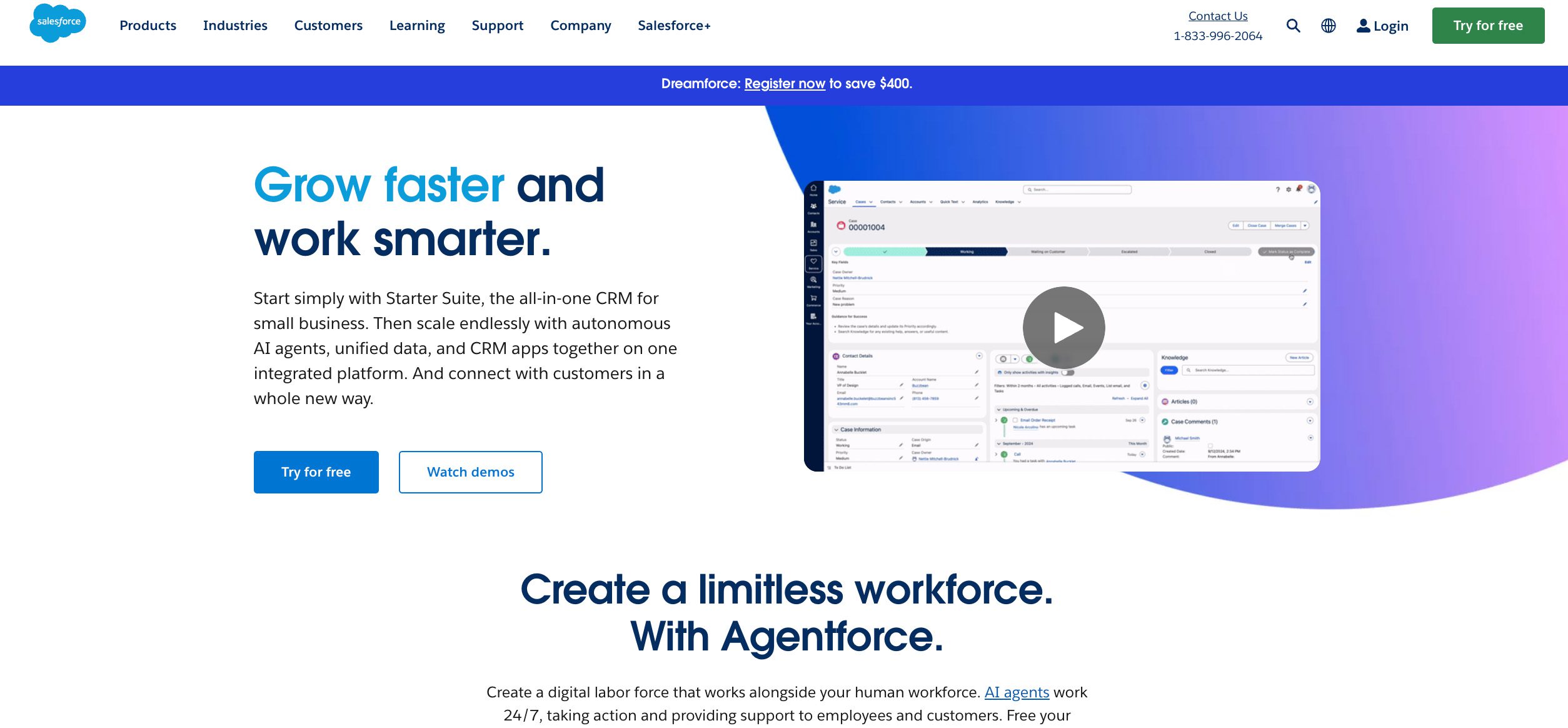
Salesforce is one of the most powerful CRM platforms on the market, trusted by large enterprises for its deep functionality and flexibility. But for many small businesses, understanding its pricing structure and deciding whether the investment makes sense can throw them for a loop.

In this guide, we’ll break down current Salesforce pricing, including what’s included in each edition, the most common add-ons, and the real-world costs you can expect based on your business size. You’ll also see how implementation, support, and customization can influence the total cost of Salesforce ownership.

Here at Method CRM, we’ve been supporting QuickBooks-based businesses since 2010. Method is loved by small and mid-sized teams for its real-time two-way QuickBooks sync, no-code customization, and end-to-end workflow automation. If you’re comparing CRM pricing or looking for a simpler, more flexible alternative to Salesforce, Method may be the better fit for your growing business.🌱

Let’s take a closer look at what really goes into the cost of Salesforce and how to decide whether it’s the right CRM for your business needs. 📈📊

Still entering sales leads manually? Let’s automate that.

Table of Contents

Salesforce pricing overview 💰

Salesforce remains one of the most widely used CRM systems, offering an extensive range of products designed to support sales, marketing, service, and e-commerce operations. In 2025, Salesforce pricing reflects this depth of functionality, with tiered editions and a growing list of add-ons that scale with each business’s needs.

how-much-does-salesforce-cost

Salesforce pricing update 🔔

As of August 2025, Salesforce has introduced a 6% increase across most of its pricing plans across its Enterprise and Unlimited editions. This change affects Enterprise and Unlimited Editions across Sales Cloud, Service Cloud, Field Service, and select Industry Clouds.

It’s important to note that there is no single Salesforce cost that applies to every customer. Each organization’s final bill depends on several factors:

  • The chosen Salesforce edition (Starter, Pro, Enterprise, Unlimited, or Agentforce)
  • The number of user licenses required
  • Any add-ons, apps, or integrations purchased through AppExchange
  • Implementation, onboarding, and ongoing support costs
  • Additional storage, API usage, or sandbox environments

Salesforce uses a per-user, per-month pricing model, with most contracts billed annually in USD. Depending on the number of licenses and services purchased, some organizations may also be eligible for volume discounts or multi-year pricing agreements.

For small businesses just starting out, the Starter Suite offers essential CRM, email marketing, and workflow automation tools at an accessible entry point. Mid-sized and enterprise organizations typically invest in higher editions like Pro Suite or Enterprise, which include advanced customization, AI-powered tools, and broader automation capabilities.

While Salesforce’s pricing can seem complex, the tiered structure allows businesses to scale their CRM investment as their operations grow from basic contact management to enterprise-grade customer relationship management and marketing automation.

Salesforce CRM base cost by edition 🏷

Salesforce offers several pricing tiers to accommodate different business sizes and needs. Each edition builds on the previous one, adding more functionality and customization options. Pricing is based on a per-user, per-month model, billed annually in USD.

Below is an overview of the current Salesforce pricing structure as of 2025.

Starter Suite

Cost: $25 USD per user per month

Includes: Basic CRM functionality for small businesses, including contact and lead management, email marketing tools, and workflow automation. The Starter Suite also provides access to dashboards and reports to help teams track sales activity and customer data in real time.

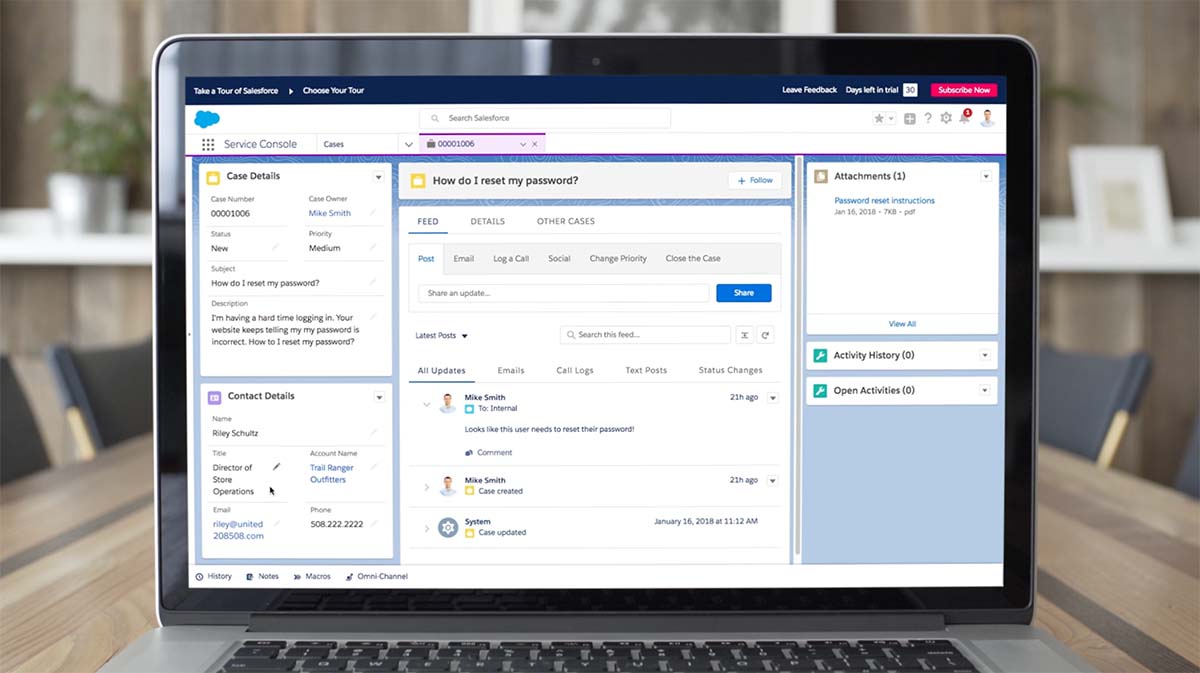
A laptop displaying Salesforce Essentials contact screen showing customer information

Pro Suite

Cost: $100 USD per user per month

Includes: Expanded CRM and automation features such as forecasting, advanced reporting, and marketing campaign management. The Pro Suite is designed for growing teams that need deeper functionality across sales and service operations.

Enterprise Edition

Cost: $175 USD per user per month

Includes: Full customization options, advanced API access, and integration support. Enterprise Edition allows for complex automation workflows, role-based permissions, and scalable business management tools suited for mid-size and enterprise organizations.

Unlimited Edition

Cost: $350 USD per user per month

Includes: Unlimited customization, advanced analytics, priority support, and enhanced AI capabilities. This edition provides the flexibility to tailor every aspect of Salesforce to unique business processes while maintaining enterprise-grade performance.

Agentforce 1 Sales Plan

Cost: $550 USD per user per month

Includes: Salesforce’s new AI-powered sales plan that integrates generative AI and Agentforce capabilities to streamline CRM processes. This edition offers deep automation, predictive insights through Einstein AI, and advanced tools for lead routing and deal management.

While Salesforce lists monthly prices publicly, most contracts are billed annually, and discounts may apply to multi-year or high-volume agreements. Businesses should confirm whether their pricing includes any required add-ons such as support, API calls, or data storage, as these can influence the total cost significantly.

Still entering sales leads manually? Let’s automate that.

Add-ons, apps, and extensions that influence cost ➕

Salesforce pricing extends far beyond license fees. Most businesses add tools and integrations to support their sales process, automation, and communication needs. These extras expand functionality but can greatly increase total CRM cost.

Agentforce and AI add-ons

Salesforce’s new Agentforce suite brings AI-powered automation for lead scoring, customer communication, and forecasting. It builds on the earlier Einstein modules and is now available across several editions. Costs vary based on the number of users, AI capacity, and automation depth.

Einstein and legacy AI

Many companies still use Einstein for analytics, predictive insights, and workflow optimization. AI tools like Einstein help sales teams and marketers make smarter, data-driven decisions to improve efficiency and ROI.

Third-party apps from AppExchange

The AppExchange marketplace hosts thousands of Salesforce-compatible apps covering project management, email marketing, social media management, and e-commerce. Some are free, but advanced apps or premium integrations often charge per user or per month.

API integrations and collaboration tools

Businesses connecting Salesforce to tools like Slack, Zapier, or MuleSoft can streamline workflows and improve team communication. However, each integration or API call adds to the overall cost through licensing or data-usage fees.

Data storage and sandbox environments

Every Salesforce edition includes limited data storage. Exceeding these caps or running heavy automations adds charges. Larger organizations often maintain multiple sandbox environments for testing and training, which can cost hundreds or thousands of USD per year.

While these add-ons and apps make Salesforce one of the most flexible CRMs available, they also make pricing unpredictable. Make it a point to review all extensions and integrations upfront to check that your CRM setup fits both your budget and your business needs.

Still entering sales leads manually? Let’s automate that.

Implementation, customization, and support costs 👨🏻‍💻

Beyond the license fee and add-ons, Salesforce costs often include implementation, customization, and ongoing support. These expenses depend on the complexity of your setup and whether your business manages the CRM internally or through a certified Salesforce partner.

Implementation and consulting fees

Setting up Salesforce for the first time usually requires professional help, especially for businesses with multiple departments or large data sets. Implementation partners help with system configuration, data migration, and user training. Fees can range from a few thousand to more than $100,000 USD, depending on the scope and number of users.

Custom development

Salesforce offers extensive flexibility, but tailoring the platform to your unique business processes can require custom development. This may include creating workflows, building apps, or designing dashboards. Hiring certified Salesforce developers or using the Salesforce Platform to create custom applications adds another layer of cost.

Training and onboarding

Training is a key part of maximizing CRM functionality and ensuring employees adopt the system effectively. Salesforce provides online training through Trailhead, but many organizations also invest in live sessions or workshops for teams. Paid training programs typically charge based on the depth and duration.

Support and success plans

Salesforce provides several levels of support. These include:

  • Standard Success Plan: Included with most licenses and offers basic online resources and community support.
  • Premier Success Plan: Adds 24/7 technical support, admin assistance, and faster case resolution. Typically costs a percentage of net license fees.
  • Signature Success Plan: The highest tier, offering personalized support, priority routing, and a dedicated technical account manager. Pricing is usually a percentage of the total license cost.

Ongoing maintenance and updates 🔧

Salesforce continually releases updates and new features. While these updates are included in the base subscription, businesses with custom apps or integrations may need developer support to keep everything compatible. This adds small but recurring maintenance costs.

When calculating the full cost of Salesforce, don’t forget to factor in these setup and support expenses. They often determine how smoothly your CRM operates and how quickly your team can achieve a return on investment.

Still entering sales leads manually? Let’s automate that.

Sample cost scenarios by business size 👥

Because Salesforce pricing is modular, total costs vary widely depending on the number of users, selected edition, and chosen add-ons. Below are three sample scenarios showing what small, mid-sized, and large businesses might expect to pay annually for Salesforce.

Small business (5–10 users)

A small business using the Starter Suite for basic CRM and marketing functionality will likely spend between $1,500 and $3,000 USD per year in base license fees. Add-ons such as email marketing, workflow automation, and extra storage can increase the total to around $4,000 to $6,000 USD annually.

Typical breakdown:

  • Starter Suite licenses: $25 USD per user per month
  • Basic implementation: $5,000 USD (one-time setup)
  • Add-ons and integrations: Could range from $25 to thousands of dollars.
  • Premier Success Plan (optional): 30% of license cost

Mid-sized business (about 50 users)

A mid-sized organization using the Pro Suite or Enterprise Edition will require more automation, advanced reporting, and data management. Annual costs can reach $120,000 to $150,000 USD, including setup and support.

Typical breakdown:

  • 50 Pro Suite licenses: $100 USD per user per month
  • Implementation and customization: $20,000 to $40,000 USD
  • Add-ons (Einstein AI, Marketing Cloud, AppExchange apps): $10,000 to $20,000 USD
  • Support (Premier Plan): 30% of license cost

Enterprise organization (200+ users)

Large enterprises using Unlimited Edition or Agentforce 1 with multiple add-ons for AI, analytics, and automation can expect an annual investment exceeding $1 million USD.

Typical breakdown:

  • 200 Unlimited Edition licenses: $350 USD per user per month
  • Implementation and custom development: $150,000 to $250,000 USD
  • Add-ons (Agentforce, Marketing Cloud, API, and storage upgrades): $200,000 to $300,000 USD
  • Signature Success Plan: Likely a percentage of the license cost, but requires you to contact your account executive

Summary table

Business sizeEditionUsersEstimated annual cost (USD)Notes
Small businessStarter Suite5–10$5,000–$10,000Includes basic setup and limited add-ons
Mid-sizedPro or Enterprise50$120,000–$150,000Includes automation, AI tools, and support
EnterpriseUnlimited or Agentforce200+$1,000,000+Includes advanced AI, Marketing Cloud, and full customization


These figures illustrate how quickly Salesforce pricing can scale. While the base CRM licenses appear straightforward, additional costs for implementation, automation, and ongoing support often make up a significant portion of the total investment.

Still entering sales leads manually? Let’s automate that.

ROI and justifying the investment 📈

Going with Salesforce can require a major financial commitment, so understanding how to measure its return on investment (ROI) is important. The platform’s wide range of CRM tools, automation features, and data analytics can deliver measurable business impact, but only when implemented and adopted effectively.

How Salesforce drives ROI

The Salesforce ecosystem is built to improve how organizations manage sales, marketing, and service. Centralizing customer data and automating repetitive tasks lets businesses reduce manual work and focus more on building customer relationships.

Key benefits that often contribute to positive ROI include:

  • Workflow automation that saves time for sales and service teams
  • Dashboards and reports that provide real-time visibility into performance metrics
  • AI tools like Einstein and Agentforce that help optimize forecasting and lead management
  • Marketing Cloud features that enhance segmentation, marketing automation, and campaign tracking

When used strategically, these capabilities can help businesses increase conversion rates, shorten the sales cycle, and reduce churn.

Metrics to track ROI

To understand whether Salesforce is worth the cost, companies should regularly track performance indicators that align with their business goals, such as:

  • Revenue generated per sales representative
  • Average deal size and win rate
  • Customer acquisition cost and lifetime value
  • Time saved through automation and streamlined workflows
  • Retention and upsell rates within the CRM

Maximizing ROI through adoption

Salesforce’s return depends heavily on adoption. A well-configured CRM only delivers value when teams use it consistently. Proper training, clean data management, and ongoing optimization are essential. Many organizations also invest in third-party apps from AppExchange or API integrations to align Salesforce with their existing tech stack.

Evaluating value versus cost

While Salesforce pricing can appear high compared to simpler CRMs, the value often lies in scalability and advanced functionality. For large teams with complex processes, the ability to automate, integrate, and analyze across multiple departments can justify the investment.

For smaller teams with limited resources, however, it’s worth comparing Salesforce with lighter CRM options that still provide automation and workflow tools at a lower cost. Platforms such as Method CRM offer an affordable, QuickBooks-integrated alternative designed to help small businesses streamline operations without the complexity or additional cost of enterprise systems.

Still entering sales leads manually? Let’s automate that.

Additional costs to watch for 💸

Salesforce pricing often extends beyond licenses and add-ons. As CRM usage and customization grow, extra costs can appear that impact ROI and long-term budgeting.

Hidden fees

Each Salesforce edition includes limits on data storage, API calls, and user access. Exceeding them leads to added charges. Businesses handling large datasets or running heavy integrations may see costs rise quickly.

Add-on dependencies

Some Salesforce products depend on others to work properly. For example, using Marketing Cloud for email marketing or segmentation may require Sales Cloud or Service Cloud, increasing the total cost.

Contracts and upgrades

Salesforce pricing is typically billed annually and often tied to multi-year agreements. Upgrading editions usually applies across your entire organization, not individual users, adding cost and increasing downtime.

Training and adoption

Without proper onboarding, teams often underuse key CRM features like automation and dashboards. Investing in training, certifications, or expert consultants ensures better adoption and maximizes ROI.

Maintenance and under-utilization

Ongoing updates, integrations, and custom workflows need regular management. Neglecting maintenance can lead to data errors or incomplete automation, while unused functionality wastes budget.

Still entering sales leads manually? Let’s automate that.

Alternatives and cost comparisons ⚖️

Salesforce is a leading name in customer relationship management, but its offerings may not suit every business. For small businesses or teams with simpler workflows, exploring CRM alternatives may help them find better value and functionality.

When Salesforce is worth the premium

Salesforce stands out for its scalability, automation, and customization across Sales Cloud, Service Cloud, and Marketing Cloud. It’s ideal for mid-sized and enterprise organizations that manage complex processes, multiple departments, and large volumes of customer data. Tools like Einstein AI and Agentforce offer powerful forecasting and analytics, justifying the higher pricing for teams needing advanced insights.

When a lighter CRM may be a better fit

Small businesses often need automation, contact management, and integrations without enterprise-level costs. Method CRM offers a flexible, affordable solution tailored for QuickBooks users. It provides:

  • Real-time two-way QuickBooks sync.
  • No-code customization for unique workflows.
  • Automation for invoicing, estimates, and follow-ups.
  • Transparent pricing without costly add-ons.

Method CRM gives small and growing businesses the essential CRM functionality to streamline sales, communication, and operations on one user-friendly platform.

how-much-does-salesforce-cost-method-crm

Other CRM options to consider

  • HubSpot CRM: Strong marketing automation and a free starter tier, though costs rise with scale.
  • Zoho CRM: Affordable, customizable, and part of a complete business app suite.
  • Pipedrive: Sales-focused CRM with visual pipelines and intuitive workflows.
  • Freshsales: Combines AI insights, automation, and email tracking at a lower price.

Looking for other options? Check out our full list of Salesforce alternatives here.

How to estimate your Salesforce cost 🤔

Salesforce pricing varies by edition, user count, and add-ons, so there’s no single number that every business should expect. Use these steps to build a realistic cost estimate before committing.

1. Choose your edition

Match the edition to your business needs. Starter Suite fits small businesses with basic CRM and email marketing. Pro and Enterprise editions suit teams that need deeper automation and customization. Agentforce 1 adds advanced AI features through Einstein and predictive insights.

2. Calculate user licenses

Salesforce charges per user per month, billed annually in USD. Multiply the cost of your chosen edition by the number of active users. Admins or analysts may need higher-tier licenses.

3. Add necessary add-ons

Include tools like Sales Cloud, Marketing Cloud, or Service Cloud. Check whether integrations, APIs, or extra automation features come with additional fees.

4. Include implementation and training

Factor in setup, onboarding, and customization. Simple setups may cost a few thousand dollars, while enterprise implementations can exceed six figures.

5. Estimate support and storage costs

Add a Success Plan — typically 20 to 30% of your license fees — and account for data storage overages if your team handles large customer databases.

6. Look for discounts and bundles

Salesforce offers volume and multi-year discounts, along with special pricing for non-profits and educational institutions.

7. Build your total estimate

Combine license costs, add-ons, support, and one-time setup into a clear annual projection. Review it regularly as your CRM needs evolve.

A structured estimate helps you understand the true cost of Salesforce and whether its functionality aligns with your business goals.

Frequently asked questions: Salesforce cost

How much does Salesforce cost per user?

Salesforce pricing starts at around $25 USD per user per month for the Starter Suite and can reach $550 USD for the AI-powered Agentforce plan. Most editions are billed annually.

What factors affect the total cost of Salesforce?

Your final cost depends on the edition, number of users, add-ons, implementation, support plans, and data storage needs.

Are there hidden costs?

Yes. Exceeding data limits, adding API integrations, or choosing advanced features like Marketing Cloud can increase costs beyond the base license fee.

Is Salesforce suitable for small businesses?

While Salesforce offers a Starter Suite for small businesses, many find it complex and expensive in the long term-term. CRMs like Method CRM provide simpler automation, clear pricing, and QuickBooks integration at a lower cost long-term.

Can I pay monthly instead of annually?

Most Salesforce plans require annual billing, but enterprise agreements may allow flexible payment terms.

Are discounts available?

Salesforce occasionally offers volume, multi-year, or non-profit discounts. Always confirm eligibility before signing a contract.

Closing thoughts and next steps 💬

Salesforce’s cost goes far beyond the base license. Between add-ons, implementation, and support, total expenses can vary widely depending on your business size and goals.

Before committing, map out your exact CRM requirements and calculate the total cost, including automation, integrations, and success plans. For smaller teams that want flexibility without enterprise-level pricing, Method CRM offers an affordable, QuickBooks-integrated alternative designed to streamline workflows and grow with your business.

Take time to compare options, request quotes, and explore a demo of Method CRM to see if it fits your needs and budget.

Method Extends Support for Intuit Enterprise Suite

Method Named Intuit Platinum Partner, Expands Support for Intuit Enterprise Suite and Multi-Entity Customers with Launch at Intuit Connect

Method is now an Intuit Platinum Partner, expanding support for Intuit Enterprise Suite with a multi-entity CRM solution that unifies data and operations.

Method Named Intuit Platinum Partner, Expands Support for Intuit Enterprise Suite and Multi-Entity Customers with Launch at Intuit Connect Read More »

Toronto, ON – October 16, 2025 – Method, a top-rated CRM integration for QuickBooks customers, today announced it has become an Intuit Platinum Partner, the highest tier in the Intuit App Partner Program. This designation reflects Method’s long-standing commitment to helping small and mid-sized businesses (SMBs) thrive with QuickBooks, while introducing new functionality to support scaling Intuit Enterprise Suite customers with multi-entity, multi-location and franchise needs.

For over a decade, Method has partnered with Intuit to serve thousands of SMBs across industries, delivering a customizable CRM that integrates seamlessly with QuickBooks. The Platinum Partner designation marks a milestone in that journey, underscoring Method’s proven impact and continued innovation for the QuickBooks ecosystem.

Recognized Partnership, New Capabilities
QuickBooks has long been the backbone of SMB financial management, and Method’s real-time, two-way sync has extended its value to sales, service, and customer management. With its new Platinum Partner status, Method is doubling down on its role in the Intuit ecosystem—bringing enhanced solutions for businesses that are scaling operations, entities, or locations.

Intuit Enterprise Suite customers can now leverage Method to:

  • Manage multiple entities, locations, or franchises with centralized customer, sales, and billing data.
  • Eliminate inefficiencies with automated quoting, order management, and invoicing that syncs directly to Intuit Enterprise Suite, including support across multiple locations and entities.
  • Adapt quickly to growth with customization delivered by our team and done closely with you, evolving with your business without ERP complexity or cost.
  • Multiple company files are linked with one consolidated operational and CRM data view via Method, all aligned with the functionality of Intuit Enterprise Suite.
  • Solve the governance permission headaches of mulit-location growth with super admin roles that provide one point of control across entities, users, and employees

Commitment to SMBs at Every Stage of Growth
“Becoming an Intuit Platinum Partner is both an honor and a responsibility,” said Paul Jackson, Founder and CEO of Method. “It reflects the success of our ongoing partnership with Intuit to support SMBs, from their earliest days to the complexities of scaled, multi-entity operations. With Intuit Enterprise Suite alignment, Method is ensuring that customers can easily continue their growth journey with Intuit and Method, avoiding business disruption that can come from moving to heavy and complex ERP platforms.”

About Method
Method is the leading CRM for QuickBooks users, trusted by thousands of businesses to manage sales, service, and operations with efficiency and ease. With real-time two-way QuickBooks sync, automation, and unique customization capabilities, Method helps SMBs scale smarter – whether they’re running a single location or managing multiple entities.

About Intuit App Partner Program
Intuit’s new App Partner Program reflects its continued investment in partner success, offering enhanced support, data access, and business-building resources based on partner needs and maturity. By aligning with this initiative, Method reinforces its commitment to helping growing small and mid-market businesses streamline workflows, manage finances more efficiently, and thrive in today’s digital economy.

Learn more about Intuit’s App Partner Program here.

crm-security-method

CRM security: How to choose software you can trust

Worried about trusting your CRM system? Learn how to evaluate CRM security, protect customer data, and choose a CRM vendor you can trust.

CRM security: How to choose software you can trust Read More »

Your CRM is where conversations with customers live, invoices are tracked, and sensitive data is stored. In many ways, it’s the heart of your business operations, which makes protecting it a top priority.

The challenge is that not every CRM system offers the same level of security, and if something goes wrong, whether it’s a data breach or unauthorized access, the result isn’t just lost information, but lost customer trust. 🤝

This guide is here to help you understand CRM security. We’ll walk through what makes a CRM secure, the red flags to watch out for when you’re choosing a vendor, and a practical checklist you can use to keep your customer data safe.

At Method CRM, we’ve been supporting QuickBooks-based businesses since 2010. Small businesses choose us for our real-time two-way QuickBooks sync, customization services, and automation that keeps security front and center. By the end of this article, you’ll know how to spot a secure CRM and see how Method makes data protection part of every feature.🛡️

Method CRM lets you run your business, your way.

Table of Contents

Why CRM security = trust 🔐

Customer trust isn’t built on features alone. It grows when you actively protect customer data and when customers come to learn this. A CRM holds sensitive data like payment records, contracts, and internal notes. Therefore, a single security breach could mean data loss, legal penalties, and a massive hit to customer trust.

Consider the stakes: Salesforce has experienced outages that left customer information inaccessible, while Microsoft Dynamics 365 has dealt with reported vulnerabilities that raised questions about incident response. These examples show that even industry leaders face security threats.

The bottom line is that when you invest in a CRM system, you’re both buying functionality and trusting that system to safeguard your entire business.

What makes a CRM secure? 🧐

When it comes to CRM security, there’s no single switch you can flip to guarantee safety. You’ll need to have the right layers in place to protect customer data at every step — from how people log in, to how information is stored, to how quickly a vendor responds if something goes wrong. Let’s look at the key pieces that make a CRM truly secure.

Authentication and access controls

Authentication is the first line of defence. Secure CRMs use multifactor authentication or two-factor authentication to verify user identity. But authentication alone isn’t enough.

Look for role-based permissions and access controls that let you assign the right level of access to each user. Following the “least privilege” principle helps prevent unauthorized access and keeps sensitive data locked down.

Weak passwords remain one of the biggest vulnerabilities. A secure CRM system should flag weak passwords and allow administrators to set requirements for stronger ones.

At Method CRM, authentication and permissions are baked in. Admins can fine-tune data access, ensuring only the right team members see the right customer data.

Data encryption and backups

A secure CRM must protect CRM data both at rest and in transit. That means strong data encryption when information is stored in the database and when it’s transmitted between devices.

Data backups are just as critical. Without them, a cyberattack or system failure can result in permanent data loss. Ask your CRM vendor how often they back up data, whether they offer point-in-time recovery, and how they test their backup integrity.

Method CRM includes regular data backups and secure storage practices to make sure sensitive customer data stays safe.

Threat detection and incident response

Cyber threats like phishing and malware are constantly evolving. That’s why a CRM system needs continuous threat detection to monitor for suspicious activity and send real-time alerts.

A transparent incident response plan is also essential. If potential breaches occur, you should know how quickly your CRM vendor will respond, how they’ll communicate with customers, and what steps they’ll take to contain the issue.

Method uses proactive monitoring, dashboards, and clear escalation protocols so customers aren’t left in the dark.

Compliance and certifications

Regulations like GDPR (General Data Protection Regulation) and CCPA (California Consumer Privacy Act) require businesses to protect personal information and give customers more control over how their data is used.

When choosing a CRM vendor, ask about compliance and certifications such as SOC 2 or ISO 27001. These third-party audits confirm that a vendor has implemented robust security measures and strong security practices.

Method CRM lets you run your business, your way.

Red flags: When you can’t trust a CRM vendor 🚩

Not every CRM software provider takes security seriously. Watch out for these warning signs:

  • No clarity on where your CRM data is stored.
  • Limited or no security features are listed on their site.
  • Dodging questions about cybersecurity or data access.
  • Pushing automation without explaining the layer of security behind it.
  • No clear plan for handling cyberattacks or data loss.
  • Over-promising “seamless” integration without explaining how they protect against vulnerabilities.

If you see these signs, keep looking, as your customer trust is too valuable to risk.

The CRM security checklist ✅

Choosing a CRM is a big decision, and security should be at the top of your list. Here’s a detailed checklist to help you evaluate any CRM vendor.

Multifactor or two-factor authentication

Strong authentication prevents unauthorized access even if a password is stolen or guessed. Look for CRM systems that support multifactor authentication (MFA) or two-factor authentication (2FA), so users must confirm their identity with a code, app, or physical key.

Fine-grained permissions and access controls

Not everyone in your business needs to see everything. A secure CRM should let you set role-based permissions and granular access controls. That way, team members only access the customer data relevant to their role, reducing risks of internal misuse or accidental exposure.

Encryption at rest and in transit

Encryption is what keeps sensitive data unreadable to outsiders. Ask your CRM vendor whether data is encrypted both while stored on their servers (at rest) and while being transmitted between users and the system (in transit). If you want to protect financial records and customer information from cybercriminals, this is important.

Regular data backups and a disaster recovery plan

Hardware failures, human error, or cyberattacks can all cause data loss. A reliable CRM should perform automated, regular backups and have a disaster recovery plan in place. In turn, you’ll have the confidence that customer information can be restored quickly if something goes wrong.

Clear incident response procedures

No system is 100% immune to cyber threats. What matters is how a CRM vendor responds. Ask them about their incident response plan: how quickly do they alert customers, what steps do they take to contain potential breaches, and how do they prevent similar issues in the future?

Compliance with GDPR/CCPA and a transparent privacy policy

Data privacy regulations such as GDPR and CCPA hold businesses accountable for how they handle sensitive data. A trustworthy CRM vendor should comply with these standards and have a clear, easy-to-read privacy policy that explains how your customer data is stored, used, and shared.

Evidence of active threat detection and monitoring

A secure CRM shouldn’t just react to breaches but also detect potential threats before they escalate. Look for features like dashboards with suspicious activity logs, real-time monitoring, and automated alerts. These show that the vendor takes proactive steps to guard against cyberattacks and phishing attempts.

Transparency about past security breaches

No vendor is perfect, but honesty goes a long way. If a CRM vendor has faced security breaches before, find out how they handled the situation, what changes they made afterward, and how they’ll keep your data safe going forward.

Use this checklist to evaluate if a CRM system is secure and trustworthy enough for your business.

🔐 Authentication & Access Controls

  • Supports multi-factor authentication (MFA)
  • Enables role-based permissions for different users
  • Offers granular access controls (field or record level)
  • Can lock or deactivate users instantly

🧱 Data Protection

  • Data encrypted at rest and in transit
  • Regular data backups and restoration available
  • Offers data masking or pseudonymization
  • Clear on data storage location

🛡️ Threat Detection & Incident Response

  • Provides activity monitoring and logs
  • Includes a documented incident response plan
  • Notifies you of potential breaches
  • Ability to audit user and permission changes

📜 Privacy & Compliance

  • Compliant with GDPR, CCPA, or similar regulations
  • Supports custom data retention policies
  • Handles data access requests (DSARs)
  • Transparent about data sharing & third-party access

🚩 Red Flags to Watch For

  • No clear security documentation
  • Avoids questions about breach history
  • Doesn’t let you manage permissions or backups
  • Uses vague buzzwords instead of clear functionality
  • Unclear on data residency and protection

Method CRM lets you run your business, your way.

Why Method is a secure CRM you can trust 🙌

crm-security-method-crm


Method CRM is built for small businesses that want the power of automation without compromising on CRM security. With real-time QuickBooks sync, strong authentication options, flexible permissions, and transparent incident response protocols, Method makes security part of your everyday workflow.

Method offers robust security measures in a streamlined package. Our customers know exactly how their data is handled, with full control over data access and visibility into our security features.

That’s why many small businesses trust Method as their secure CRM system. It’s powerful, flexible, and built with customer trust at its core.

Method CRM lets you run your business, your way.

Closing thoughts 💬

A CRM isn’t valuable unless it keeps your data safe. First and foremost, it needs to protect sensitive information about your customers, your business, and your financials.

Use the checklist, ask vendors the tough questions, and don’t settle for vague promises. At Method, we’re committed to being transparent and reliable so you can focus on building strong customer relationships.

Ready to see our secure CRM system in action? Book a demo of Method today.

How-much-does-crm-cost-Method-CRM

How much does CRM cost? A complete guide for 2026

How much does CRM cost? Keep reading to find out how different CRMs are priced and how to pick the right option for your budget.

How much does CRM cost? A complete guide for 2026 Read More »

Choosing the right customer relationship management (CRM) software means finding features and a price that fit your business. 👔

During your search, you may wonder: How much does CRM cost? With free plans on one end and plans costing hundreds of dollars per user per month on the other, CRM pricing can be hard to grasp. 🤯

This guide examines the true costs of CRMs for various businesses, including those selecting their first CRM system and established companies seeking to streamline workflows and automate processes. We’ll include subscription fees and discuss add-ons, onboarding, integrations, and hidden extras that often arise later. 🫣

We’ll also break down the pricing plans of popular CRM providers like Salesforce, Zoho CRM, HubSpot, Pipedrive, and Monday CRM, helping you make an informed decision based on your team size, business needs, and future goals. 🎯

At Method CRM, we’ve supported QuickBooks-based businesses since 2010. Small businesses across many industries value our real-time QuickBooks sync, customization services, and workflow automation. If you want to automate, save time, and avoid paying for unused features, Method could be a great fit for your growing business. 💯🚀

Ditch the spreadsheets — automate your workflows today.

Table of Contents

CRM pricing models and key variables 💰

CRM pricing can vary significantly depending on the vendor, the features included, and the structure of the pricing. With numerous models and factors influencing cost, learning how pricing works can help you select a CRM solution that suits your budget.

Per-user vs flat license models

Most CRM platforms charge per user, so your costs grow as your team grows. This works well for small teams, but expenses can rise quickly as you add people. Some CRMs offer flat-rate pricing for unlimited users, which can be more affordable for larger businesses.

Monthly vs annual billing

Monthly billing offers flexibility, while annual plans often include discounts. If you’re just getting started, monthly may make more sense. But if you’re confident in your CRM choice, switching to annual billing can save you between 10 and 30% over time.

Tiered plans

Many CRM providers offer tiered pricing plans, typically structured as basic, professional, and enterprise. Lower-tier plans usually cover core CRM features, such as contact management and email tracking, while higher-tier plans may unlock automation, advanced analytics, custom reporting, and integration capabilities. Choosing the right tier depends on your current needs and how you expect your business to grow.

Free CRM and freemium plans

Free plans are a great way for startups and small teams to test out CRM software. These typically come with limited contacts, basic features, and a cap on the number of users. While they’re a low-risk entry point, you’ll eventually need to upgrade to access advanced features, such as workflow automation or custom dashboards.

Functionality affects cost

As the CRM system adds more functionality, pricing tends to increase. Features such as automation, forecasting, advanced analytics, and real-time dashboards can significantly enhance efficiency and decision-making, but they often come at a higher price point. Consider how essential these tools are for your team before committing to a plan that includes them.

Add-ons and extras

Many CRM platforms charge extra for add-ons like more storage, API access, upgraded support, marketing tools, or AI features. These extras can be useful, but will increase your total cost. Check what’s included in your plan and what costs extra.

Ditch the spreadsheets — automate your workflows today.

Typical price ranges and vendor examples 💵

CRM pricing usually falls into different ranges based on business size. A solo consultant’s needs and budget are very different from those of a fast-growing startup or a large company.

Price ranges by business size

Let’s take a look at the ballpark costs for businesses based on their size.

Small businesses and startups: Startups and small teams often begin with a free CRM or a low-cost plan to handle basic contact management, lead capture, and email marketing. These entry-level plans typically range from $0 to $29 per user per month, and may include some automation features and pipeline management tools.

Medium-sized businesses: Mid-sized companies tend to require more functionality, such as workflow automation, team collaboration tools, and real-time dashboards, as well as more users. Pricing here generally falls in the $30 to $80 per user per month range, depending on the feature set and add-ons.

Enterprise businesses: Larger organizations typically need enterprise-level features like advanced analytics, forecasting tools, AI-powered automation, and robust integration with ERP and ecommerce systems. CRM cost at this level can easily exceed $100 per user per month, particularly for platforms like Salesforce or Microsoft Dynamics.

Vendor snapshot and current pricing

Here’s a quick overview of popular CRM providers and their latest pricing tiers:

how-much-does CRM-cost-Method-CRM


Method CRM: Offers a free trial. Paid plans start at $27 per user per month. Designed specifically for QuickBooks and Xero users, Method offers a full two-way sync, contact management, lead management, custom reports and dashboards, integrations (Zapier, Gmail, Outlook, Mailchimp, Google Calendar, API access), administration capabilities, support, self-serve contact portals, and some communication features. This package also includes DIY customization and a free hour with a Method customization expert. 

how-much-does-crm-cost-zoho-method-crm


Zoho CRM: Offers a free plan for up to 3 users. Paid plans begin at $14 per user per month billed annually with more advanced CRM features like forecasting, automation, and AI tools.

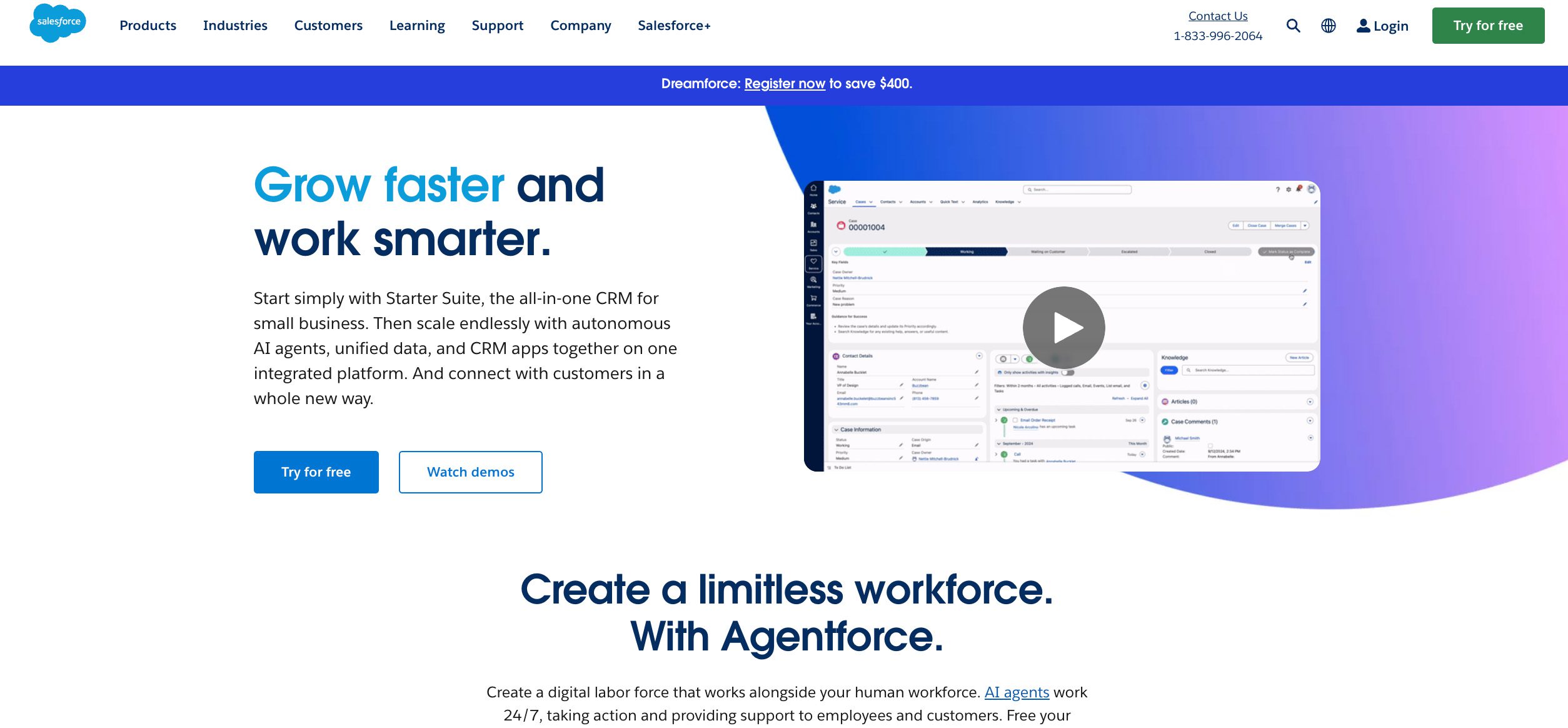
how-much-does-crm-cost-salesforce-method-crm


Salesforce: Offers a 30-day free trial and several tiered CRM pricing plans, from its Starter Suite plan for small businesses ($25 USD per user/month) to full enterprise-level packages. Known for its scalability and deep functionality, though pricing can climb quickly with add-ons.

how-much-does-crm-cost-pipedrive-methos-crm


Pipedrive: Known for its sales-focused design and pipeline management tools. Pipedrive pricing starts at $14 per user per month, with plans scaling up depending on automation and integrations.

how-much-does-crm-cost-hubspot-method-crm


HubSpot: Offers one of the most generous free CRM plans with basic features for unlimited users. Paid tiers unlock additional functionality like marketing automation, advanced reporting, and custom workflows. Read more about HubSpot pricing here. 

Ditch the spreadsheets — automate your workflows today.

Additional costs beyond licenses

CRM pricing includes more than just the monthly or per-user fee. You also need to consider setup, customization, and ongoing maintenance. These extra costs are easy to overlook but can affect your budget and ROI.

Onboarding and training

Many CRM providers charge extra for onboarding, training, and support, especially for custom setups. Including training costs in your budget helps your team use the CRM well and see faster ROI.

Data migration and cleanup

Importing legacy data from spreadsheets or another CRM solution can involve cleaning records, mapping fields, and ensuring compatibility. Some vendors include migration tools, while others charge a one-time fee based on data volume.

Customization and configuration

Adding custom fields, dashboards, and workflow automation can require developer time or professional services. Even no-code platforms may involve costs if you need advanced or tailored workflows.

Integration with other systems

Connecting your CRM to tools like QuickBooks, ERP, ecommerce, or marketing automation may require paid API access or third-party connectors like Zapier, which can add to your setup costs.

Maintenance, upgrades, and support

Premium support tiers, ongoing updates, or troubleshooting integrations can add to your CRM cost. Even cloud-based CRM software may require budgeting for these services.

Storage overages, extra seats, and API usage

Most CRM pricing plans limit storage, file uploads, and API calls. Exceeding these limits can trigger overage charges. Adding team members also increases monthly costs under per-user pricing plans.

Change management and governance

Maintaining data quality, user permissions, and governance as your CRM grows may require a dedicated admin or outside consultants, especially for larger teams or evolving workflows.

Ditch the spreadsheets — automate your workflows today.

Cost vs. value 📈

CRM cost isn’t just about the price tag, but it’s also about the value delivered. The right CRM software should save time, streamline processes, and support revenue growth. Here’s how key features justify the investment:

Automation and workflow automation

Automating tasks like follow-ups and data entry boosts efficiency and reduces errors. Look for CRM systems with drag-and-drop workflow automation and custom triggers to streamline your sales pipeline.

Forecasting and dashboards

Real-time dashboards and forecasting tools let you see your sales pipeline clearly and plan ahead. These features help you spot bottlenecks and make better decisions for growth.

Advanced analytics, reporting, and AI features

AI-powered insights and advanced analytics help optimize performance, track customer behaviour, and uncover new opportunities. While these come with higher pricing, they offer long-term returns.

Email marketing, lead scoring, and campaign modules

CRMs with built-in email marketing reduce the need for third-party tools. Features like lead scoring and drip campaigns can improve engagement and accelerate the sales cycle.

Multi-channel features (social, SMS, live chat)

Support customer engagement across social media, SMS, and live chat from one platform. These capabilities enhance your customer relationship management by making communication seamless and centralized.

Scalability (user growth, storage, module expansion)

A scalable CRM grows with your team, data, and needs, whether that’s adding team members, storage, or modules like project management. Some level of adaptability supports long-term value and stability.

Ditch the spreadsheets — automate your workflows today.

What makes Method CRM’s pricing different? ⭐

At Method CRM, our pricing is designed for the real needs of small businesses, without extra promises or confusing options. Here’s what makes us different from other CRM providers.

Transparent, modular pricing

With Method, you only pay for what you need. Our pricing is clear, with no hidden fees or forced upgrades. Whether you’re starting with basic contact management or layering on advanced automation, you’ll always know what you’re paying for and why.

Pay by pack, not by promise

Many CRMs lock core features behind high-tier pricing plans, forcing small businesses to overpay for tools they barely use. Method changes that. Our modular pricing lets you add functionality as you grow, without jumping to a whole new tier.

Customization that saves time

Unlike some CRMs that require technical teams or developers to customize, Method empowers you to tweak workflows, dashboards, and even create apps without writing code. Plus, our customer success team is there to guide you with free training and support.

Built for QuickBooks users who want a CRM that actually fits their business

If you use QuickBooks (Online or Desktop), Method offers the most advanced two-way sync on the market. Your CRM and accounting stay in perfect alignment, eliminating double data entry, reducing errors, and improving efficiency across your entire operation.

Flexible enough for startups, powerful enough for growing teams

Whether you’re a solo business owner or a growing team, Method adapts to your workflow. You can start small and scale up, knowing your CRM will keep up with your needs.

Estimating your CRM cost 🤔

To make an informed decision, you’ll want to break down the costs based on your current team, feature needs, and future growth. Here’s a simple framework to help you estimate your CRM software cost accurately.

Step-by-step cost estimation formula

To get a rough estimate of your CRM investment, use the formula below:

Number of users × monthly cost per user + add-ons + setup/training + potential overages = estimated monthly CRM cost

From there, you can multiply by 12, 36, or 60 months to get a 1, 3, or 5-year cost projection.

Use cases and scenarios

Let’s look at a few examples of how CRM pricing can play out across different team sizes.

Note: These are just estimates. Your actual CRM cost will depend on your chosen platform, onboarding needs, and how your business changes.

Scenario 1: 5 users on a basic plan ($27/user/month)
Estimated monthly cost: $125
Add-ons: $25
Training (one-time): $250
1-year total: $1,775

Scenario 2: 20 users on a mid-tier plan ($45/user/month)
Estimated monthly cost: $800
Add-ons and API access: $75
Training and onboarding: $1,000
1-year total: $10,600

Scenario 3: 100 users on a professional plan ($73/user/month)
Estimated monthly cost: $7,500
Custom integrations: $3,000
Support and upgrades: $1,500/year
1-year total: $96,000

Sensitivity analysis: mid-tier vs premium

The jump from a mid-tier plan to an enterprise-level CRM solution can be steep. What starts at $40 per user might double or triple once you add forecasting, advanced analytics, AI-powered tools, or multi-channel communication features. That’s why it’s important to map your priorities early and explore vendors that let you scale without overpaying upfront.

Sample total cost projection

ScenarioTeam SizePlan LevelMonthly CostAdd-ons1-Year Total3-Year Total
Starter5 usersBasic$125$25$1,775$5,325
Growth20 usersMid-tier$800$75$10,600$31,800
Scale100 usersPremium$7,500$300$96,000$288,000

Ditch the spreadsheets — automate your workflows today.

Cost risks and mitigation strategies 💡

Even the best CRM software can become a budget strain if you’re not mindful of hidden or unexpected costs. Here are some common pitfalls businesses encounter when adopting a new CRM system and how to avoid them.

Overbuying features you don’t need

It’s tempting to choose the plan with the most bells and whistles, but this often leads to paying for features your team doesn’t use. Always map your CRM features to real business needs before committing.

Mitigation: Start with a lower tier or a modular system that lets you add features as you grow.

Underestimating integration complexity

Connecting your CRM with tools like email marketing, accounting software, or project management systems may require more effort (and budget) than expected, especially if custom APIs are involved.

Mitigation: Choose CRM platforms with pre-built integrations or confirm API access is included in your pricing plan.

Ignoring user adoption and change costs

New tools often bring a learning curve, and without proper onboarding, employees may resist switching. That can lead to underutilized software and wasted budget.

Mitigation: Invest in training from day one, and involve your team in the selection process to boost buy-in.

Vendor lock-in or hidden renewal hikes

Some CRM providers offer low introductory pricing, only to significantly increase renewal costs. Others make it difficult to export data or downgrade your plan.

Mitigation: Read the fine print, ask about renewal terms upfront, and keep a full backup of your customer data.

Scope creep in customization

As your team requests more workflows, dashboards, or reports, customization costs can spiral, especially if the platform requires coding or third-party developers.

Mitigation: Work with a CRM provider that includes no-code tools or offers expert customization services, like Method CRM.

Final tip: pilot before you commit

Before launching a CRM for your whole company, test it with a small group first. This helps you find issues early, see how it works in practice, and adjust your budget.

Ditch the spreadsheets — automate your workflows today.

Choosing a CRM solution that aligns with your budget ✅

With so many CRM platforms and pricing models out there, it’s easy to get overwhelmed. But the right CRM solution should feel like an investment, not an expense. Here’s how to make sure your chosen platform matches both your business needs and your budget.

Prioritize features over flash

Don’t get distracted by advanced features you’ll never use. Focus on functionality that supports your current goals, whether it’s contact management, sales pipeline tracking, email marketing, or automation.

Start lean, expand later

Most CRM providers offer scalable pricing tiers or modular add-ons. Begin with a basic plan or core features, then grow your CRM as your team size and customer base expand.

Use modular vendors with flexible pricing

Choose a CRM system that allows you to customize your setup and only pay for what you need. Method CRM, for example, uses transparent, pack-based pricing so you’re not stuck with a bloated plan that doesn’t fit your workflow.

Negotiate discounts and billing terms

Some vendors offer savings for annual commitments, nonprofit status, or multi-year contracts. Others may customize pricing for larger teams. Don’t be afraid to ask.

Evaluate the total cost of ownership (TCO)

Sticker price isn’t everything. Factor in additional costs like onboarding, training, integrations, support, and add-ons. The best CRM for your business is one that balances cost, functionality, and long-term value.

Frequently asked questions

What’s the lowest possible CRM cost?

Many CRM platforms offer free plans for small teams, with limited functionality. For example, Zoho CRM and HubSpot both offer free tiers, and Agile CRM supports up to 10 users at no cost. While these can be a great starting point, expect to pay more as your needs grow.

Why do some CRMs cost $300+ per user?

High-end pricing usually includes enterprise-level features like advanced forecasting, AI-powered automation, security controls, compliance tools, and premium customer support. These platforms, such as Salesforce or Microsoft Dynamics, are designed for large companies with complex needs.

Do free CRMs work long-term?

Free CRMs can work if your needs are basic—think contact management and email tracking. But most growing businesses quickly outgrow free plans due to limited automation, reporting, and storage. You’ll eventually need more functionality.

When will my CRM hit “break-even”?

The break-even point depends on your team size, sales cycle, and use of features like automation or marketing tools. Many businesses begin seeing ROI within 3 to 6 months, especially if the CRM streamlines lead follow-up, customer support, or reporting.

How often should I revisit or renegotiate pricing?

Revisit your CRM pricing annually or whenever your team size, business model, or tech stack changes. Many vendors are open to negotiations or custom pricing if your usage increases.

Final thoughts 💬

CRM pricing isn’t always straightforward, but understanding what’s included and what’s not helps you make a smarter choice. Look beyond just the monthly cost and consider onboarding, add-ons, and whether the platform truly fits your business.

Method CRM has clear, scalable pricing for growing teams that use QuickBooks. With real-time sync, no-code customization, and built-in automation, Method helps you save time and grow your business.

Check out Method CRM pricing to see if we’re the right fit for your team.

How-to-grow-an-HVAC-business-Method-CRM

How to grow an HVAC business: 13 strategies

Discover how to grow an HVAC business with proven marketing, referrals, SEO, automation, and operations strategies.

How to grow an HVAC business: 13 strategies Read More »

If you are an HVAC business owner ready to scale, it’s likely that your current system needs an upgrade. ✅

Perhaps you are experiencing an increase in demand that your current team can’t keep up with. Or maybe you want to expand geographically or increase your capacity for larger projects. Whatever the case may be, this means adopting the right systems and processes to facilitate these changes. 

If this sounds like you, you may be wondering where to start. For businesses on the move, having the proper platform to manage operations makes all the difference. 

Here at Method CRM, we’ve been supporting QuickBooks-based businesses since 2010. Method is loved by HVAC companies for its real-time, two-way QuickBooks sync, end-to-end sales automation, and customization services. Method CRM for field services also offers a Field Crew app that keeps service techs and office staff in sync.💯🎯📈

In this guide, we highlight relevant tools and break down the practical strategies for growing an HVAC business, from planning to execution.🚀

Sick of manual admin work? Save time on every job with Method.

Table of Contents

Why many HVAC businesses stall and how to avoid it ❌

Running an HVAC business isn’t easy, and there are common challenges that can stall you. Spotting these ahead of time can help you keep your business moving.

Here are some common reasons why HVAC business growth often comes to a halt:

  • ❄️ Seasonal dips: HVAC work naturally fluctuates depending on the season. Heating services often spike in winter, and cooling services during the summer. Spring and fall are often quieter. These off-peak months can create gaps in revenue and underused crews. To avoid this, plan seasonal promotions (like pre-summer AC checkups or winter furnace inspections) or schedule tune-ups to fill slow periods.
  • 🚫 Lack of systems: Without an organized business operation, jobs slip through the cracks, schedules get mixed up, and growth comes to a standstill. To avoid this, establish standard workflows, use software to track jobs and customer information, and create easy-to-follow systems that keep your team on the same page.
  • 🤯 Owner burnout: Running every part of the HVAC business yourself isn’t realistic. When you’re exhausted, mistakes happen, and you miss opportunities. Prevent possible burnout by delegating responsibilities, assembling a reliable team, and automating repetitive tasks.

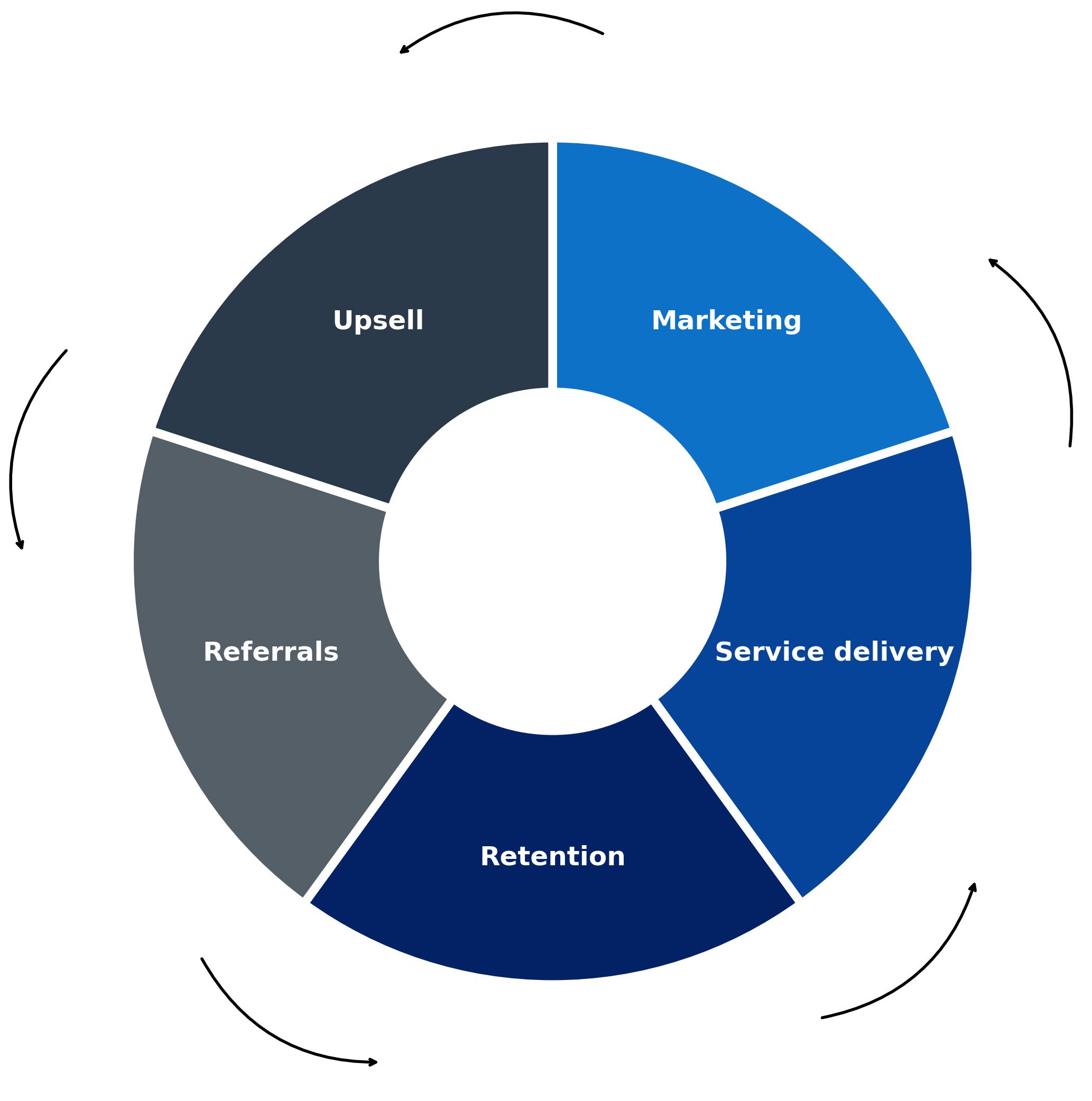
Growing a business is a continuous cycle, as shown in this growth flywheel. It’s a systematic effort that takes careful planning.

how-to-grow-an-HVAC-business-flywheel-growth

Here’s how the growth flywheel works:

  1. Start by finding ways to attract potential customers.
  2. Deliver exceptional HVAC services that turn them into satisfied customers.
  3. Keep customers coming back with retention strategies.
  4. Encourage referrals to bring in even more business.
  5. Offer upgrades or additional services to increase revenue per customer.
  6. Repeat the cycle.

Each stage feeds the next, creating momentum. The more efficiently your flywheel spins, the less you’ll have to chase leads manually and the more predictable your growth becomes.

Sick of manual admin work? Save time on every job with Method.

Define your growth foundation 🌱

Before chasing growth, you’ll first need to build a foundation for your business. A strong base prevents chaos as you scale and prepares you to handle the extra workload.

Here are strategies on how to lay the groundwork for lasting business growth.

1. Choose your ideal HVAC customer segments 👥

You can’t make everyone your customer, as it’ll spread your business too thin.

Your customer segments define the type of work you’ll do and how you’ll market your services. Make sure you and your team’s HVAC licenses cover your chosen markets.

These are the core HVAC customer segments to focus on:

  • 🏠 Residential: Focus on homeowners who need repairs, maintenance, or upgrades like air conditioning replacement or duct cleaning. It’s a great niche for steady, routine work and strong local visibility.
  • 🏢 Commercial: Work with offices, retail spaces, or buildings that need larger-scale systems and ongoing maintenance. You’ll see a higher revenue per job, but often with slower decision cycles.
  • 🏗️ New construction: Partner with builders for system installs in new builds. This model is predictable but also competitive, as it requires precise scheduling and coordination from multiple teams.

2. Pricing, margins, and financial benchmarks 💰

Understanding your costs, knowing your margins, and providing accurate estimates for your HVAC jobs keep your business afloat. Also consider offering service contracts for a steady revenue stream during the slower months, while also building long-term trust with clients.

Aim for profit margins that support growth. For small businesses, a 10–20% margin after expenses is considered healthy. Then set aside around 6–12% of your annual revenue for growth efforts.

For instance, if your HVAC company brings in $800,000 a year, you could reinvest $48,000–$96,000 in new email marketing campaigns, improving your fleet, or boosting your online presence with Google ads.

3. Map out a 90‑day growth plan ✍🏻

Every successful HVAC business runs on a plan. After all, guesswork won’t help you thrive. Having a growth plan gives your new business structure, focus, and measurable progress. Think of it as your short-term roadmap for hitting realistic targets.

Here’s an example of how a 90‑day growth plan goes:

  • Month 1 – Foundation: Define your target market, review your pricing structure, and set up your apps and CRM.
  • Month 2 – Promotion: Launch a local marketing campaign while also boosting brand awareness on social media. Send out flyers to your local service areas. Gather early customer reviews to build trust.
  • Month 3 – Results: Track leads, conversions, and bookings to see how things went. Refine what worked and cut what didn’t. Roll out a referral program to bring in more jobs.

Pro tip! Set specific milestones in your plan, like setting up your marketing channels in month one and launching your first full campaign in month two, to keep your growth on track every 30 days.

Sick of manual admin work? Save time on every job with Method.

Marketing strategy that drives qualified leads 📊

Once your foundation is in place, it’s time to get noticed. From optimizing your content for local SEO to going on social media, the right approach gives you quality leads who are ready to book.

These are the marketing strategies that will help you reach potential clients actively searching for HVAC services.

4. Local SEO and website optimization 👨🏻‍💻

With strong local SEO, your HVAC business will show up when people search for services nearby. The goal of localizing your SEO is to rank in your service area and earn trust locally.

Of course, discovery is only half the battle. Once visitors land on your site, you’ll need to optimize your website to provide a great user experience. This includes having clear calls-to-action, fast-loading pages, and an overall intuitive website.

Focus on these areas to strengthen your website’s SEO performance:

  • 👨🏻‍💻 On-page SEO: Build service pages like “air conditioning repair in Dallas.” Use city + keyword targeting in titles, meta tags, and headers.
  • 🌐 Technical SEO: Keep your website fast and mobile-friendly. Improve Core Web Vitals (loading speed, interactivity, and visual stability) and add schema markup (service type, pricing, and customer ratings) for commercial/home services to help Google understand your pages.

5. Google Business Profile and Local Pack 🗺️

Your Google Business Profile (GBP) is your HVAC company’s online storefront. It shows your name, address, phone number, reviews, and hours right in the search results. And if you properly optimize your GBP, you’ll get to be in Google’s Local Pack, which is a coveted top-three map listing that customers see first on the search results page.

To achieve this, you need to claim your GBP. Fill out every field, add photos, and post updates regularly.

You can also boost your visibility with Google Local Services Ads (LSAs) and pay-per-click (PPC) campaigns. LSAs put your business above organic results, and you pay for every lead you get. PPC ads, on the other hand, let you bid on keywords like “AC installation near me,” so your ad shows up when someone searches for it. You then only pay when someone clicks your ad.

Think of your GBP as owning prime real estate on Google. When potential customers search for HVAC help, your business appears front and center. That’s when investing in LSAs and PPC ads pays off.

6. Content and inbound marketing 📝

Content marketing focuses on sharing helpful resources, like blogs, videos, and social posts, that answer real HVAC questions. It’s part of inbound marketing, which is a broader strategy that pulls in customers with relevant content.

So instead of chasing leads via cold calls or hard sells, you attract potential clients who are already searching for HVAC help.

Here are ways to start your content and inbound marketing efforts:

  • 📰 Blogging/FAQ pages: Cover common, relatable topics optimized for keywords your customers search for like “Why is my AC leaking?” or “When to replace a furnace.”
  • 🎥 Video marketing: Record quick maintenance tips, behind-the-scenes clips of your HVAC technicians at work, or testimonials to show customer satisfaction.
  • 🤳 Social media marketing: Use various social media platforms, such as Facebook, Instagram, YouTube, and TikTok, to showcase your work, like before-and-afters.

7. Paid Promotions and Ads 📣

Paid ads and promos are some of the fastest ways for HVAC businesses to drive traffic and bookings. You’re paying for visibility, but when your targeting and messaging are right, there can be a significant return on that investment.

Here are a few paid marketing tactics to try:

  • 📲 Facebook/Instagram ads: Target homeowners and businesses nearby with seasonal offers or service reminders.
  • 🖥️ Google PPC campaigns: As mentioned, you can run ads for specific search terms related to your niche. Add retargeting to re-engage past visitors.
  • 📩 Direct mail or local promotions: Send postcards or flyers in high-ROI neighbourhoods, especially before peak seasons.

Sick of manual admin work? Save time on every job with Method.

Referrals and reviews ⭐

Word-of-mouth is gold in the HVAC industry. Ads can attract leads, but real trust is built through genuine customer experiences. So what better way to prove your quality and reliability than having a satisfied client vouch for you?

Fuel trust-building through active referral and review programs. Learn how these strategies work below.

8. Systematize referrals from existing customers 🗂️

A referral program turns trust into a repeatable process.

Here’s a quick overview of how to structure your referral program:

  • Reward: Set your incentive, like a $50 credit or free maintenance check, for every successful referral.
  • 📃 Terms: Provide simple, transparent rules (like a reward that applies once the new client books and completes a service).
  • 📍Tracking: Use your CRM to log who referred whom and monitor the payouts automatically.

Pro tip: The best time to ask for referrals is after a job well done, right when customer satisfaction is still high. After a clean install or repair, have your HVAC professional thank the customer and send a follow-up email with a referral link.

9. Encourage and collect online reviews 👏

Online customer reviews act as social proof that your HVAC business delivers. They help boost your credibility and help your Google Business Profile rank higher.

Make it easy for happy customers to leave feedback. You can send review requests via email or SMS, or include a review link in your invoices. Personalize the message and thank them for their business before asking for honest feedback.

Once received, display the reviews on your website, marketing materials, and social posts. If you get a negative review, don’t worry. It happens to everyone. Just reply calmly, acknowledge the concern, and explain how you’re going to address it.

10. Partnerships and cross-promotions 🤝

HVAC contractors thrive on local connections. You can build partnerships with other service providers in your community for steady referral streams.

Here are ways to connect with local partners for growth:

  • 👨‍🔧 Partner with realtors, plumbers, electricians, or home builders: Exchange referrals for clients moving into new homes or starting renovations.
  • 🔥 Host joint promotions: Pair up with a local contractor for limited-time deals, like an “AC + insulation tune-up package this summer.”
  • 🎁 Bundle services: Team up with other trades for standard bundled home maintenance plans. For example, you could offer a year-round home maintenance plan that includes HVAC, plumbing, and electrical checkups.
  • Sponsor local events: Support community fundraisers or sports teams to increase brand awareness and goodwill.

Sick of manual admin work? Save time on every job with Method.

Operational excellence and automation 🏆

A smooth operation is key to a successful HVAC business. With tools and systems to handle the repetitive work, you can optimize your operations and deliver consistent service that keeps customers satisfied and coming back.

Run your business like clockwork with these strategies.

11. Dispatch, scheduling, and CRM systems 🗓️

Purely relying on manual processes slows growth. Scheduling software and CRM systems let HVAC businesses run efficiently by dispatching jobs and coordinating office staff, service techs, and field operations in real time.

Some tools combine all of these functions into a single platform, like Method CRM for field services. As an all-in-one QuickBooks-compatible field service management solution, you get to manage dispatch, scheduling, customer data, and billing seamlessly. No need to keep track and switch between multiple apps.

Here’s what you can expect when using Method CRM for field services:

  • 🔄 Two-way QuickBooks integration: Sync invoices and payments effortlessly. Your accounting stays accurate without any extra work.
  • 💻 All-in-one dashboard: View your technicians’ schedules, current job statuses, metrics, and tasks at a glance.
  • 📅 Automated routing and scheduling: Assign the nearest available tech to each job and calculate the fastest route.
  • 👨‍💼 Customer management: Track service history, upcoming follow-ups, and maintenance agreements, so every client interaction is logged and nothing falls behind.

With the right tools and software that integrates smoothly with your existing systems, you can run your HVAC business efficiently, reduce errors, and keep both your team and customers on the same page.

12. SOPs and training 📄

Standard Operating Procedures (SOPs) are written guides that outline how your techs handle jobs, customer interactions, and safety protocols. They’re essential, especially when onboarding new team members and maintaining consistent service quality.

Once you have these, you can pair your SOPs with ongoing training and feedback loops to reinforce best practices.

For example, after a new tech completes an AC install, your manager reviews the tech’s work using SOPs, provides feedback, and tracks improvements over time. This keeps work standards high, reduces mistakes, and improves customer satisfaction.

13. Customer communication and retention tactics 🗣️

How you interact with your HVAC customers, through calls, emails, texts, or in-person updates, directly affects whether they’ll stick with your business and book future services.

Here are some retention tactics to keep your customers engaged:

  • 📑 Maintenance agreements: Scheduled tune-ups that guarantee recurring business.
  • 📧 Drip email campaigns: Send helpful reminders, seasonal offers, or system alerts.
  • ⬆️ Upsell opportunities: Promote IAQ products, smart thermostats, or upgrades to increase the value of each job.
  • 👋 Follow-ups and check-ins: Call or email after service to ensure that the customer is satisfied, or to address any questions or concerns promptly.

Sick of manual admin work? Save time on every job with Method.

Putting it all together: Growth playbook 📈

Your HVAC business grows fastest when every strategy feeds the next.

More leads → more jobs → more referrals → retention

Here’s how you can map out your business’s growth journey:

  1. Attract more leads through effective marketing strategies.
  2. New leads turn into more jobs, keeping your techs busy and your business growing.
  3. By providing top-notch service, you get happy customers who will recommend you, leading to more referrals.
  4. With referrals, you retain customers and increase repeat business.

KPIs for HVAC businesses 👨‍🔧

Don’t forget about the metrics that matter to your business. These key performance indicators (KPIs) show whether your growth strategies are working:

  • Lead conversion rate: Number of leads that become customers.
  • Average job value: Revenue per service call.
  • Customer lifetime value: Total revenue from a customer over time.
  • Referral rate: Number of new customers from word-of-mouth/referrals.

Growth forecast model 🚀

A growth forecast predicts your business’s revenue, leads, and jobs based on your marketing and operational capacity. It shows you what to hire for, where to invest, and how to expand.

A sample 12-month HVAC growth forecast looks like this:

QuarterLeadsConversion rateJobs bookedAvg job valueProjected revenueNotes
Q115040%60$500$30,000Foundation & early marketing campaigns
Q236045%162$520$84,240Seasonal AC prep, service contracts upsells
Q342050%210$550$115,500Peak summer, retention and referrals active
Q421042%88$520$45,760Fall/winter prep, off-peak maintenance focus

Here’s how to use the forecast:

  • Compare the projected versus actual leads and revenue each quarter.
  • Adjust marketing, staffing, and promotions based on the results.
  • Include your repeat customers and referrals to predict what’s sustainable.
  • Tie into your HVAC service software for automated tracking and KPI monitoring.

This only serves as a blueprint. Include the metrics relevant to your business and track your results regularly, such as on a monthly basis. Tweak your marketing and retention efforts, and update projections as your HVAC business evolves.

With consistent monitoring, you’ll always be confident knowing where to hire, spend, and grow.

Sick of manual admin work? Save time on every job with Method.

Common mistakes and troubleshooting ⚠️

Having more jobs won’t always mean more profit if you don’t have the proper systems in place.

Here are some common mistakes when scaling your HVAC business and how to troubleshoot them:

  • 💸 Overspending on ads without the foundational elements: Running campaigns without a clear target market, pricing, or website setup wastes money. Don’t jump into advertising without solidifying your growth foundation first.
  • 🙉 Ignoring seasonal downturns and cash flow: HVAC demand fluctuates with the seasons. To keep cash flow steady, plan for off-peak months with promotions, maintenance contracts, or tune-ups.
  • 🤦‍♂️ Poor lead quality or no follow-up: Leads are only valuable if you act on them. Use follow-up systems, email reminders, or call scripts to nurture inquiries into booked jobs.
  • 👎 Underutilized referrals: Your customers are a powerful source of new business. Create a simple referral program and ask for referrals after successful jobs.
  • 📈 Scaling too fast without process stability: Expanding before SOPs, training, and scheduling systems are in place leads to chaos. Build your processes, then grow steadily.

Summary and next steps ➡️

To recap, growing your HVAC business relies on four main levers:

  • 📢 Marketing: Attract new leads with targeted campaigns and local visibility.
  • ⚙️ Operations: Streamline scheduling, dispatch, and service delivery for efficiency.
  • 🤝 Referrals: Turn your satisfied customers into a steady source of new leads.
  • 🙋‍♂️ Retention: Keep clients coming back through various retention tactics.

Start with your foundation, which sets up your operations and processes. Then, layer in marketing, referrals, and retention strategies to support sustainable growth.

A field service platform brings everything under one roof. Method CRM for field Services handles job scheduling, dispatch, follow-ups, and invoicing, all synced instantly with QuickBooks. With Method, your team spends less time juggling tasks and more time growing the business.

Start your free trial with Method today and start taking full control of your HVAC business.

Frequently asked questions

How can I differentiate my HVAC business from competitors?

Focus on what makes your HVAC business unique. Offer a few key services and do them exceptionally well. Satisfied clients will naturally recommend your services, helping your business stand out. Combine that with community involvement to increase local visibility and build trust. Then, showcase your expertise with online reviews and testimonials to reinforce your reputation.


Together, these steps create a unique, memorable HVAC brand that customers recognize and prefer over competitors.

How do I get more customers for my HVAC business?

Start with a solid marketing plan. Include strategies like optimizing for local SEO, updating your Google Business Profile, and running targeted ads such as Google PPC or social media campaigns. Encourage referrals and ask happy customers to leave reviews. Offer seasonal promotions or maintenance contracts to keep work steady, and stay active on social media to boost brand awareness.


Combine these with smooth customer communication and follow-ups to turn leads into loyal clients.

How profitable is an HVAC business?

A well-run HVAC business can be highly profitable. Healthy profit margins are typically 10–20% after expenses, and reinvesting 6–12% of revenue into growth (marketing, new equipment, or tech) keeps momentum going.


Profit depends on your service mix, pricing, and efficiency. Seasonal planning, retention strategies, and using the right tools for scheduling and billing all contribute to stronger margins and sustainable growth.

HighLevel-alternatives

22 HighLevel alternatives for small businesses in 2026

Explore top‐rated HighLevel alternatives for small businesses. Compare CRM, email marketing, workflows, funnels, pricing, and more.

22 HighLevel alternatives for small businesses in 2026 Read More »

HighLevel, also called GoHighLevel, is an all-in-one platform for businesses that want everything sales and marketing under one roof. It combines built-in customer relationship management (CRM) with marketing automation, workflows, email marketing, and sales funnels. 💻

But HighLevel is an all-in-one setup that won’t work for everyone. For many small businesses, the pricing is steep for the tools they actually use, and the learning curve slows them down. If you find yourself in that situation, that’s your cue to consider the alternatives. 🧐

Take Method CRM, for example. If your operations live on QuickBooks, Method syncs perfectly with your accounting, so client management and invoicing stay within the same system. It’s the kind of specific functionality HighLevel can’t always cover. ✅

Here at Method CRM, we’ve been supporting QuickBooks-based businesses since 2010. Method is loved by business owners across a range of industries for its real-time, two-way QuickBooks sync; end-to-end sales automation; and customization services. In this guide, we’ll look at the best GoHighLevel alternatives for 2026 and why they may better fit your business needs. 👩🏻‍💻📓✍🏻💡

Customize workflows and watch your team thrive.

Table of Contents

Why look for HighLevel alternatives? 🤷‍♂️

HighLevel-alternatives


Though HighLevel bundles lots of tools, many businesses find other reasons to switch to something else.

Here are the main issues many users run into:

  • Steep learning curve: HighLevel has so many features that mastering them takes time. New users can easily get overwhelmed by the interface, the time needed to set up, and the effort required to figure out which features they need.
  • Pricing concerns: Considering what’s being offered, HighLevel is reasonably priced at $97/month for the Starter Plan, but it caps you at three sub-accounts. To unlock unlimited sub-accounts, you’ll need the $297/month Unlimited Plan, and if you want full white-label branding or SaaS features, that jumps to $497/month. On top of that, extras like a branded mobile app, HIPAA compliance, or advanced API access come with additional costs. 
  • Feature overload: You might never use 80-90% of what’s offered. You might also end up with menus full of tools you’ll never touch, which makes the platform more crowded and drives up costs for features that sit idle. That can lead to wasted time or paying for unused capacity.
  • Agency vs small business needs: Agencies and small businesses have very different needs. Agencies often need white-labeling, many client sub-accounts, and custom reports. Meanwhile, a small business will find a solid CRM, email marketing, sales funnels, and customizable workflows more than enough to get started. HighLevel tries to cover both ends of the spectrum, but sometimes it overshoots or complicates things for smaller players.

Before choosing an alternative, be clear about your business needs.

These are the big decision points when choosing a HighLevel alternative and what you should expect:

  • CRM: Keep contact and lead data organized and trackable.
  • Marketing tools: From email campaigns to SMS and social media, having the tools to handle these on one platform keeps outreach running seamlessly.
  • Funnels and sales pipeline: Track where leads drop, what converts, and where to focus effort.
  • Email marketing and automation: Go beyond sending emails. Look for alternatives that offer segmentation, triggers, and follow-ups.
  • Workflows: Automate tasks like lead capture, reminders, and assignments to cut manual errors.
  • White-label options: Agencies need branded dashboards and reports to build trust and credibility.
  • Pricing and plans: Don’t settle on the website’s price “sticker.” Check for limits, hidden fees, and the scalability of the pricing structure.

Choosing the right platform comes down to knowing your priorities.

Customize workflows and watch your team thrive.

Best CRM and marketing automation platforms 🥇

Many seek platforms capable of handling customer support, data, and marketing that are lighter, cheaper, or easier to use than HighLevel. These alternatives fit small businesses, agencies, and startups that want growth tools without the extra bloat.

Note: All prices are billed annually and are in USD.

1. Method CRM

HighLevel-alternatives-Method-CRM


Pricing: Free trial (includes an hour setup demo and an hour of customization). Plans start at $27/user/month for Contact Management, $45 for CRM Pro, and $73 for CRM Enterprise.

Method is CRM software built especially for businesses that run on QuickBooks or Xero. With Method, because your accounting and sales are integrated in one place, you eliminate the risk of duplicate data entry and keep accounting records accurate at all times.

Aside from a patented two-way, real-time sync with QuickBooks Online and Desktop, Method offers automated workflows, email marketing, self-service portals, and deep customization so you can tailor processes unique to yours. This tight accounting sync, client management focus, and hands-on support and onboarding make Method a strong HighLevel alternative for service-driven businesses.

2. HubSpot CRM

HighLevel-alternatives-Hubspot-Method-CRM


Pricing: Free plan available for up to two users. Paid tiers start at $15/user/month (Starter) for the essentials, then the Professional Customer Platform at $1,300/month for up to six users.

HubSpot is a popular customer platform with its own ecosystem of tools involving marketing, sales, support, content, and operations, all tied together. You get email marketing, social tools, landing pages, and inbound features that are all built in. That includes having a dedicated HubSpot CRM.

Integration with other HubSpot “Hubs” makes expansion easier and more seamless. But as you scale, the pricing can escalate quickly, especially when you add marketing contacts or advanced automation.

Read our full guide on HubSpot’s pricing breakdown for more info.

3. Zoho CRM

HighLevel-alternatives-Zoho-Method-CRM


Pricing: Free plan available for up to three users; Standard at $14/user/month, Professional at $23, Enterprise at $40, and Ultimate at $52.

If your team already runs on the Zoho suite, it makes sense to choose Zoho CRM. It’s a budget-friendly pick for business owners who need reliable lead and deal management, workflow automation, mass email, sales forecasting, and a drag-and-drop design studio that won’t overcomplicate their daily workflow.

As you scale, note that essential features like AI sales predictions, advanced customization, and multi-user portals are only available for higher-cost tiers.

Considering Zoho? Learn what’s included in the free version.

4. Keap

HighLevel-alternatives-Keap-Method-CRM


Pricing: Free trial available. Prices are based on the number of contacts and users. Plans start at $299/month for two users and up to 1,500 contacts. Additional user seats cost $39/month each.

With a focus on making growth feel less overwhelming, Keap gives small businesses the tools to capture leads, manage customer relationships, automate follow-ups, and get paid without the complications. You get email marketing with templates, workflows to handle lead capture, sales pipeline, task assignments, client reminders, and automation features.

That said, the steep starting price can deter those on a tighter budget. Costs may also rise quickly as contacts grow.

5. Apptivo

HighLevel-alternative-Apptivo-Method-CRM


Pricing: Free trial available. Plans start at $15/user/month for Lite, $25 for Premium, and $40/user/month for Ultimate.

Looking for a modular approach to your CRM? Apptivo builds its system around apps. This means that each of its apps is a modular unit providing specific functionality, like invoicing, project management, or helpdesk.

The number of apps included in your tier is what fleshes out your CRM. This “pick-your-apps” structure makes Apptivo appealing for businesses that want control over features.

6. Insightly

HighLevel-alternatives-Insightly-Method-CRM


Pricing: Free trial available. Plans start at $29/user/month for Plus, $49 for Professional, and $99 for Enterprise.

Insightly stands out because it ties sales with project management, letting you convert won deals into projects with ease. Its workflow automation and AppConnect integrations hook into 2,000+ apps (like Gmail, Slack, and QuickBooks) for smoother follow-ups and handoffs. You also get custom dashboards and relationship linking to track how contacts, companies, and projects connect.

As a HighLevel alternative, it appeals to businesses that need both customer tracking and project execution in one system. Just note that restrictions on storage, email volume, and records may force an upgrade sooner than expected.

See how Insightly vs Method CRM compare.

7. Bitrix24

HighLevel-alternatives-Bitrix24-Method-CRM


Pricing: Free plan available for unlimited users. Paid tiers are fixed per organization. Plans start at $99/month for Standard (50 users), Professional at $199/month (100 users), and Enterprise at $399/month (250 users).

Bitrix24 is an all-in-one business platform that bundles CRM, project and task management, team collaboration, website building, contact centre tools, cloud storage, and more in a single suite.

You get a lot with the free plan, which includes many of its key features (albeit with limits like no live support and 5GB of storage), making Bitrix24 a preferred choice for startups or those trying out new software. You can manage leads, collaborate, and run basic communications without paying, then upgrade when it’s time.

Check out the top Bitrix24 alternatives.

Customize workflows and watch your team thrive.

Comparison table

Here’s a side-by-side look at the top CRM and marketing automation platforms.

PlatformPricing tiersKey features
Method CRMFree trial. Paid: $27/user/month (Contact Management), $45 (CRM Pro), $73 (CRM Enterprise)Real-time QuickBooks/Xero sync, workflows, email marketing, client portals, deep customization, and onboarding support. 
HubSpot CRMFree plan. Paid: $15/user/month (Starter), $1,300/month for 6 users (Professional)Built-in CRM, email marketing, social tools, landing pages, inbound features, and HubSpot ecosystem integration. 
Zoho CRMFree plan. Paid: $14/user/month (Standard), $23 (Professional), $40 (Enterprise), $52 (Ultimate)Lead/deal management, workflow automation, mass email, sales forecasting, drag-and-drop design studio, and Zoho suite integration. 
KeapFree trial. Paid: $299/month for 2 users/1,500 contacts; $39/month per additional userEmail marketing templates, automation workflows, sales pipeline, task management, and client reminders. 
ApptivoFree trial. Paid: $15/user/month (Lite), $25 (Premium), $40 (Ultimate)Modular apps, and customizable per business needs. 
InsightlyFree trial. Paid: $29/user/month (Plus), $49 (Professional), $99 (Enterprise)CRM + project management, workflow automation, 2,000+ app integrations, dashboards, and relationship linking. 
Bitrix24Free plan. Paid: $99/month (50 users), $199 (100), $399 (250)CRM, project/task management, team collaboration, website builder, contact centre, and cloud storage. 

Advanced email marketing and automation tools 📧

If you’re chasing better results from your campaigns, these advanced email marketing and automation tools are for you. These alternatives pack in segmentation, triggers, analytics, and automation features that keep your outreach effective.

8. ActiveCampaign

HighLevel-alternatives-ActiveCampaign-Method-CRM


Pricing: Free trial available. Prices depend on the number of email contacts. Based on 1,000 contacts (minimum), plans start at $15/month for Starter, $49/month for Plus, $79 for Pro, and $145 for Enterprise.

ActiveCampaign is a go-to platform for e-commerce businesses to optimize their email campaigns and customer journeys. It delivers advanced segmentation, AI-powered predictive sending, conditional content, split testing, and landing page tools. With these tools, you’re able to run complex marketing campaigns, nurture leads, and track detailed metrics across channels.

As a HighLevel alternative, it shines for businesses focused on personalized outreach and campaign logic.

9. Brevo (formerly Sendinblue)

HighLevel-alternatives-Brevo-Method-CRM


Pricing: Free plan available. Plans start at $8.08/month for Starter, $16.17 for Business, and custom pricing for Enterprise. Prices increase depending on email volume (minimum of 5,000 emails/month).

Brevo shines as a budget-friendly email and SMS platform for thriving entrepreneurs and small businesses alike. With one place to manage marketing, sales, conversations, customer data, and even a messaging API, you can run email newsletters, promos, and SMS campaigns without having to juggle separate tools.

With an affordable multi-channel outreach (the free plan lets you send 300 emails a day), starting businesses can run effective marketing campaigns while on a budget.

Discover the other best tools for automated lead generation.

10. Drip

HighLevel-alternatives-Drip-Method-CRM


Pricing: Free trial available. Minimum plan starts at $39/month for up to 2,500 email contacts with unlimited email sends.

Want a platform that makes sure every abandoned cart email, promo, or thank-you note reaches your customers? Drip is made for brands that want deep personalization and lead nurturing. Its workflow tools let you react to behaviours (browsing, buying, clicking), so you can deliver messages that feel timely and relevant.

Prebuilt templates and e-commerce integrations help you get started fast, and let you streamline the way you manage marketing campaigns and outreach.

11. Wishpond

HighLevel-alternatives-Wishpond-Method-CRM


Pricing: Free trial available. Plans start at $149/month for Starter, $299 for All-In-One, and $349 for Growth.

Wishpond is made for marketers who prefer to run their lead generation campaigns, landing pages, email automations, and social promos from one place. AI-driven workflows help you streamline follow-ups, while drag-and-drop builders make it easy to spin up campaigns fast.

Combined with email marketing automation, you can create segmented lists based on interests, location, or web activity.

12. Encharge

HighLevel-alternatives-Encharge-Method-CRM


Pricing: Free trial available. Prices are based on the number of subscribers you have. Up to 2,000 subscribers, plans start at $79/month for Growth, $129/month for Premium, and custom pricing for Enterprise.

Encharge is tailored for SaaS businesses and digital marketers aiming to streamline user onboarding and lifecycle marketing. Its visual flow builder, advanced segmentation, and behaviour-based emails enable precise automation across the customer journey.

With integrations like HubSpot, Stripe, and Salesforce, Encharge supports complex workflows and personalized engagement at scale.

Customize workflows and watch your team thrive.

Comparison table

See how the leading email marketing and automation tools compare.

PlatformPricing tiersKey features
ActiveCampaignFree trial. Paid (1,000 contacts): $15/month (Starter), $49 (Plus), $79 (Pro), $145 (Enterprise)Advanced segmentation, AI predictive sending, conditional content, split testing, landing pages, and multi-channel campaigns. 
Brevo (Sendinblue)Free plan. Based on 5,000 emails/month, paid: $8.08/month (Starter), $16.17 (Business), custom (Enterprise)Email + SMS campaigns, conversations inbox, CRM, marketing automation, customer data tools, and messaging API. 
DripFree trial. Paid: $39/month (based on 2,500 contacts, unlimited emails)Behaviour-triggered workflows, personalization, cart recovery, templates, and strong e-commerce integrations. 
WishpondFree trial. Paid: $149/month (Starter), $299 (All-In-One), $349 (Growth)Lead generation campaigns, landing pages, email automation, AI-driven workflows, and a drag-and-drop campaign builder. 
EnchargeFree trial. Paid (based on 2,000 subscribers): $79/month (Growth), $129 (Premium), custom (Enterprise)Visual flow builder, behaviour-based email, advanced segmentation, lifecycle marketing, and strong integrations. 

Funnel and course builder platforms 📊

Selling courses, coaching, or digital products? These funnel and course builder platforms give you the tools to sell, deliver, and track it all. From landing pages to student dashboards, they make it easier to convert leads and keep your learners engaged.

13. ClickFunnels 2.0

HighLevel-alternatives-Click-Funnels-2.0-Method-CRM


Pricing: Free trial available. Plans start at $81/month for Launch, $164 for Scale, $248 for Optimize, and $5,997/yr (annual only) for Dominate.

The 2.0 version replaces ClickFunnels Classic and is an upgraded, all-in-one platform designed for businesses aiming to build and optimize their sales funnels. It offers a drag-and-drop editor, CRM, email marketing, membership sites, and course creation tools to get started easily.

The platform also includes AI-powered tools, real-time analytics, and team collaboration features, making it a comprehensive solution for digital marketing needs.

14. Kartra

HighLevel-alternatives-Kartra-Method-CRM

Pricing: Free trial available. Plans start at $52/month for Essentials, $99 for Starter, $189 for Growth, and Professional for $429.

Kartra focuses on funnel building, online courses, and digital marketing campaigns. What sets it apart are the ready-made campaign templates crafted by marketing experts, plus tools for CRM, email marketing, automation, analytics, membership sites, and affiliate management.

Each plan bundles creation tools, marketing tools, scaling tools, and advanced tools, making it easier to launch and manage your online business.

15. Kajabi

HighLevel-alternatives-Kajabi-Method-CRM


Pricing: Free trial available. Plans start at $71/month for Kickstarter, $143 for Basic, $199 for Growth, and $399 for Pro.

Kajabi is a premium platform tailored for creators aiming to build, market, and sell digital products. While it does come at a steeper price, Kajabi has a comprehensive toolkit for online course creation, offering features like AI-assisted content generation, customizable templates, and a mobile app for on-the-go access.

The platform also includes tools for building sales funnels, email marketing automation, and managing memberships.

16. OptimizePress

HighLevel-alternatives-OptimizePress-Method-CRM


Pricing: Free trial available. Only offers yearly subscription-based plans, starting at $99/year for Starter, $149 for Plus, and $179 for Ultimate.

If you’re all-in on WordPress, OptimizePress lets you turn your site into a full marketing machine. It’s a WordPress-based suite for entrepreneurs to build high-converting landing pages, sales funnels, and membership sites.

With over 450 templates, a drag-and-drop editor, course creation, checkout tools, and upsell features, it covers everything for lead generation and sales, all done through WordPress.

Read our guide on how to add lead generation forms for your WordPress website.

17. Groove.cm

HighLevel-alternatives-Groove.cm-Method-CRM


Pricing: Free plan available. The full Premium version requires signing up to see the pricing; it’s a one-time fee for lifetime use.

Formerly Groove Funnels, Groove.cm is an all-in-one solution for users to build and sell digital products effectively through its robust sales funnel builder. A major draw is their single payment for lifetime access. Their free plan is forever-free, too.

Groove.cm has dedicated tools like “Groove Pages” for customizable landing pages, “Groove Sell” for one-click upsells and order bumps, “Groove Mail” for automated email campaigns, and Groove Affiliate to manage affiliate programs.

18. Systeme.io

HighLevel-alternatives-Systeme-Method-CRM


Pricing: Free plan available. Paid plans start at $17/month for Startup, $47 for Webinar, and $97 for Unlimited.

Systeme.io gives you a single place to run all your marketing efforts and track them accurately. You can create full sales funnels with opt-in, checkout, and thank-you pages, build and sell online courses, automate email campaigns, and manage an affiliate program.

You can also process payments via Stripe or PayPal. Its simplicity and user-friendly interface make launching and managing digital products straightforward for beginners.

Customize workflows and watch your team thrive.

Comparison table

Check out this comparison of the top funnel and course builder platforms.

PlatformPricing tiersKey features
ClickFunnels 2.0Free trial. Plans: $81/mo (Launch), $164 (Scale), $248 (Optimize), $5,997/yr (Dominate)Drag-and-drop funnel builder, CRM, email marketing, membership sites, course creation, AI-powered tools, real-time analytics, and team collaboration tools. 
KartraFree trial. Plans: $52/mo (Essentials), $99 (Starter), $189 (Growth), $429 (Professional)Funnel building, CRM, email automation, analytics, membership sites, affiliate management, and expert-built campaign templates. 
KajabiFree trial. Plans: $71/mo (Kickstarter), $143 (Basic), $199 (Growth), $399 (Pro)Online course creation, AI-assisted content, customizable templates, mobile app, sales funnels, email automation, and membership management. 
OptimizePressFree trial. Yearly plans: $99 (Starter), $149 (Plus), $179 (Ultimate)WordPress-based landing pages, funnels, membership sites, drag-and-drop editor, 450+ templates, course creation, and checkout and upsell tools. 
Groove.cmFree plan. Premium = one-time lifetime payment (pricing behind signup)Landing page builder, one-click upsells, automated email campaigns, affiliate management, and all-in-one marketing tools. 
Systeme.ioFree plan. Paid: $17/mo (Startup), $47 (Webinar), $97 (Unlimited)Sales funnels, course creation, email automation, affiliate program, payment integration (Stripe/PayPal), and a simple UI for beginners. 

Agency‑focused or cost‑effective alternatives 💰

Agencies and budget-conscious businesses, like smaller teams or startups, need tools that deliver power without the steep costs. These alternatives offer client management, reporting, and branding options while keeping pricing predictable (no surprises included).

19. DashClicks

HighLevel-alternatives-dashClicks-Method-CRM


Pricing: Free access to the “Fulfillment Centre,” which lets you pay only for apps and services you use. Unlock all apps and features for $199/month.

DashClicks is a comprehensive digital marketing platform that offers white-label fulfillment services, customizable reporting dashboards, and an integrated suite of marketing solutions. Users can manage client projects, monitor campaign performance, and generate branded reports from a centralized dashboard.

Their free “Fulfillment Centre” allows agencies to start at minimal cost and scale services as needed, making it roughly much less costly than HighLevel while still providing a complete marketing and CRM solution.

20. Vendasta

HighLevel-alternatives-Vendasta-Method-CRM


Pricing: Free plan available. Paid plans start at $79/month for Starter, $399 for Professional, $799 for Premium, and custom pricing for Enterprise.

Vendasta is an AI-powered customer acquisition and engagement platform made for marketing agencies, software vendors, and local business experts. It enables users to resell over 250 white-labeled marketing tools through its marketplace, allowing for customized pricing and branding.

Additionally, Vendasta’s AI tools assist in automating client engagement and content creation, enhancing efficiency and scalability for agencies.

21. Close CRM

HighLevel-alternatives-Close-CRM-Method-CRM


Pricing: Free trial available. Paid plans start at $35/user/month for Essentials, $99 for Growth, and $139 for Scale.

Close CRM is a sales-focused customer relationship management platform designed for small and growing businesses. Despite the affordability, it’s able to integrate built-in calling, email, and SMS features, along with productivity tools like a power dialer and sales sequences, to streamline the sales process without needing a complex external tech stack.

Automation features, such as email workflows and follow-up reminders, significantly reduce manual tasks, so teams reduce repetitive tasks and focus more on closing deals.

22. SalesPype

HighLevel-alternatives-SalesPype-Method-CRM


Pricing: Free trial available. Fully Loaded plan for $99/month, plus $25/month for every additional user.

SalesPype is a CRM and marketing automation platform made to streamline lead management and enhance sales processes. It offers features such as a click-and-drag sales pipeline, drip marketing automation, video email, ringless voicemail, two-way text messaging, and geo-farming.

With these tools, businesses can manage their leads, automate outreach, and streamline communication from a unified dashboard. SalesPype also provides a white-label program for agencies and consultants aiming to resell the platform under their brand.

Customize workflows and watch your team thrive.

Comparison table

See how agency-focused and budget-friendly platforms stack up.

PlatformPricing TiersKey Features
DashClicksFree access to Fulfillment Centre (pay as you go for services); $199/month for full platformWhite-label fulfillment, customizable reporting dashboards, centralized client management, branded reporting, and pay only for services used. 
VendastaFree plan. Paid: $79 (Starter), $399 (Professional), $799 (Premium), Custom (Enterprise)250+ white-labeled tools, AI-powered client engagement, automated content creation, marketplace for reselling, and scalability for agencies. 
Close CRMFree trial. Paid: $35/user (Essentials), $99 (Growth), $139 (Scale)Built-in calling, SMS, and email, power dialer, sales sequences, automation for follow-ups, and an affordable all-in-one sales CRM. 
SalesPypeFree trial. $99/month (Fully Loaded) + $25/month per extra userDrag-and-drop pipeline, drip automation, video email, ringless voicemail, SMS, geo-farming, and a white-label option for agencies. 

Which alternative suits your business? ⚖️

With so many CRMs and marketing platforms to choose from, the best choice comes down to your size, budget, and how you work.

Here’s a quick breakdown to help you match the right tool with your day-to-day needs.

If you’re a small business that needs affordability and ease of use…

Choose tools that balance low cost with everyday functionality.

What we recommend:

  • Zoho CRM for budget-friendly lead and deal management.
  • Brevo for affordable multi-channel outreach.
  • Bitrix24 for free all-in-one collaboration + CRM.
  • Method CRM for real-time QuickBooks/Xero sync at a great value; no extra tools required.

If email marketing is your main growth driver…

Focus on platforms with advanced email automation and personalization.

What we recommend:

  • ActiveCampaign for segmentation and predictive sending.
  • Drip for behaviour-triggered workflows and e-commerce focus.

If you’re building courses, memberships, or funnels…

You’ll want flexible, specialized platforms for selling and delivering digital products.

What we recommend:

  • Kajabi for premium course creation with AI tools.
  • ClickFunnels for funnel building and real-time analytics.
  • Systeme.io for simple, budget-friendly, all-in-one funnels.

If you’re an agency that needs white-label solutions…

Then go for platforms that let you resell services under your brand.

What we recommend:

  • Method CRM for client portals tied to accounting.
  • DashClicks for fulfillment services you can rebrand.
  • Keap for automation and client reminders built in.

For a HighLevel alternative that balances power with flexibility, Method CRM is for you. It keeps pricing fair, offers real-time QuickBooks/Xero sync, built-in workflows, email tools, and funnel management — all on an interface small teams can start using without a steep learning curve.Ready to see how Method works for you? Schedule your free demo today.

Frequently asked questions

What are good HighLevel alternatives for small businesses?

For small businesses, Method CRM is worth considering first if you use QuickBooks or Xero. Its real-time accounting sync saves hours of manual data entry and keeps your financials accurate without adding extra steps.


Zoho CRM is another budget-friendly option, with simple workflows that keep things manageable for small teams.


Brevo (formerly Sendinblue) also works well if email and SMS marketing are your main focus, offering automation at a low cost.


Bitrix24’s generous free plan makes it appealing for small teams who are just starting out using CRM software.

What are free HighLevel alternatives?

From the tools we’ve covered, a few stand out with free plans.

HubSpot CRM offers a forever-free version with contact management, email marketing, and basic sales tools.

Groove.cm offers a free plan that includes landing pages, email campaigns, and affiliate management, making it a strong option for businesses focused on funnel building without upfront costs.

Vendasta also has a free plan, giving users access to its marketplace and basic tools before upgrading, ideal for those considering a white-label solution.

There’s also DashClicks, which provides free access to its “Fulfillment Centre” and where you only pay for the specific services you use.

CRM ROI Method CRM

CRM ROI in 2026: Benchmarks and best practices

Learn how to calculate CRM ROI, benchmark returns, and implement best practices to increase your CRM investment’s return.

CRM ROI in 2026: Benchmarks and best practices Read More »

CRM software is adopted by businesses looking to increase revenue, boost efficiency, and build stronger customer relationships, but how can these businesses measure whether it’s actually delivering on that promise? 🤔

Learning to measure CRM ROI can help businesses move beyond guesswork and understand what their CRM system is truly bringing to the table. 💡

In this article, we’ll break down what CRM ROI really means, how to calculate it, and the factors that make one CRM more valuable than another. We’ll explore costs, potential gains, and practical ways to improve your return on your CRM investment over time. 📈

At Method CRM, we’ve been helping QuickBooks-based small businesses succeed since 2010. Our platform is loved by businesses across a range of industries for its two-way QuickBooks sync, end-to-end sales automation, and customization services. In this guide, we’ll also show you how Method can help you get more value from your CRM. 💯🚀🎯

Customize workflows and watch your team thrive.

Table of Contents

Why CRM ROI matters 💰📊

CRM ROI, or customer relationship management return on investment, measures how much value your CRM system delivers compared to what you spend on it.

For leadership teams, ROI plays a big role in justifying a CRM investment. It helps secure internal buy-in and sets clear expectations for what success should look like. Tracking ROI also keeps everyone accountable. It ensures your sales team, marketing efforts, and support functions are all working together to make the most of a new CRM tool.

But CRM ROI isn’t just about revenue. A well-implemented CRM can streamline workflows, automate repetitive tasks, improve the customer experience, reduce churn, and give your team real-time access to the data they need to make smarter decisions. Many of these benefits aren’t immediately visible in the bottom line but still contribute significantly to long-term business growth.

Customize workflows and watch your team thrive.

Key components of CRM ROI ⚙️

When evaluating the return on investment of your CRM system, it’s helpful to break it down into two categories: what you put in, and what you get out. Understanding both sides is key to making a strong business case and accurately forecasting your CRM ROI.

Costs (inputs) 💵

Initial investment: Before your team even logs in, there are some upfront costs to account for. These may include licensing fees, setup charges, CRM implementation costs, integrations with other tools, and data migration from legacy systems or spreadsheets.

Implementation, configuration, and consulting: Depending on your chosen CRM software, you may need help configuring the system to suit your business processes. Whether that involves in-house setup or third-party consultants, these services can carry a significant cost, especially if your workflows are complex.

Training, onboarding, and change management: Getting your team on board with a new CRM tool takes more than just sending login details. You’ll need to budget for training sessions, onboarding resources, and possibly internal champions to support user adoption.

Ongoing costs: Even after setup, there are recurring costs to consider with certain platforms. These include customer support, software maintenance, additional seats for new hires, feature upgrades, and potential increases in storage or API usage.

Hidden costs: Some of the most overlooked expenses come from poor adoption or data management. Low usage can result in wasted licensing fees, while poor data hygiene or double entry can slow down workflows and create decision-making blind spots.

Benefits (outputs) 👍

Increased sales and revenue growth: With better visibility into the sales pipeline and more efficient follow-ups, many businesses see an increase in new customer acquisition and upsells. A CRM system helps sales reps close deals faster and with more consistency, fuelling top-line growth.

Efficiency gains through automation: Automation is a huge win for CRM users. By reducing time spent on repetitive tasks like data entry or lead assignment, your team can focus on higher-value activities. Streamlined workflows mean less time wasted and fewer mistakes made.

Improved productivity of the sales team: When your CRM gives sales reps everything they need in one place, such as customer data, previous interactions, and task reminders, they can work faster and smarter. That leads to more deals closed, fewer missed opportunities, and a higher ROI for each sales rep.

Better decision-making with dashboards and forecasting: CRM dashboards offer real-time visibility into performance metrics and pipeline health, while forecasting tools help predict revenue and identify risks. This kind of insight helps leaders make more informed decisions and adjust strategies quickly.

Stronger customer retention and reduced churn: A CRM system tracks customer interactions, preferences, and support tickets, making it easier to deliver a better customer experience. In turn, there’s higher satisfaction, more upsell opportunities, and less churn.

Lower customer acquisition costs: A well-implemented CRM helps sales and marketing teams work together more efficiently, increasing the quality of leads and improving campaign targeting. As a result, customer acquisition becomes more cost-effective.

Higher conversion rates across the funnel: With better lead scoring, targeted campaigns, and faster follow-ups, your team is more likely to convert potential customers into paying ones. Small boosts in conversion rate can lead to big gains in revenue over time.

Increased lifetime value of each customer: Retaining a customer is often more profitable than acquiring a new one. Your CRM helps maximize the long-term value of every relationship by personalizing engagement, tracking preferences, and upselling at the right time.

Customize workflows and watch your team thrive.

The ROI formula and forecast model ✍️

So, how do you calculate CRM ROI? It starts with a simple formula, but the power lies in how you apply it to your business.

Core formula

The standard formula for return on investment is:

ROI = (Total Value Gained – Total Cost) / Total Cost

When it comes to measuring the ROI of CRM, here’s what that looks like:

  • Total Value Gained = Incremental revenue + cost savings
  • Total Cost = Implementation + ongoing investment

This gives you a percentage that reflects the return on every dollar spent on your CRM system. A higher percentage means a stronger CRM return on investment. But remember, CRM ROI isn’t just about cost savings. It’s also about time savings, increased sales, improved forecasting, and long-term value through better customer retention.

ROI example and scenario model

Start by establishing a baseline. Suppose your sales team closes $50,000 in deals each month with a 20% conversion rate and a 60‑day sales cycle.

After CRM implementation, you project a 10% lift in conversions, a 20% shorter sales cycle, and $1,500 saved monthly through automation and fewer manual tasks. These improvements push revenue to $55,000 and give sales reps more time to pursue leads.

That’s $5,000 in added revenue plus $1,500 in savings, or $6,500 in total value gained per month. If your CRM costs $500 per user for five users ($2,500 monthly) plus a one‑time $5,000 setup fee, your first‑month spend is $7,500.

Plugging this into the formula:
Month 1 ROI = ($6,500 – $7,500) / $7,500 = –13%
Month 2 and beyond (no setup cost) = ($6,500 – $2,500) / $2,500 = 160% ROI

A scenario model helps plan realistically:
• Best case: 15% lift in conversions with strong adoption
• Base case: 10% lift with average adoption
• Worst case: Low usage and minimal gains

Payback period and break-even

The payback period is how long it takes to recover your CRM investment. In this example, the initial $7,500 would be recouped in just over one month of value gains. Strong adoption and automation shorten the break‑even point, while slow adoption delays ROI. Linking CRM ROI to payback builds accountability and helps justify ongoing investment.

Benchmarks, studies and real-world data

Research shows CRM ROI is still strong but varies widely. Nucleus Research reports an average return of $3.10 for every dollar spent, down from $8.71 in 2014. Today’s CRM systems are more advanced, with deeper automation and integrations, but time to value can be longer without clear implementation plans or user adoption.

Industry, company size, and digital maturity all affect CRM return on investment. Smaller businesses often see faster wins, while large enterprises may take longer. The key is to measure your own KPIs, define success early, and update your forecast as your CRM usage evolves.

Customize workflows and watch your team thrive.

Drivers and levers to improve CRM ROI 🙌

Maximizing your CRM return on investment isn’t just about choosing the right tool, but about how you use it. Here are five ways to drive stronger results.

User adoption and change management

Your CRM system is only as effective as the people using it. Invest in clear onboarding, training, and internal champions. Reduce friction with intuitive design, and reinforce habits through incentives, accountability, and simple governance.

Aligning CRM to business processes

Map out your existing workflows and ensure your CRM supports and doesn’t disrupt them. Integrate key systems to break down silos, and tailor the platform for your sales, marketing, and support teams.

Automation and workflows

Use automation to save time and improve consistency. Set up follow-ups, alerts, lead routing, and drip campaigns. Align marketing and sales workflows to streamline the customer journey and reduce manual tasks.

Data quality, dashboards and metrics

Accurate customer data fuels better decision-making. Focus on clean data, the right KPIs, and real-time dashboards to track pipeline health, performance, and forecast accuracy.

Continuous optimization

Review your CRM regularly. Test workflows, gather feedback, and make small improvements over time. Expanding features like upsell, cross-sell, or customer success can unlock even more ROI.

Risks and pitfalls ⚠️

Even the best CRM system won’t deliver results if the implementation is mismanaged. Here are some common pitfalls that reduce CRM ROI and how to avoid them.

Poor user adoption or resistance

If your sales team or customer support staff don’t embrace the new CRM tool, it’ll quickly become an expensive spreadsheet replacement.

Mitigation: Prioritize user onboarding with role-specific training, appoint internal champions, and involve teams early in the selection and setup process to boost ownership.

Incorrect assumptions in ROI forecasts

Overestimating conversion rates or underestimating costs can skew your ROI model, leading to unrealistic expectations.

Mitigation: Use historical data as your baseline, run sensitivity scenarios (best, base, worst case), and revisit projections regularly during your CRM implementation.

Overcustomization, scope creep, or costly integrations

Trying to make your CRM do too much at once can blow up your timeline and budget.

Mitigation: Focus on core business processes first, start with a minimum viable rollout, and expand modules or custom features only as needed. Establish clear governance to prevent scope creep.

Data silos or fragmented systems

If your CRM doesn’t integrate well with other tools (e.g., accounting software, marketing platforms), you’ll face double entry, lost insights, and reduced efficiency.

Mitigation: Choose a CRM with strong integration capabilities or open APIs. Map key systems in advance and prioritize integrations that streamline your most critical workflows.

Underestimating ongoing support and training

Even after go-live, teams need time and support to adjust. Without it, user engagement may drop and workflows break down.

Mitigation: Budget for ongoing training, invest in accessible help resources, and schedule quarterly reviews to check for friction or gaps.

Treating ROI as a one-time metric

ROI isn’t static. It changes as your CRM usage evolves, your team grows, and your processes shift.

Mitigation: Track CRM metrics regularly, reforecast ROI annually or after major process changes, and use real-time dashboards to spot trends early.

Ignoring churn, renewals, and retention metrics

Focusing too heavily on new customer acquisition can lead to missing out on one of a CRM system’s biggest value drivers: customer retention.

Mitigation: Set KPIs around retention, upsell, and customer lifetime value. Use automation to manage renewals and flag at-risk customers based on behaviour or support interactions.

How Method CRM drives higher CRM ROI 🥇

Method CRM is designed to help businesses see faster returns from their CRM investment by reducing implementation friction and delivering measurable value quickly.

Features and functions that reduce cost and speed time-to-value

Method’s platform lets you customize fields, workflows, and dashboards with expert-led support. Automated workflows handle repetitive tasks like follow-ups, approvals, and notifications to lower manual effort and speed up operations, directly improving ROI.

How Method supports automation, dashboards, and data integration

Method combines powerful automation with real-time dashboards and deep data integration. Its two-way sync with QuickBooks eliminates double entry, ensuring your customer data and financial records are always accurate. Built-in dashboards give managers clear visibility into sales pipelines, customer interactions, and forecasting metrics, making better decision-making easier.

Implementation support that drives adoption

Method’s onboarding team helps you map your existing processes, import your data, and train staff so your CRM implementation starts off smoothly. This focus on user adoption and change management reduces the risk of low engagement—a common ROI killer for other CRMs.

Examples of ROI uplift enabled by Method

Many small and medium-sized businesses report faster invoicing, shorter sales cycles, and better customer retention after switching to Method. For example, this tax advisory firm used Method to cut invoice prep time from 20 minutes to under 2, saving hundreds of hours annually.

Planning your CRM ROI path📝

A strong ROI begins with planning and ongoing measurement.

Pre-implementation checklist

Define clear goals, establish your baseline metrics, and align all stakeholders before rollout. Knowing exactly what success looks like makes ROI easier to track.

Pilot or phased rollout

Start with a pilot group or one department before scaling so you can refine processes, collect feedback, and demonstrate quick wins to build internal buy-in.

Tips on change management and communication

Communicate early and often. Involve team leaders as champions, make training sessions interactive, and highlight time-saving features to boost enthusiasm.

Ongoing measurement cadence

Review CRM metrics monthly or quarterly. Track KPIs like conversion rate, sales cycle length, customer retention, and automation time savings to see if you’re on target.

When to re-evaluate or reforecast ROI

Revisit your CRM ROI forecast after major process changes, team expansion, or new feature rollouts. Continuous monitoring ensures your CRM investment stays aligned with your business goals.

Frequently asked questions

What’s a realistic ROI for a small business vs enterprise?

According to studies such as Nucleus Research, businesses typically see an average of $3.10 return for every $1 spent on CRM systems, though results vary by company size and adoption level.

How long before CRM ROI is realized?

Many businesses see measurable ROI within 6–12 months, but timelines depend on the complexity of your workflows and user adoption.

What metrics do I track first?

Start with conversion rate, sales cycle time, customer retention, and automation savings. These offer quick insight into whether your CRM system is paying off.

Can a CRM fail to deliver ROI?

Yes. Poor user adoption and lack of clear goals can erode ROI. Mitigate this by planning carefully, training users, and starting small.

Should I use spreadsheets to estimate ROI?

Yes, at least initially. A simple ROI calculator or spreadsheet helps model costs and benefits before committing to a CRM investment.

How often should I revisit my ROI forecast?

At least once a year, or after any major process or team change. This keeps your ROI expectations realistic and actionable.

Final thoughts 💭

A CRM system is one of the most powerful investments a business can make, but its ROI depends on how well it’s implemented and adopted. By focusing on automation, dashboards, and data integration, Method CRM helps companies streamline workflows, improve customer retention, and make better decisions in real time. Its easy onboarding and customization services give small and medium-sized businesses enterprise-grade functionality without enterprise complexity. Try Method for free today.

Plan your rollout, measure ROI regularly, and refine your processes. With the right approach and the right CRM, you’ll be able to recover your initial investment and also drive sustainable business growth. 🌱✨

NetSuite-vs-QuickBooks-Method-CRM

NetSuite vs. QuickBooks: Which is best for your business in 2026

Two popular options are NetSuite vs QuickBooks. Both are great solutions, but let’s break down the differences between them.

NetSuite vs. QuickBooks: Which is best for your business in 2026 Read More »

The right accounting software shouldn’t just crunch numbers but also help manage financial data and workflows, guide decisions, and positively impact your bottom line.

QuickBooks Online and NetSuite are two of the most popular providers available today, but they cater to very different types of businesses. 

QuickBooks is often the first choice for small businesses that want a cloud-based accounting solution with basic automation and ease of use. NetSuite, on the other hand, is a complete enterprise resource planning (ERP) system. It goes beyond accounting to support complex business processes, including: 

  • Customer relationship management 🤝
  • Order management 🛒
  • Project tracking and categorization 📋
  • Inventory management 📦

If you’re trying to decide between QuickBooks and NetSuite, it’s time to take a look at your business needs and budgeting. Are you mainly focused on managing cash flow and staying on top of bookkeeping, or do you need a system that integrates multiple departments, supports multiple subsidiaries, and helps with forecasting and decision-making? 🤔

While both platforms offer value, many small businesses may find that what they really need is a CRM that works hand-in-hand with their accounting system. Method CRM becomes an efficient choice as a fully customizable CRM built for QuickBooks users who want to automate their operations, streamline customer management, and grow without outgrowing their tools.

Method CRM has been supporting QuickBooks-based businesses since 2010, helping them take control of their workflows, boost efficiency, and stay connected with customers with an instant, two-way QuickBooks sync; end-to-end sales automation; and customization services that allow them to tailor their workflows to their unique business needs. 🚀📈

In this article, we’ll compare QuickBooks Online and NetSuite in detail, looking at their key features, pricing, automation capabilities, real-time data access, scalability, and overall functionality. By the end, you’ll have a clear understanding of which software is the better fit for your company’s current goals and future growth. 🌱
Ready to compare QuickBooks vs NetSuite? Let’s dive in.

Sick of manually adding invoices into QuickBooks?

Table of Contents

Why QuickBooks feels safe ✅

QuickBooks Online is often the first accounting software many small business owners turn to, and there’s a good reason for that. It’s simple, intuitive, and gets the job done when your needs are straightforward.

Built for small business accounting 🧾

QuickBooks was designed for small businesses. Its user-friendly interface makes onboarding fast and painless, even for teams without a dedicated finance department. You can set up basic accounting functions like invoicing, accounts payable, and expense tracking with minimal fuss. The built-in templates and clear navigation allow business owners to handle day-to-day bookkeeping without needing advanced technical skills.

For freelancers, startups, and service-based small businesses, QuickBooks Online offers a reliable way to manage cash flow, stay compliant, and generate basic financial reports to monitor financial health.

Strength in simplicity 💪

The appeal of QuickBooks is its simplicity. It covers the core accounting tasks most small businesses need, including creating invoices, recording expenses, generating profit and loss reports, and reconciling bank accounts. Thanks to its cloud-based setup, it’s easy to access from anywhere, and it integrates with a wide range of popular add-ons.

However, that simplicity has its limits.

QuickBooks Online allows a limited number of users on most plans, and its functionality can feel restrictive as your business operations grow to a medium-sized business or even a large enterprise. The reporting is solid for basic insights, but it lacks the depth and flexibility you might need when scaling.

Sick of manually adding invoices into QuickBooks?

When your QuickBooks-run business needs more ➡️

Netsuite-vs-QuickBooks


You may feel the need to search for additional software for your QuickBooks-run business as it scales and becomes more complex, especially if you’re managing multiple teams, products, or clients.

When you start needing enterprise-level features like supply chain management visibility, automated revenue recognition, or customer relationship management, QuickBooks can feel more like a stepping stone than a long-term solution.

In the next section, we’ll explore how NetSuite fills in these gaps and whether it’s the right fit for your growing business.

Why NetSuite is the heavy-duty ERP 🏋

Netsuite-vs-QuickBooks-vs-Method-CRM


When growing businesses outgrow basic accounting management software, NetSuite steps in as a full ERP system built for scale. It combines financial management, CRM, inventory management, and project tracking in one cloud-based platform.

Advanced functionality out of the gate ⚙️

NetSuite offers end-to-end visibility with real-time dashboards, multi-currency support, fixed assets, and consolidated financial reporting. It comes with advanced features that go far beyond basic bookkeeping or invoicing.

Automation and global scale 🌎

NetSuite supports complex workflows like revenue recognition, lease management, and tax compliance. Automation tools streamline tasks across departments, and AI insights help improve forecasting and decision-making. This makes it ideal for e-commerce, SaaS, and international operations.

Cost and complexity 💰

NetSuite has a broad cost range, with pricing increasing based on users, modules, and implementation needs. It is powerful but not plug-and-play. Many companies require an IT team or ERP consultant to set up and maintain it.

Some users report missing conveniences like manual bank matching or a steeper learning curve, saying it feels harder to learn than when they use QuickBooks. Still, for businesses that need serious scalability, NetSuite accounting delivers enterprise-level control and customization.

That said, not every business needs the power (or price tag) of a full ERP. For small businesses that run on QuickBooks, Method CRM offers a smarter step up, bringing automation, customization, and real-time data sync without the complexity or overhead. It’s designed to work the way small businesses already do, with the flexibility to grow alongside them.

If you are looking for other NetSuite alternatives, check out this list of options for your business.

Sick of manually adding invoices into QuickBooks?

Enter Method CRM — The Smart Upgrade 🤓☝️

Netsuite-vs-Method-CRM


For growing businesses that have hit the ceiling with QuickBooks but aren’t ready for the cost or complexity of NetSuite, Method CRM offers the perfect middle ground. It fills the functionality gap with automation, CRM, and project visibility without requiring a full ERP system.

While NetSuite integrates all its features into one unified platform, which can lead to complexity and rigidity when scaling or adapting to new business needs, Method CRM provides a flexible, integrated ecosystem. It allows businesses to connect various tools, improving efficiency and adaptability.

What is Method CRM? 🧐

Method CRM is a cloud-based software solution that offers a deep, two-way sync with QuickBooks Online and QuickBooks Desktop. Every estimate, invoice, payment, and customer update flows back and forth between systems in real time. This eliminates double entry, reduces manual errors, and gives your team up-to-date access to financial data and client history.

The platform is designed to streamline business processes and give small businesses a way to automate workflows without leaving the QuickBooks ecosystem.

With Method, you can build an end-to-end lead-to-cash cycle with automated follow-ups, task management, and custom pipelines. It includes built-in customer relationship management, e-signature integration for quotes, real-time dashboards, and custom workflows tailored to your business needs.

Whether you’re managing sales, customer support, or project workflows, Method helps unify your operations while keeping QuickBooks at the core.

Pricing that scales with you 📶

Unlike NetSuite, which can cost thousands per month and often requires outside consultants to implement, Method CRM is priced for small to mid-sized businesses. Plans start affordably and grow with you, so most businesses can get up and running without a lengthy implementation cycle.

Method is ideal for QuickBooks users looking for more functionality, automation, and CRM features without committing to a full ERP solution like Oracle NetSuite.

Sick of manually adding invoices into QuickBooks?

Choosing the right software ride 👍🚘

Different stages of business growth need different tools. Picking the right software is like choosing the right vehicle. Using the wrong one can slow you down or steer you off course.

software-ride-netsuite-method-quickbooks

Pen and paper = the bicycle 🚲

You’re technically moving forward, but at a crawl. Think Excel spreadsheets, sticky notes, or the most basic accounting software or CRM.

For brand-new startups or solopreneurs, this setup might work in the short term. But as customer lists grow, invoices pile up, and processes get more complex, manual tools quickly become risky and inefficient. The cracks start showing in missed follow-ups, duplicate data entry, and poor visibility into cash flow.

NetSuite = the transport truck 🚛

NetSuite is built for large-scale operations. It supports global financial management, complex on-premise inventory tracking, multi-currency transactions, and real-time reporting across multiple subsidiaries.

It’s incredibly powerful but also expensive, complex, and time-consuming to implement. It often requires an ERP consultant to set up, and learning to use it can feel like trying to drive an 18-wheeler before you have even passed your road test.

For most small businesses, it is more system than you need. You end up paying for enterprise-level functionality that doesn’t match your current business processes or size.

QuickBooks + Method CRM = the reliable car that gets you there 🚗

When you combine QuickBooks’ trusted accounting tools with Method CRM’s automation and customer relationship management features, you get a system that is built for growth and still easy to manage.

QuickBooks handles your bookkeeping, invoicing, and financial reports. Method adds lead management, workflow automation, project tracking, and real-time syncing between customer activity and financial data.

Together, they give you the flexibility and scalability to grow your business without overcomplicating your software setup. You get better visibility, fewer manual tasks, and a solution that fits how small businesses actually work.

It is the smart, comfortable upgrade that helps you move faster without trading ease of use for complexity.

Sick of manually adding invoices into QuickBooks?

QuickBooks vs NetSuite vs QuickBooks with Method — Side by side ⚖️

Choosing between QuickBooks, NetSuite, or combining QuickBooks with Method CRM depends on your business stage, your processes, and how much complexity you’re ready to manage. Here’s how they stack up.

Functionality matrix

FeatureQuickBooks OnlineNetSuite ERPQuickBooks + Method CRM
Accounting basicsYesYesYes
CRMLimitedBuilt-inFull CRM with automation
Inventory managementBasicAdvanced Advanced 
Workflow automationLimitedFull enterprise automationFully customizable workflows
Multi-user scaleModerateHighScales with team size
Real-time dashboardsBasicYesYes
Project managementNoYesYes
Revenue recognitionYes, in QuickBooks Online Advanced YesSupported through QuickBooks

QuickBooks covers the essentials of bookkeeping, invoicing, and expense tracking. NetSuite delivers advanced ERP capabilities for large-scale businesses, including complex financial reporting and multi-subsidiary operations. Method CRM fills the gap for growing small businesses that need more functionality and automation without the jump to full ERP.

Cost and complexity comparison 🔍

CategoryIntuit QuickBooks NetSuite ERPQuickBooks + Method CRM
Base pricingAffordable monthly plansStarts at $1,000+ per monthMethod plans start at $27/user/month 
Setup timeQuick and easyLong setup with consultantsFast, with onboarding support
CustomizationLimitedExtensive but complexExpert-led customization services 
Additional costsAdd-ons per featureHigh per user and per modulePredictable pricing
Learning curveLowSteepLow to moderate
Tech team requiredNoOften yesNo

QuickBooks is affordable and user-friendly. NetSuite is powerful but can be overkill for small businesses. Method CRM provides advanced workflows, CRM, and automation on top of QuickBooks with a much lower barrier to entry.

Ideal use cases by business stage 👌

Business StageBest Fit
Startup or new small businessQuickBooks Online
Growing SMB needing workflowsQuickBooks + Method CRM
Large enterprise or multinationalNetSuite ERP

If your business is just starting out, QuickBooks alone handles the core accounting functions without complication. As your client base and operations grow, Method CRM gives you the automation, customer relationship management, and custom workflows you need. And when your business becomes global, with complex reporting, subsidiaries, and high-volume transactions, NetSuite becomes a fitting choice.

Sick of manually adding invoices into QuickBooks?

Is it time to add Method instead of jumping straight to NetSuite? 🕒

As your business scales, it’s natural to look for tools that go beyond QuickBooks. NetSuite is a powerful ERP solution that supports large, complex organizations. But for many small businesses, it may offer more than they currently need. Method CRM provides a more accessible path forward by extending QuickBooks’ functionality without requiring a full ERP migration.

Here are common signs it might be time to upgrade, but not necessarily to NetSuite.

You’re spending too much time in spreadsheets: If you’re exporting data to Excel to track leads, manage quotes, or monitor client activity, it’s a sign your current system isn’t keeping up. Method CRM integrates directly with QuickBooks, offering real-time visibility and reducing the need for manual workarounds.

You want to automate sales, quotes, or follow-ups: Method CRM offers automation to manage recurring tasks like quote approvals, reminders, and customer onboarding. This helps streamline your day-to-day operations.

You need CRM functionality connected to financial data: NetSuite includes built-in CRM and sales modules, but not every business needs that level of scale right away. Method CRM fills the gap for small to mid-sized businesses by adding customer relationship management to your QuickBooks setup without replacing your entire system.

You are hitting QuickBooks’ limits, but aren’t ready for NetSuite: NetSuite offers capabilities like consolidated reporting, multi-currency support, and global scale. However, it often requires specialist support, significant setup time, and a higher price point. If you’re not ready for that investment, Method CRM offers a middle ground. You get automation, CRM, and dashboards with less cost and complexity.

If you’re a growing business looking to bridge the gap between simple accounting and a full ERP solution, Method CRM helps you move forward confidently, without overextending your budget or resources.

How to transition smoothly 🔀

Moving from basic accounting tools to a more powerful business management system doesn’t have to be overwhelming. Contrary to jumping into a full ERP platform like NetSuite, adopting Method CRM is a practical next step that keeps your business agile while giving you more optimization for your specific needs.

Here’s how to make the transition seamless:

1. Keep QuickBooks as your accounting engine

QuickBooks continues to handle your core accounting functions like invoicing, expense tracking, and financial reporting. You don’t need to migrate financial data or retrain your entire team.

2. Install Method CRM and connect it

Method integrates directly with QuickBooks in real time. You get two-way syncing of contacts, transactions, and activity history, such as time tracking, with no need for manual imports or duplicate entry.

3. Map out your business workflows

Look at how your sales, quoting, and client onboarding processes currently work, then use Method’s workflow automation tools to streamline those steps. From lead capture to revenue recognition, Method lets you customize workflows without needing to write code.

4. Train your team

Method’s user-friendly interface and logical layout make training simple. No ERP consultants required. Most teams are up and running in days, not weeks.

5. Scale as needed

As your client base grows, so can your system. Add new workflows, users, or modules when you’re ready. Since you’re not locked into a large ERP investment upfront, you scale at your own pace, keeping control over complexity and cost.

Sick of manually adding invoices into QuickBooks?

Conclusion 💡

Not every business needs a transport truck. If you’re running a small to mid-sized company, trying to scale by jumping straight into a full ERP system like NetSuite can be more trouble than it’s worth.

QuickBooks offers a reliable engine for basic accounting, but when growth kicks in, you may need more than just the basics.

QuickBooks plus Method CRM gives you the best of both worlds: the ease and familiarity of QuickBooks, combined with the automation, CRM, and real-time workflows that growing businesses need.

It’s a flexible, cost-effective solution built for the way small businesses manage their KPIs without the long setup time, high costs, or steep learning curve of enterprise software.

Ready to drive your business forward? Start a free trial of Method CRM and experience the power of streamlined automation, synced financials, and scalable growth without switching platforms. 🔄💻😎👍

CRM-for-plumbers-Method

CRM for plumbers: 12 best tools for 2025

Discover the best CRM for plumbers: automate scheduling, invoicing, and customer follow-ups, compare pricing, mobile apps, integrations with QuickBooks, and template workflows to streamline your plumbing business.

CRM for plumbers: 12 best tools for 2025 Read More »

The days of scribbling customer names in a notebook or chasing payments through email threads are numbered. Plumbing businesses today are navigating tighter schedules, bigger expectations, and more competition than ever. The good news is you don’t always need to hire more staff to stay organized. Many companies just need the right tools, and we’re not talking about a pipe cutter or plumber’s tape. 🛠️

A CRM, short for customer relationship management software, helps you keep track of jobs, follow up with clients, send invoices on time, and stay in sync with your team all from one place. For plumbers, this can mean fewer mistakes, faster payments, and happier customers.

At Method CRM, we’ve been serving QuickBooks-based businesses since 2010. We offer real-time syncing, drag-and-drop customization, and full workflow automation so you can optimize your plumbing business your way. With Method, field service businesses can easily track sales, manage work orders, and connect their office team with technicians in the field. In this article, we’ll walk you through the best CRM software options for plumbers in 2025, what to look for, and how to choose the one that suits your goals. 👨‍🔧💯🚀🎯

Sick of manual admin work? Save time on every job with Method.

Table of Contents

Why plumbers need a CRM 👨🏻‍🔧

Running a plumbing business without a CRM often means juggling spreadsheets, paper notes, text messages, and phone calls. While that might work for a little while, it quickly gets messy as your customer base grows or when you start managing multiple jobs at once.

Spreadsheets can’t send appointment reminders, paper notes don’t alert you when it’s time to follow up with a lead, and relying on memory alone can be a recipe for missed appointments and unhappy customers.

CRM software brings everything together in one place, including your customer information, job history, quotes, and follow-ups. Instead of spending hours trying to find the last service date or whether a job was paid, you get instant access to everything you need.

A good CRM helps you:

  • Automate reminders so customers pay on time
  • Track service history to deliver faster, more informed work
  • Improve customer satisfaction by staying consistent and professional
  • Streamline communication with built-in text and email tools

Most importantly, a CRM gives plumbers time back — time to grow the business, take on more jobs, or finally get to that long-overdue lunch break.

Sick of manual admin work? Save time on every job with Method.

Top CRM solutions for plumbing businesses in 2025 🥇

CRM tools and their functionality differ, and choosing the right one can prevent your business from getting clogged with inefficiency. Some offer all-in-one platforms that you can tailor to your business, while others come ready to go right out of the box, which can be helpful for busy teams that just want to get started. Then there are the enterprise-level options built for large operations with multiple crews, locations, and service lines.

Here’s a breakdown of the top CRM software options for plumbers, based on the size and style of your business.

Purpose-built field service CRMs 🔧

These ready-to-use field service CRMs are perfect for plumbers who want to hit the ground running with minimal setup and built-in industry features.

Method Field Services 

CRM-for-Plumbers-Method-Field-Services


Method Field Services offers a powerful two-way QuickBooks integration that helps field service businesses efficiently manage jobs, crews and customer relationships. It has a range of solutions for plumbing businesses including work order management, scheduling and dispatching, a field crew app, automated recurring jobs, online estimates and e-signatures, and customer portals. Businesses can easily process online payments, send SMS reminders, track time, and access centralized contact and service history—all in one place.

While it comes with pre-built features, Method also allows for full customization, making it an ideal fit for plumbing businesses looking for tailored solutions beyond the standard tools available.

Housecall Pro

CRM-for-plumbers-Housecall-Pro-Method-Field-Services


A popular pick among home service business owners. Housecall Pro makes it easy to handle mobile scheduling, invoicing, customer messaging, and automated reminders. It’s ideal for solo plumbers or small teams that need simple tools that just work.

Jobber

CRM-for-plumbers-Jobber-Method-Field-Services


Made for plumbers offering regular maintenance contracts or seasonal work. Jobber is user-friendly business software that is dependable and robust when it comes to managing recurring jobs and repeat customers.

Looking for a deeper comparison? Check out our article on Housecall Pro vs. Jobber vs. Method.

Service Fusion

CRM-for-plumbers-Service-Fusion-Method-Field-Services


A cost-effective platform for field service management with flat-rate pricing, so you aren’t charged per user. It includes tools for estimates, job details, dispatching, invoicing, and customer communication.

FieldEZ

CRM-for-plumbers-FieldEZ-Method-Field-Services


Mobile-first and built for speed, FieldEZ offers a lean, affordable CRM software for plumbing teams just starting to digitize their operations. It includes essentials like scheduling appointments, time tracking, and simple reporting to keep track of business growth and project management.

Customizable all-in-one platforms (great for growth and flexibility) 🎨

If your plumbing business needs more than standardized, out-of-the-box tools, these customizable platforms offer flexibility, scalability, and control as you grow.

As previously mentioned, Method Field Services is purpose-built for plumbers and other field service businesses and comes with pre-built features. However, its no-code customization capabilities also make it a great fit for businesses looking to tailor their workflows to match their unique needs. 

Here are other options for customizable platforms: 

Zoho CRM

CRM-for-plumbers-Zoho-Method-CRM


A flexible and budget-friendly option for small businesses that comes with automation features, artificial intelligence tools, and broad integration support. It’s best suited for tech-savvy teams or those looking for a low-code platform they can adapt as they grow.

Learn more about Zoho pricing plans and see if it’s the right fit for your business. 

HubSpot CRM

CRM for plumbers-HubSpot-Method-CRM


Free to start and easy to expand. HubSpot is not plumbing-specific, but it’s a favourite for its CRM features for lead management, customer tracking, and marketing. If your plumbing business leans heavily into sales or you want to run email campaigns, this is a solid option.

How much does HubSpot cost? Get in depth details about pricing.

Enterprise-level and large-scale contractor platforms 📈

These powerful platforms are built for large plumbing companies and plumbing contractors who need advanced tools for managing teams, projects, and complex business operations.

ServiceTitan

CRM-for-plumbers-ServiceTitan-Method-Field-Services


A heavyweight in this space. ServiceTitan is built for established plumbing companies and franchises. It includes everything from advanced reporting and call booking to sales tracking and employee performance insights.

Unsure about ServiceTitan? Check out our list of ServiceTitan alternatives

FieldEdge

CRM-for-plumbers-Field-Edge-Method-Field-Services


A smart option for HVAC and plumbing teams already using QuickBooks. FieldEdge provides real-time dispatching, a searchable service history, and a full customer database.

Read our article about FieldEdge alternatives for more potential options for your business. 

Simpro

CRM-for-plumbers-Simpro-Method-Field-Services


Built for service companies that handle both installations and ongoing service work. Simpro includes inventory management, job costing, project tracking, and billing tools bundled into one.

ServMan by WorkWave

CRM-for-plumbers-ServMan-Method-Field-Services


An ERP-style solution made for fast-growing field service businesses. It helps with everything from scheduling and billing to route planning and team coordination.

BuildOps

CRM-for-plumber-BuildOps-Method-Field-Services


Tailored to the needs of commercial contractors, especially those dealing with large or complex plumbing jobs. BuildOps is a strong fit for industrial plumbing firms handling long-term or multi-phase projects.

Sick of manual admin work? Save time on every job with Method.

Feature comparison table

Not sure which CRM is the best fit for your plumbing business? Here’s a side-by-side comparison of the most important features to help you make an informed choice.

CRM PlatformPricing Tiers (Billed Annually)Mobile AppScheduling & DispatchNative QuickBooks IntegrationTemplates & WorkflowsAutomation & Real-Time UpdatesScalability
Method Field Services Field Crew: $15 per field crew technician/month; Dispatcher: $44 per dispatcher/monthHighly scalable
Zoho CRMStandard: $14/user/month, Professional: $23/user/month, Enterprise: $40/user/month, Ultimate: $52/user/monthScalable
HubSpot CRMFree plan, Starter: $9/user/month, Professional: Starts at $1,300/month (6 seats), Enterprise Customer Platform: Starts at $4,700/month (8 seats)✅ (via add-ons)Scalable
Housecall ProBasic: $59/month (1 user), Essentials: $149/month (up to 5 users), MAX: $299/month (up to 8 users). Additional users $35/month eachGood for small teams
JobberCore: $25/month (1 user), Connect: $75/month (1 user), Grow: $126/month (1 user) Moderate scalability
Service FusionStarter: Starts at $208/month, Plus: Starts at $324/month, Pro: Starts at $533/month. All with unlimited usersModerate scalability
FieldEZTiered plans. Contact for pricing.LimitedBasicEntry-level growth
ServiceTitanStarter, Essentials, and The Works. Contact for pricingEnterprise-ready
FieldEdgeSelect, Premier, and Elite. Contact for pricingScalable
SimproCustom pricing with a base plan and add-ons.High scalability
ServMan by WorkWaveCustom pricing with a base plan and add-ons.Enterprise-ready
BuildOpsCustom pricingEnterprise-focused


Choosing the right CRM for your plumbing business ✅

The best CRM for your plumbing business depends on your size, goals, and how much control you want over your operations. Here’s a quick guide to help you narrow it down.

For budget-conscious or solo teams 💵

If you’re just getting started or running a one-person operation, tools like HubSpot CRM and Jobber offer an affordable and easy-to-use starting point. HubSpot is free to start and great for managing leads and customer relationships, while Jobber simplifies quoting, scheduling, and payments for everyday plumbing jobs.

To streamline workflows and use built-in templates 🔀

If your main goal is to reduce admin time and keep everything running smoothly, Housecall Pro and FieldEdge both offer robust workflow tools. These platforms let you schedule jobs, send invoices, track service history, and automate follow-ups without needing any setup from scratch.

For growing operations that need full automation 🦾

As your plumbing business scales, you may find yourself juggling too many manual steps. ServiceTitan is a good option for managing end-to-end operations, from call booking to dispatch to sales reporting. It’s ideal for businesses that want to automate customer communication, track performance, and manage teams at scale.

For scalability and AI tools 🚀

Tech-forward plumbing companies looking to grow steadily will appreciate Zoho CRM. It’s affordable and comes with smart features like sales predictions and marketing automation, and integrates well with other tools in the Zoho ecosystem. It’s also one of the more scalable options, making it suitable for when your business expands.

Sick of manual admin work? Save time on every job with Method.

Accounting integration and mobile apps matter 📱

Whatever platform you choose, make sure it integrates with QuickBooks, or your accounting software of choice, and offers a mobile app. These features go a long way in optimizing field operations and bookkeeping, letting you sync invoices in real time, track jobs on the go, and stay in control no matter where you are.

How Method CRM supports plumbing businesses 🙌

Method CRM is designed to give plumbing businesses full control over their operations. It allows you to automate customer interactions, send follow-ups, and track job progress.

Its real-time, two-way QuickBooks sync eliminates double entry, while the mobile app keeps field teams connected. Pre-built templates for work orders, estimates, and scheduling help you hit the ground running.

With Method, you get a fully customizable system that helps boost profitability, reduce admin work, and deliver a smoother customer experience all in one place.

Pricing and ROI considerations 💰

CRM pricing varies widely, from free tools like HubSpot to platforms like Service Fusion that can start at $533 per month.

Yet it’s important to look beyond the monthly fee. The real ROI comes from time saved, fewer missed appointments, and faster payments. And having a tool that can automate admin tasks and improve customer satisfaction the way you want can lead to higher retention and steady growth.

Sick of manual admin work? Save time on every job with Method.

Tips to get started 💡

  • Start with a free trial or demo.
  • Map out your current workflow, from lead to payment.
  • Identify where you spend the most time. That’s where automation can help first.
  • Use built-in templates and connect your CRM with tools like QuickBooks.
  • Train your team to use the mobile app and automation features from day one.

Frequently asked questions

Do plumbers really need a CRM?

Yes. A CRM system helps you organize customer info, track service history, automate reminders, and improve your day-to-day efficiency.

What integrations should I look for?

QuickBooks, mobile apps, payment processors, and SMS/email tools are key for most plumbing businesses.

Is it hard to switch from spreadsheets?

Not at all. Most CRMs offer onboarding support and import tools to make the switch smooth.

Closing thoughts ✍️

A good CRM system helps plumbers save time, reduce manual tasks, and deliver a better customer experience.

Whether you’re a solo contractor or running a growing team, the right software should help you streamline workflows, improve service, and stay with you as you grow.

Method stands out with its full QuickBooks integration, mobile tools, real-time automation, and flexible templates, all backed by excellent support and transparent pricing.Ready to get started? Try Method CRM and see how it can transform your plumbing business. 🏆🎯🌟