The Customizable CRM for Distribution
Automate your real-world workflows, so everything fits the way your distribution business actually works, saving you hours every week.
- Free trial
- No credit card required
- No-contract trial

QuickBooks handles your books.
Let Method handle the rest.


1,600+ 5-star reviews don’t happen by accident. Businesses just like yours love us.


4.7/5


4.5/5


4.3/5


4.1/5


4.4/5
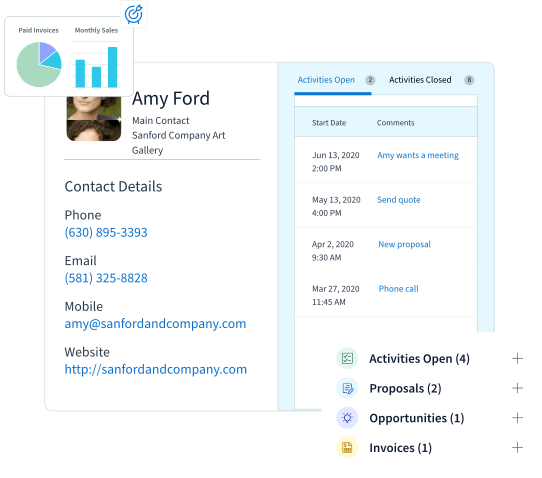
contact MANAGEMENT
Turn leads into paying customers without the runaround

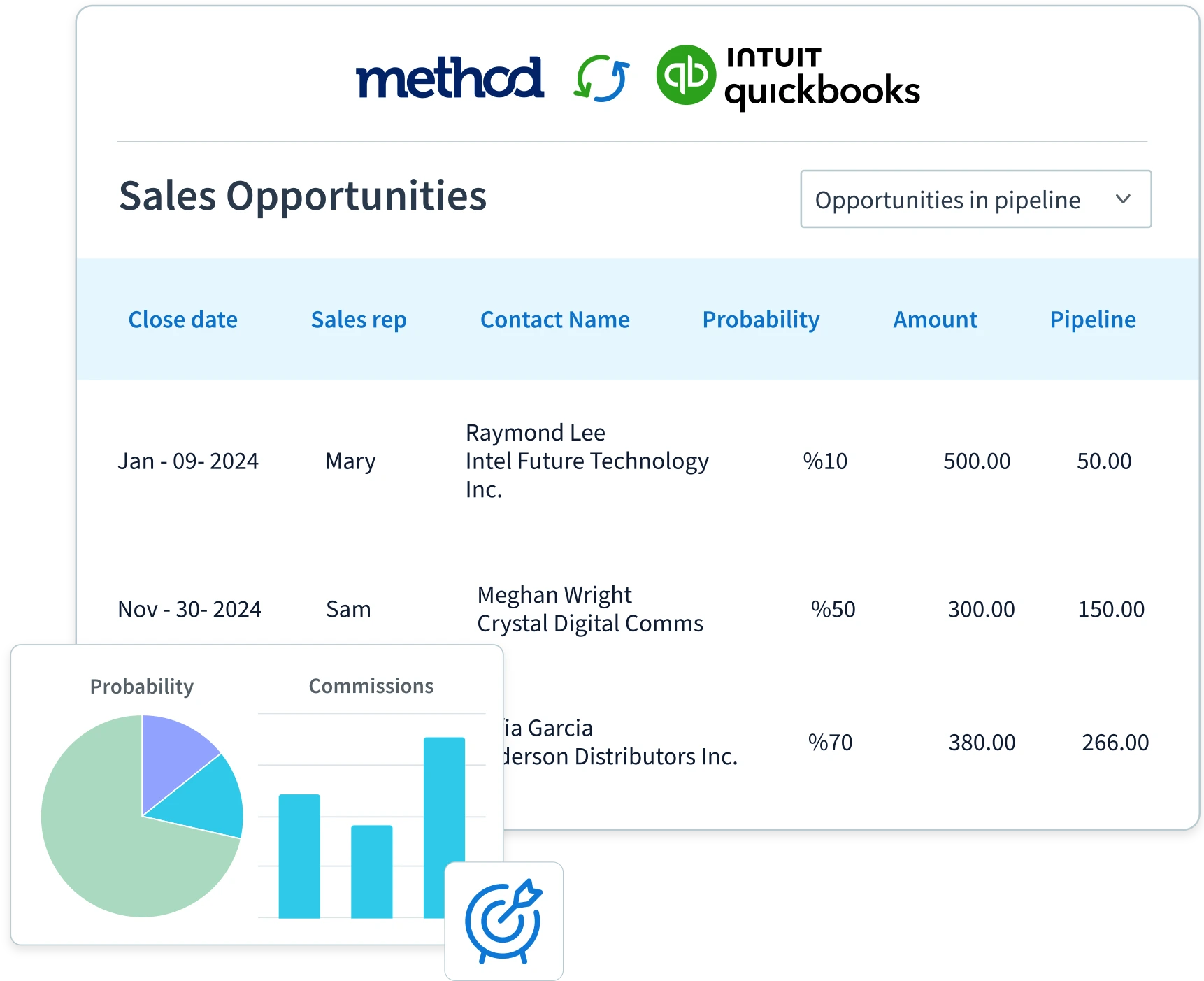
Sales MANAGEMENT
Quote to cash, connected from start to finish
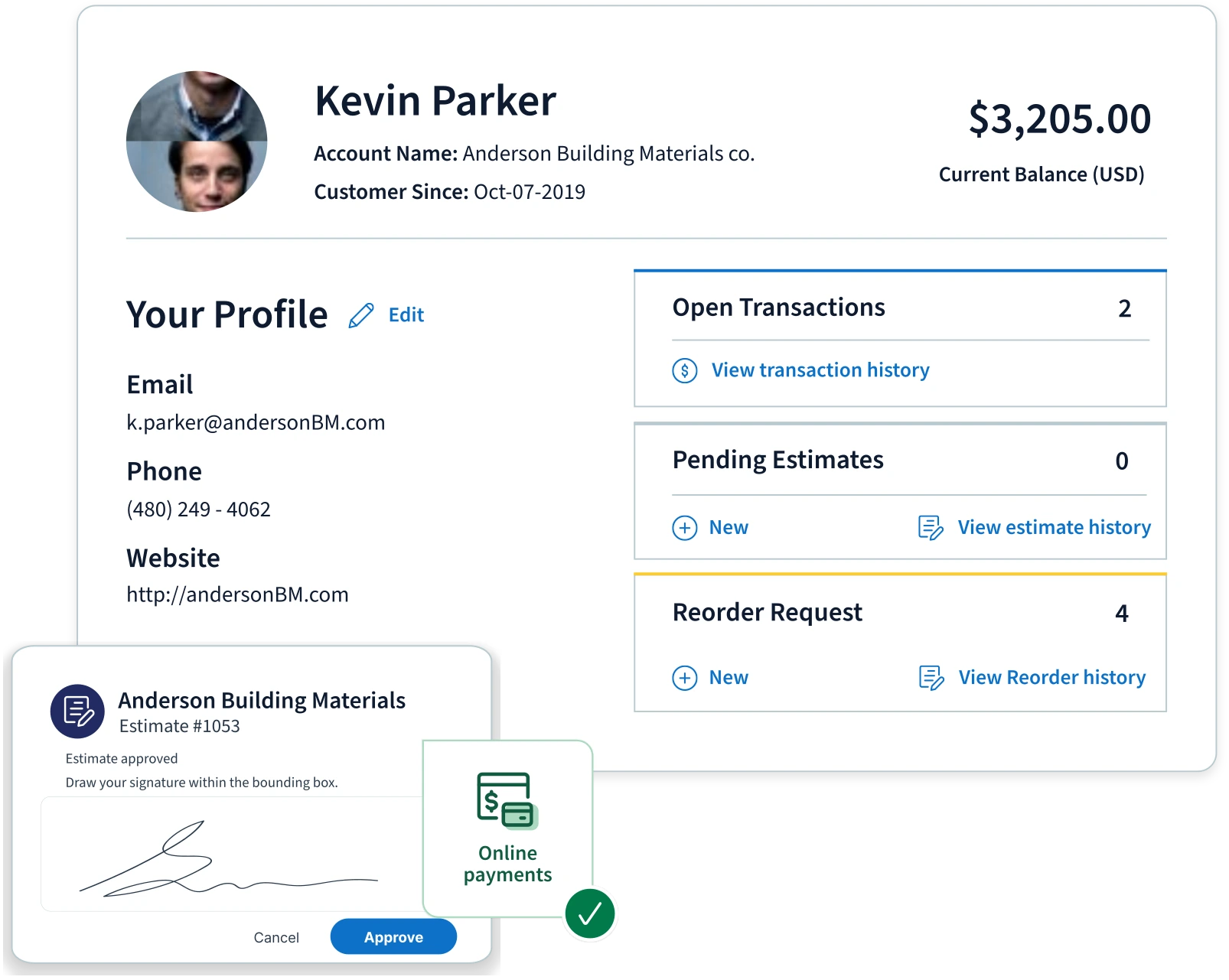
CUSTOMER MANAGEMENT
Give customers control with self-serve portals
The #1 CRM solution for QuickBooks
Method is loved by businesses just like yours — and widely considered a best CRM for distribution business workflows.
18k+
Users trust us
2M+
Estimates created
14yrs
Helping businesses thrive
Everything you need to run your distribution business
From creating estimates to fulfilling orders to processing payments,
Method can help you do it all


Don’t see what you’re looking for?
Talk to our team about building it for you!
With Method CRM, we’ve entered a 21st-century approach to business. Automation, security, and flexibility have empowered us to deliver faster and more efficiently than ever.
Ilya Yunanov
VP of Sales and Marketing, Wearing Williams

FULLY CUSTOMIZABLE
Your business is unique. Your CRM should be too.
Method is the Customizable CRM software solution that adapts to your business, not the other way around. Work with our team to build a solution around your actual distribution processes.
And don’t worry, Method can connect to your favorite apps too:





+ more


And don’t worry, Method can connect to your favorite apps too:
+ more
With Method CRM, we’ve entered a 21st-century approach to business. Automation, security, and flexibility have empowered us to deliver faster and more efficiently than ever.
Ilya Yunanov
VP of Sales and Marketing, Wearing Williams
Get Started
See what Method can do for your business

Let’s talk!
Talk to our sales team to see how Method works for manufacturers.

Try Method for free!
Start a free 10-day trial today. No commitment, no credit card.
WHO WE SERVE
Industries that use Method





Additional resources
Trends and resources for the distribution industry

How to run an efficient warehouse: Top tips for 2026 and beyond
Get the tips and tricks to improve your warehouse efficiency. From inventory management to optimizing processes, this blog has you covered.

3PL warehouse: Your ultimate guide
Managing shipping and logistics is hard. Learn how partnering with a 3PL warehouse increases your efficiency and reduces costs.
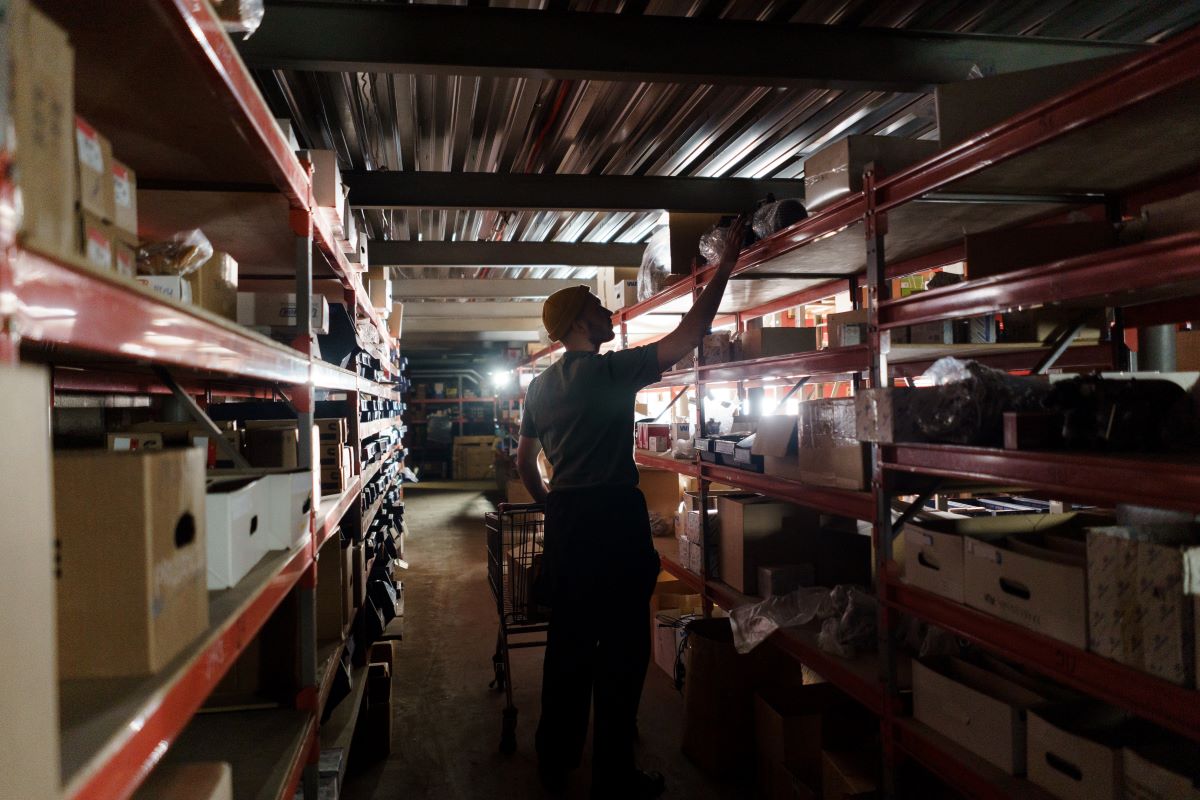
Warehouse inventory control: Top 3 processes you need to automate
Is your warehouse inventory control getting out of hand? Check out this blog for the top 3 inventory processes you need to automate.
CRM for distribution: FAQs
The right CRM (customer relationship management) for wholesale distribution depends on a few key factors: how tightly it connects to your accounting system, whether it supports the full quote-to-cash workflow, and how much it can adapt to your specific business needs. Wholesale distributors deal with B2B account complexity, negotiated pricing, and recurring orders that some generic CRMs aren’t built to handle well. Method is a strong fit for distribution companies because it combines a deep, two-way QuickBooks sync with flexible customization, so your team can manage customer records, quoting, sales orders, and invoicing in one place without a rigid out-of-the-box setup.
A CRM and an ERP system serve different parts of a distribution business. A CRM manages the customer-facing side (leads, contacts, quotes, sales pipelines, and customer interactions). An ERP manages the operational and financial back-end (inventory, purchasing, accounting, and fulfillment). Most distributors use both, and the strongest setups connect them so customer data and financial data stay in sync. For businesses already running QuickBooks, a CRM like Method bridges that gap by syncing customer records, invoices, and payments in real time without replacing your accounting system.
Method helps distributors centralize customer data, quotes, orders, invoices, and sales records in one system so the sales team has better visibility into every account. With pipeline management, custom views, and dashboards, teams can work from real-time information, making it easier to streamline processes, monitor profitability, support sales activities, and ultimately increase sales.
A CRM for distribution can support parts of the order management process, especially when it is designed to connect sales and operational handoffs. Method helps teams manage the workflow around quotes, approvals, invoicing, and status updates, which can improve visibility tied to fulfillment. These are the kinds of CRM features that matter when distributors need more than a basic contact database and want workflow automation that keeps work moving.
Yes. Method includes mobile access so users can view records, update activity, and keep work moving while away from a desk. It is a good fit for teams that need mobile support as part of broader sales, service, and quote to cash workflows, though the exact mobile experience depends on the process you need to support.
Method helps distribution companies connect customer workflows with accounting through real-time, two-way QuickBooks sync, plus support for payments, email, and custom integrations. You can also add packs for sales, purchasing, customer communication, and portal workflows, so Method fits the way your team actually works.
A CRM can improve efficiency in the distribution sector by giving teams one place to manage customer data, quotes, orders, communication, and internal workflows. Instead of relying on spreadsheets, disconnected tools, or manual updates, distributors can use a CRM to streamline follow-up, improve visibility across the sales pipeline, and keep the sales team aligned with real-time information, all of which adds up to a better customer experience across every account.
Not entirely, but it can close a significant gap. A CRM handles the customer relationship and sales workflow side (quotes, approvals, communication, and pipeline visibility). Order management systems handle the operational execution (inventory allocation, picking, packing, and shipping). Where many distributors run into trouble is the handoff between the two: a sales rep closes a deal and then manually recreates the order in a separate system. A well-configured CRM for distribution, especially one that syncs with QuickBooks, can automate that handoff and improve customer satisfaction by reducing delays and errors, even if it doesn’t replace a dedicated OMS entirely.
The most important things to evaluate are QuickBooks or accounting integration, order workflow support, customization flexibility, and mobile access. A generic CRM might handle contacts and pipelines well but fall short on the functionality needed to connect those workflows to actual orders and invoices. For distributors, the handoff from quote to sales order to invoice is where most systems break down, so look for a CRM that manages that entire sequence in one place, not just the top of the funnel. Implementation time and ongoing support also matter more than most buyers expect, especially if your processes are non-standard.