How Go Powertrain connected sales, inventory, and operations without an ERP
To connect siloed systems and reduce manual workflows, Go Powertrain used Method CRM to create a fully connected, customized operation that integrates sales, inventory, and customer management.
Want to see it in action first? Take me there →
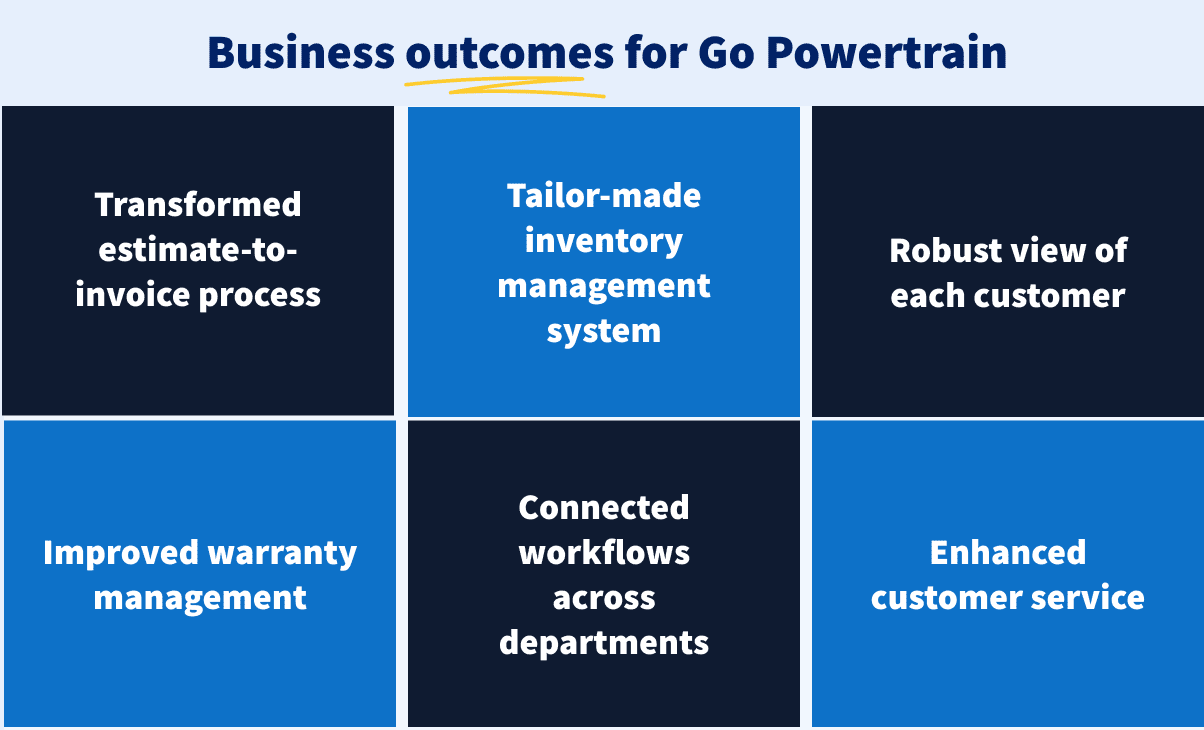
Reduced estimate-to-invoice process to 6 steps from 60
By creating a more efficient estimate → sales order → invoice process, Go Powertrain cut complexity, saving time and minimizing mistakes.
2x’d inventory fill rate
By building a custom inventory system, Go Powertrain doubled its in-stock fill rate and improved inventory turnover.
Improved post-sale customer service
By creating detailed warranty records, Go Powertrain enhanced post-sale service for complex automotive components.
For many months, Aaron Barnhart, CEO of Go Powertrain, was on the hunt for an ERP. Instead, he discovered Method CRM and realized it offered all the functionality he was looking for in an ERP but never found.
Method replaced the company’s need for an ERP entirely and allowed Aaron to build custom workflows and a tailor-made inventory module, resulting in a completely integrated system adopted across departments.
Go Powertrain: The history
When Aaron Barnhart founded Go Powertrain in 2014, he was his first and only employee. Today, the company has grown to 40 employees and serves independent repair facilities, fleets, third-party administrators, and municipalities across the U.S. and internationally. Go Powertrain sells major automotive components, including engines, transmissions, differentials, and transfer cases, along with warranty support for these products.
As CEO, Aaron focuses on discovering new ways to create efficiencies across departments while driving sales growth. Before adopting Method, that growth presented a problem: the systems that once supported the business became the same ones slowing it down.
The challenge: Siloed systems, spreadsheets and manual work
Before Method, Go Powertrain relied on tools like Google Sheets and other standalone software services that didn’t communicate well with each other.
“Our biggest pain point before we came on board with Method was finding a way to blend all of our departments together,” Aaron said.
The team initially searched for an ERP system but hit a roadblock and paused their efforts. They adopted Method as a CRM that syncs directly with QuickBooks, but quickly realized its flexibility could support much more.
“We started with Method as a CRM, but once we realized the opportunity in front of us with being able to develop it into essentially our ERP system, we were able to go full speed ahead on that,” Aaron explained. “It’s been a great success.”
Customizing Method to provide the functionality of an ERP
Out of the box, Method provided estimate, sales order, and invoice functionality for Go Powertrain. From there, the company built out a series of highly customized modules to fit their unique workflows.
“I’m almost positive there’s no other ERP system out there where we’d have the adaptability we do with Method,” Aaron added.
Today, nearly every department uses Method, including sales, cores, warranty, shipping and receiving, and accounting. The company is close to 100% adoption across the business.
What was built with Method
Efficient estimate → sales order → invoice process
Before Method, the process of converting an estimate to a sales order to an invoice required around 60 steps. Data was duplicated repeatedly, leaving room for human error.
After mapping and rebuilding the workflow in Method, the team was able to reduce that process to just six.
This resulted in more efficient sales operations and reduced manual work, improvements that have since been replicated in other departments.
Bolstered customer service due to detailed warranty records
Go Powertrain also customized Method’s Cases module to handle all warranty workflows. The team can now manage claims, track details, and maintain organized records they can easily reference later.
“It’s done an amazing job of being able to keep those records so that we can refer back to them,” Aaron said. “And that’s really upped our customer service when it comes to the backend of our business.”
Given the labor hours tied to the large automotive components they sell, providing strong post-sale warranty customer service is a critical part of the business, Aaron added.
‘Revolutionary’ custom inventory system
Rather than purchasing a separate inventory management system, Go Powertrain built their own from scratch within Method.
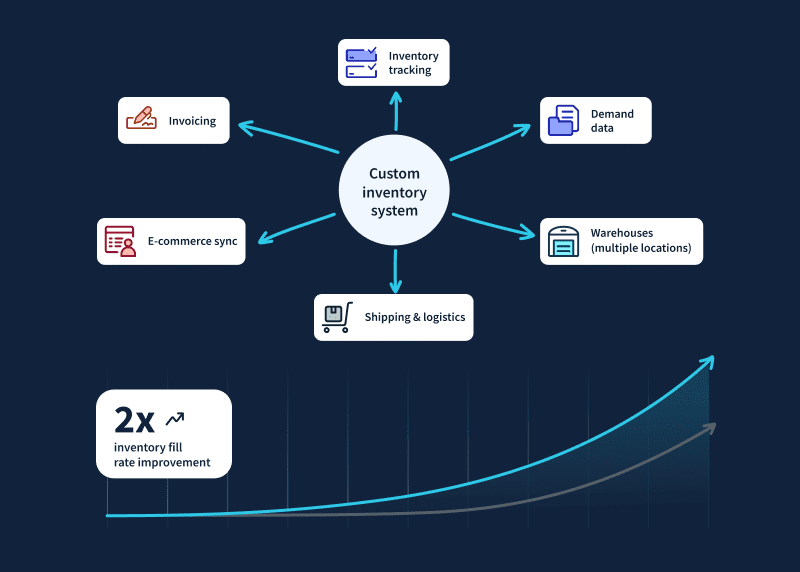
As a result of this system Go Powertrain was able to increase its in-stock fill rate from roughly 20% to 40%, creating a healthier inventory and turning products more frequently.
“I would say Method has been really revolutionary when it comes to how we handle the inventory side,” Aaron said. “We had scoped out multiple inventory-specific programs and actually building one from scratch was the best thing that we could have done.”
Go Powertrain’s inventory module:
- Tracks inventory levels and demand data
- Supports multiple warehouse locations
- Manages the full lifecycle from check-in to shipping and logistics
- Ties directly into invoicing
- Syncs with e-commerce platforms, ensuring changes made in one system are reflected in the other.
By connecting inventory data directly to sales orders, the sales team can see real-time stock availability and location information on the same screen. Automation also helps them quickly fill products.
Holistic customer view
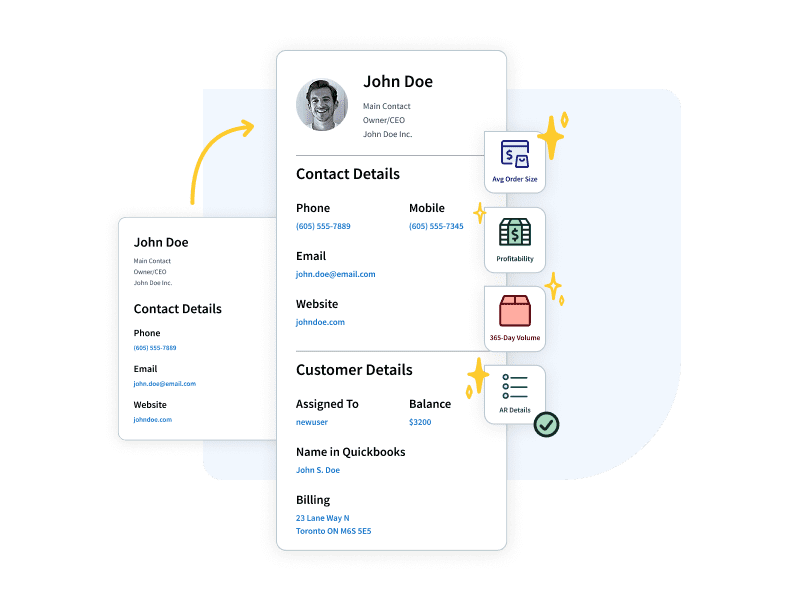
Go Powertrain also enhanced Method’s native Contacts module to create a more robust customer profile.
They track average order size, total order volume over the last 365 days, account health profitability, and accounts receivable status.
Every custom module built in Method ties back to Contacts. With a single click, the team can see everything about a customer in seconds.
The results: Faster processes, higher fill rates, and stronger customer relationships
Go Powertrain began seeing immediate changes after adopting Method, and as they became more familiar with the platform’s customization capabilities, the impact grew significantly.
Key results:
- Boost in customer service quality
- Estimate-to-invoice process reduced to six steps from 60
- Inventory fill rate increased by 100%
- End-to-end inventory visibility
- Ability to reallocate labor from admin work to customer relationships
- A robust view of each customer
“From an efficiency standpoint across all of our departments, it has saved us a tremendous amount of money,” Aaron concluded. “There’s a lot of manual tasks that we’ve been able to automate that have saved a complete position that we would have had to hire for.”