Choosing the wrong CRM costs manufacturers months of re-implementation. This guide compares 16 options and identifies the strongest manufacturing CRM fit by company size, accounting setup, and sales process, so you can make the call without testing them all yourself.
TL;DR: Best CRM for manufacturing
A manufacturing CRM connects leads, quotes, orders, and customer follow-ups in one system. The best choice depends on your size, sales process, and accounting setup.
- Best for QuickBooks manufacturers: Method CRM. Native two-way sync and customizable quote-to-cash workflows.
- Best for enterprise: Salesforce. Built for complex sales teams with a large integrations ecosystem.
- Best budget option: Zoho CRM. Flexible pipelines starting at $14/user/month.
- Best for small sales teams: Pipedrive. Visual pipeline with low setup overhead.
- Best CRM + production combo: MRPeasy or Odoo. Sales and manufacturing managed in one system.
- CRM handles customer-facing workflows; ERP handles production and back-office. Most manufacturers need both.
- QuickBooks-based manufacturers should prioritize two-way sync to eliminate duplicate data entry between sales and accounting teams.
| CRM | Best for | Starting price | QuickBooks sync | Free trial |
|---|---|---|---|---|
| Method CRM | QuickBooks-based manufacturers needing quote-to-cash workflows | $27/user/month | Two-way native sync | Yes |
| Salesforce | Large manufacturers with complex sales teams | $25/user/month | Via third-party connector | Yes |
| Zoho CRM | Small to mid-sized manufacturers on a budget | $14/user/month | Via integration | Yes |
| HubSpot CRM | Manufacturers focused on lead gen and marketing | $7/user/month | Limited, via connector | Yes |
| Pipedrive | Small sales teams that need simple pipeline tracking | $14/user/month | Native for QuickBooks Online | Yes |
| Freshsales | Small teams wanting built-in communication tools | $9/user/month | Via third-party | Yes |
| Nutshell | B2B sales teams wanting simple reporting | $13/user/month | One-way sync, native for QuickBooks Online | Yes |
| MRPeasy | Small manufacturers needing CRM and production together | $44.92/user/month | One-way sync, native for QuickBooks Online | Yes |
| Odoo | Manufacturers wanting one system across all departments | $24.90/user/month | Via third-party connector | Yes (one app) |
| NetSuite CRM | Mid-market and enterprise manufacturers | Custom pricing | Via third-party connectors | No |
| SugarAI | Mid-sized manufacturers with complex sales cycles | $59/user/month | Via third-party | Yes |
| Insightly | Manufacturers where deals turn into projects | $29/user/month | Mostly one-way sync | Yes |
| monday sales CRM | Teams that want visual pipeline and collaboration | $12/user/month | Native for QuickBooks Online | Yes |
| Claritysoft | Small to mid-sized teams needing flexible reporting | $49/user/month | Via third-party connectors | No |
| Maximizer CRM | Relationship-driven sales teams | $65/user/month | Limited | No |
| Thryv | Small service-based manufacturers | $646/month | Native for QuickBooks Online | No |
How we evaluated these CRMs
We assessed each CRM based on manufacturing-specific criteria: QuickBooks integration depth, quote-to-cash workflow support, customization flexibility, pricing transparency, and suitability for B2B sales cycles. Where possible, we cross-referenced user reviews on G2 and Capterra and drew on direct conversations with manufacturers who evaluated multiple tools before choosing.
What is a CRM for manufacturing?
A CRM for manufacturing is customer relationship management software that helps manufacturers manage leads, quotes, customer communication, sales activity, order handoffs, service requests, and account history in one place.
Unlike a generic CRM, a manufacturing CRM needs to support longer sales cycles, repeat orders, custom quotes, distributor or dealer relationships, production dependencies, and accounting data.
For example, a manufacturer may need to track a lead from the first inquiry to the quote, approval, sales order, invoice, payment, and post-sale service request. A manufacturing CRM gives sales, service, accounting, and operations teams one shared view of that customer journey.
Why do manufacturers need CRM software?
Manufacturers need CRM software when customer, quote, order, and follow-up data becomes too important to manage through spreadsheets, inboxes, or disconnected tools. According to Method CRM’s internal analysis of over 465 prospect calls, 82% of manufacturers cite order management as their primary pain point—not just tracking leads, but keeping quotes, orders, invoices, and customer communication connected across teams.
Manufacturing sales rarely follows a simple lead-to-close path. A customer may request a custom quote, ask about a previous order, need updated pricing, speak with several team members, or require service after delivery. If those details live in different systems, teams lose visibility and customers wait longer for answers.
A manufacturing CRM helps companies:
- Centralize customer, prospect, vendor, distributor, and dealer information.
- Track leads, opportunities, estimates, quotes, and follow-ups.
- Connect sales activity to orders, invoices, and payments.
- Automate reminders, approvals, customer updates, and internal handoffs.
- Give teams visibility into customer history and transaction activity.
- Reduce duplicate data entry across sales, accounting, and operations.
- Improve forecasting, pipeline visibility, and customer service.
When do manufacturers outgrow spreadsheets or generic CRMs?
Manufacturers usually outgrow spreadsheets or generic CRMs when sales, quoting, customer service, and accounting workflows start depending on the same customer data.
Spreadsheets can work when a business is small and only one or two people manage customer relationships. But as soon as multiple people need to manage quotes, follow-ups, approvals, repeat orders, invoices, or service requests, spreadsheet-based systems become difficult to control.
Common signs that a manufacturer needs a CRM include:
- Quotes are delayed because product, pricing, or margin details live in separate files.
- Sales and accounting teams re-enter the same customer or order data.
- Customer follow-up depends on memory, inbox searches, or sticky notes.
- Order updates require manual check-ins across email, spreadsheets, or chat.
- Managers cannot see pipeline, quote status, order history, and customer activity in one place.
- QuickBooks has the financial data, but non-accounting teams need customer and transaction visibility.
What spreadsheet-based manufacturing workflows usually miss
Spreadsheets usually become inefficient once manufacturers need multiple teams to act on the same customer or order data. A sales rep may update a quote, accounting may update an invoice, operations may update production status, and customer service may field the customer’s follow-up call.
If those updates live in separate files, inboxes, or disconnected tools, no team has the full customer picture.
That is why manufacturers usually need CRM when customer data starts affecting more than sales. Once quotes, orders, invoices, production timing, and service requests depend on the same account record, a shared CRM becomes operational infrastructure instead of just a contact database.
CRM vs. ERP for manufacturing: What is the difference?
A CRM manages customer-facing manufacturing workflows, including leads, quotes, communication, follow-ups, service cases, and account history. An ERP manages internal operations such as production planning, procurement, inventory, finance, and fulfillment.
Manufacturers often need both because sales, operations, and accounting depend on connected data, but they do not all perform the same work.
| System | What it manages | Manufacturing use case |
|---|---|---|
| CRM | Customer relationships, leads, quotes, follow-ups, sales activity, and service interactions. | Helps teams manage customer-facing workflows from inquiry to quote, order, invoice, and follow-up. |
| ERP | Inventory, purchasing, production, fulfillment, finance, and back-office operations. | Helps teams manage internal resources, production planning, procurement, and operational execution. |
What types of manufacturing CRM systems are there?
The three main types of manufacturing CRM systems are operational CRM, analytical CRM, and collaborative CRM. Operational CRM automates sales and service workflows, analytical CRM turns customer and sales data into insights, and collaborative CRM helps departments share customer information.| CRM system type | What it does for manufacturers | Best fit |
|---|---|---|
| Operational CRM | Automates sales, marketing, service, follow-up, and workflow tasks. | Manufacturers with manual handoffs or repetitive customer-facing processes. |
| Analytical CRM | Analyzes customer, sales, order, and pipeline data to identify trends. | Manufacturers that need better forecasting, account insights, or demand visibility. |
| Collaborative CRM | Shares customer information across sales, service, operations, and accounting teams. | Manufacturers with multiple departments involved in the customer experience. |
Which manufacturing teams should use a CRM?
Sales, marketing, customer service, production, operations, and accounting-adjacent teams can all use a manufacturing CRM when they need shared access to customer, quote, order, or service information.
| Team | How they use manufacturing CRM | Why it matters |
|---|---|---|
| Sales | Tracks leads, quotes, opportunities, follow-ups, and customer history. | Keeps deals moving and reduces missed follow-ups. |
| Marketing | Uses customer and sales data to segment campaigns and target repeat buyers. | Improves campaign relevance and supports demand generation. |
| Customer service | Manages support cases, order questions, and service history. | Helps customers get faster, more informed answers. |
| Production or operations | Uses customer demand, quote, and order context to plan work. | Improves coordination between sales promises and operational capacity. |
| Accounting-adjacent teams | Reviews customer, invoice, estimate, payment, or transaction context when needed. | Reduces unnecessary back-and-forth with accounting. |
What features should the best CRM for manufacturing include?
The best CRM for manufacturing should include custom workflows, quote and estimate management, accounting integration, sales pipeline tracking, automation, reporting, mobile access, and customer service tools.
Manufacturers should evaluate CRM software around their actual workflows, not just the number of features listed on a pricing page.
Custom workflows, fields, dashboards, and approvals
Manufacturers should choose a CRM that can be configured around their real sales and operational workflows. That includes custom fields for product, quote, distributor, dealer, or order details; custom dashboards for sales and operations teams; and approval workflows for pricing, margins, discounts, or production handoffs.
This matters because manufacturing sales rarely follow a simple lead-to-close path. Many teams need quote reviews, customer-specific pricing, production checks, accounting handoffs, or post-sale service steps before an order is complete.
Quote-to-cash management
A manufacturing CRM should help teams manage the full quote-to-cash process, including leads, quotes, estimates, approvals, sales orders, invoices, payments, and follow-ups.
This gives teams one connected workflow instead of forcing them to rebuild the same customer and order information across spreadsheets, email, accounting software, and project notes.
Accounting integration
For manufacturers using QuickBooks or another accounting system, CRM and accounting data should stay connected. This reduces duplicate entry and helps sales, service, and operations teams access the customer and transaction details they need without working directly inside accounting software.
Important accounting integration features include:
- Customer sync.
- Estimate and invoice sync.
- Payment visibility.
- Sales order or transaction visibility.
- Two-way data updates.
- Controlled access for non-accounting users.
Sales forecasting and pipeline visibility
Manufacturers need to know what revenue is likely to close, which quotes are active, which accounts need follow-up, and where deals are slowing down. A CRM should make pipeline data visible without forcing managers to chase updates manually.
Useful reporting includes:
- Pipeline by rep, product line, or customer type.
- Quote conversion rate.
- Sales cycle length.
- Revenue forecast.
- Repeat order activity.
- Lost deal reasons.
Customer and distributor management
Many manufacturers sell through repeat buyers, dealers, distributors, contractors, or account-based relationships. A CRM should make it easy to manage customer-specific history, pricing, contacts, communication, orders, and follow-up tasks.
Mobile access
Sales reps, field teams, service teams, and managers often need customer information outside the office. Mobile CRM access helps teams update notes, view customer records, manage follow-ups, and check account details without waiting until they are back at a desk.
Workflow automation
Manufacturing teams should use CRM automation to reduce repetitive admin work. Useful automations include:
- Quote follow-up reminders.
- Approval notifications.
- Lead assignment.
- Customer status updates.
- Post-sale service tasks.
- Renewal or reorder reminders.
- Internal handoff notifications.
Reporting and profitability insights
A CRM should help manufacturers understand which customers, products, quotes, and sales activities drive revenue. Strong reporting helps teams make better decisions about pipeline health, sales performance, customer service, and operational planning.
Why customization matters more in manufacturing than in generic sales teams
No two manufacturers manage sales, quoting, approvals, production handoffs, and repeat orders in exactly the same way. A manufacturer selling custom-built equipment has different CRM requirements than a distributor selling repeat SKUs or a shop managing service requests after installation.
That is why manufacturing teams should prioritize CRM systems that support custom fields, screens, reports, workflows, and automations. The CRM should adapt to the manufacturer’s process instead of forcing every team into a generic pipeline.
What generic CRM systems often miss for manufacturers
Generic CRM systems usually manage contacts, deals, and follow-ups well. Where they fall short for manufacturers is the handoff between customer-facing activity and operational execution.
A manufacturer does not just need to know that a deal closed. The team also needs to know what was quoted, whether pricing was approved, whether accounting has the right customer data, whether the order has been created, and whether the customer has been updated.
That is why manufacturing CRM requirements should be evaluated around workflows, not just features. A CRM that looks strong for a standard sales team may still fail a manufacturer if it cannot support quote approvals, repeat orders, customer-specific pricing, service history, accounting sync, or cross-team visibility.
How does a manufacturing sales CRM improve the sales cycle?
A manufacturing sales CRM improves the sales cycle by giving sales teams one place to manage leads, quotes, follow-ups, customer history, and order-related communication. When the CRM connects with accounting software like QuickBooks, sales teams can also access customer and transaction data without waiting on accounting.
For manufacturers, the sales cycle often involves more than a simple quote and close. Reps may need to check previous orders, confirm customer-specific pricing, send estimates, manage purchase or sales orders, and follow up after delivery.
When those details live in disconnected systems, deals slow down and customers wait longer for answers.
A manufacturing sales CRM helps teams:
- Follow up with customers faster after quotes, inquiries, or service requests.
- Track every lead, estimate, and sales order from one customer record.
- Shorten the sales cycle by reducing manual handoffs between sales and accounting.
- Give customers faster answers about orders, invoices, and account history.
- Improve close rates by standardizing follow-up tasks and quote workflows.
Why QuickBooks sync matters for manufacturing sales teams
For QuickBooks-based manufacturers, accounting data is often part of the sales conversation. Reps may need to confirm customer details, past invoices, estimates, balances, purchase orders, or sales orders before they can give a customer an accurate answer.
If the CRM does not sync with QuickBooks, sales teams either wait on accounting or re-enter data manually.
A QuickBooks-connected manufacturing CRM reduces that friction by giving customer-facing teams controlled access to the customer and transaction data they need while keeping accounting as the system of record.
WATCH: Learn how a shipping container company handled a massive surge in demand by using Method CRM.
2026 Comparison: Best CRM solutions for manufacturing
The best CRM for manufacturing depends on the company’s size, sales process, accounting system, workflow complexity, and need for customization. QuickBooks-based manufacturers should prioritize CRM software with two-way accounting sync, workflow automation, quote management, and flexible customization.
Before choosing a CRM, manufacturers should compare each option by use case, implementation needs, integrations, reporting, pricing, and manufacturing workflow fit.
Method CRM
Best for:
QuickBooks-based manufacturers that need customizable quote-to-cash workflows.
Key manufacturing CRM features:
Two-way QuickBooks and Xero sync, custom workflows, customer portals, mobile access, reporting, estimates, invoices, payments, and automation.
Pros:
- Save time and enhance accuracy with real-time data sync between Method and QuickBooks/Xero.
- Offers reusable templates for personalized emails, reports, invoices, and estimates.
- Provides customization services to create a tailored solution and automate business processes.
Limitations:
- Method CRM is currently only available in English to users of QuickBooks or Xero.
Pricing:
Method CRM offers three subscription options (billed annually for lower rates, monthly also available):
- Contact Management: $27 per user per month
- CRM Pro: $45 per user per month
- CRM Enterprise: $73 per user per month
- Method CRM also offers a free trial, no credit card required
Manufacturing fit:
Method CRM is strongest for manufacturers that need CRM, accounting data, and workflow automation connected in one customizable system.
Salesforce
Best for:
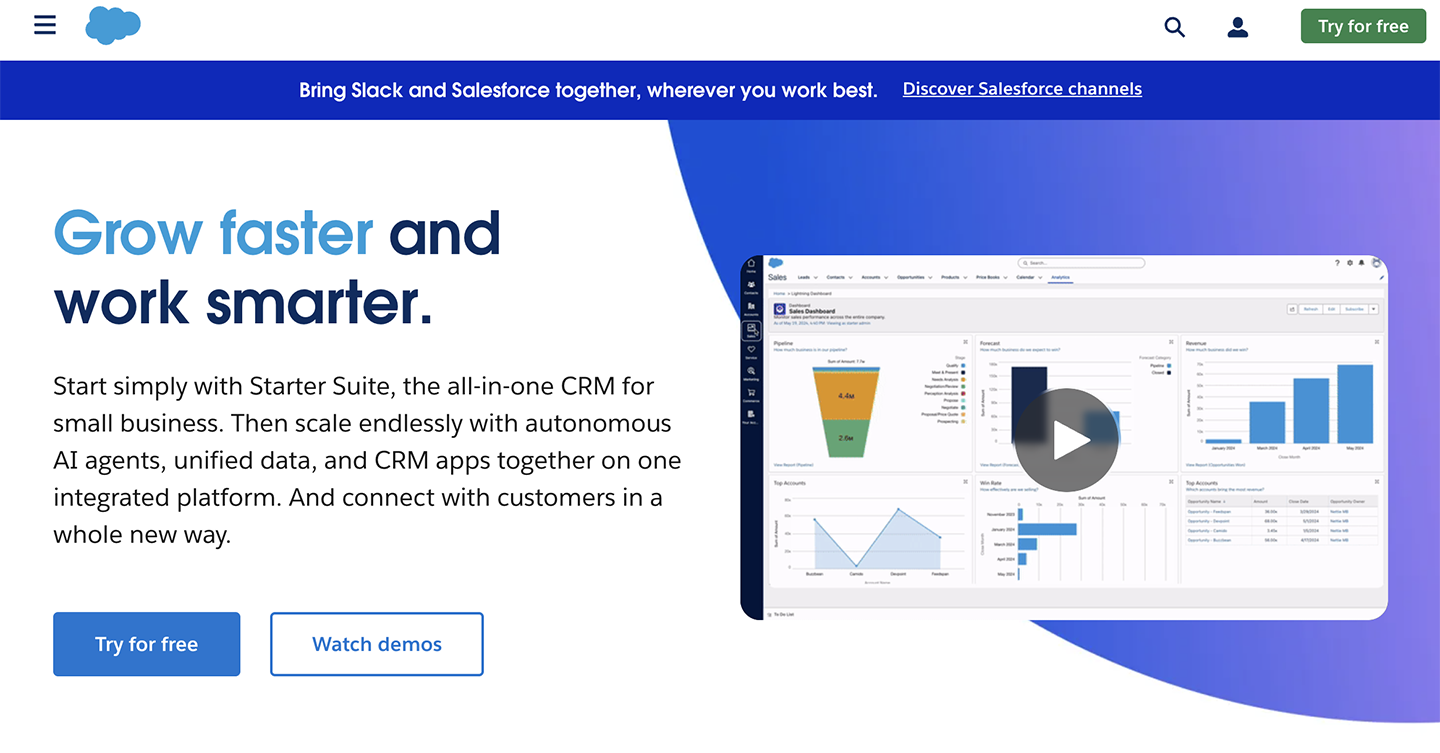
Large or scaling manufacturers that need enterprise-grade CRM, advanced reporting, AI capabilities, and a broad ecosystem of integrations.
Key manufacturing CRM features:
Comprehensive marketing automation (Pardot, Email Studio, Data Studio, Social Studio), robust contact and opportunity management with a 360-degree customer view, and customizable workflow automation. Includes AI capabilities (Agentforce) for insights and task automation.
Pros:
- Highly scalable and suitable for businesses of all sizes, particularly large enterprises.
- Offers a vast ecosystem of integrated tools and extensive customization options.
- Strong analytics and reporting capabilities.
Limitations:
- Can be one of the more expensive CRM solutions.
- Its extensive features can result in a steep learning curve for new users.
Pricing:
Salesforce offers various Sales Cloud editions (billed annually):
- Starter Suite: $25 per user per month
- Pro Suite: $100 per user per month
Manufacturing fit:
Salesforce works well for manufacturers with complex sales teams, multiple departments, and dedicated admin or implementation resources.
3. Zoho CRM
Best for:
Small to mid-sized manufacturers that want an affordable, customizable CRM with sales automation, analytics, and a broad app ecosystem.
Key manufacturing CRM features:
Efficient lead and contact management, open and closed deals management, sales and marketing automation, advanced analytics and reporting, and an AI assistant (Zia) for intelligent insights. It offers integrations with popular business tools like G Suite, Office 365, Slack, QuickBooks, Xero, Mailchimp, and Zapier.
Pros:
- Highly cost-effective with a standard plan for small teams.
- Offers a comprehensive feature set that is highly customizable to adapt to unique business processes.
- Scalable for businesses of all sizes.
Limitations:
- The extensive feature set can lead to a steep learning curve for new users.
- Some advanced customization options are limited to higher-priced tiers.
- Some users report occasional delays in customer support response times.
Pricing:
Zoho CRM offers flexible pricing tiers (billed annually for lower rates, monthly also available):.
- Standard: $14 per user per month
- Professional: $23 per user per month
- Enterprise: $40 per user per month
- Ultimate: $52 per user per month
Manufacturing fit:
Zoho CRM is a solid fit for manufacturers that need flexible sales pipeline tracking and general business integrations at a lower price point.
HubSpot CRM

Best for:
Manufacturers that want an easy-to-use CRM for sales, marketing, lead capture, email tracking, and customer communication.
Key manufacturing CRM features:
HubSpot CRM offers email tracking and marketing tools, shared inbox for customer messages, quoting and deal management and customizable dashboards.
Pros:
- Sends automatic emails after quotes or service calls.
- Keeps sales and support records in one place.
- Offers free and paid plans depending on your needs.
HubSpot CRM is a good option for manufacturers that want simple tools to improve customer experience.
Limitations:
- Limited native accounting sync
- Limited customer service portal; no built-in invoicing or order portal.
- Users have reported complex pricing, with essential features hidden behind paywalls.
Pricing:
- Sales Hub Starter: $7 per seat per month (billed annually)
- Professional: $90 per seat per month (billed annually)
- Enterprise: Starts at $150 per seat per month
Manufacturing fit:
HubSpot is strongest for manufacturers focused on lead generation, sales follow-up, and marketing automation.
Nutshell CRM
Best for:
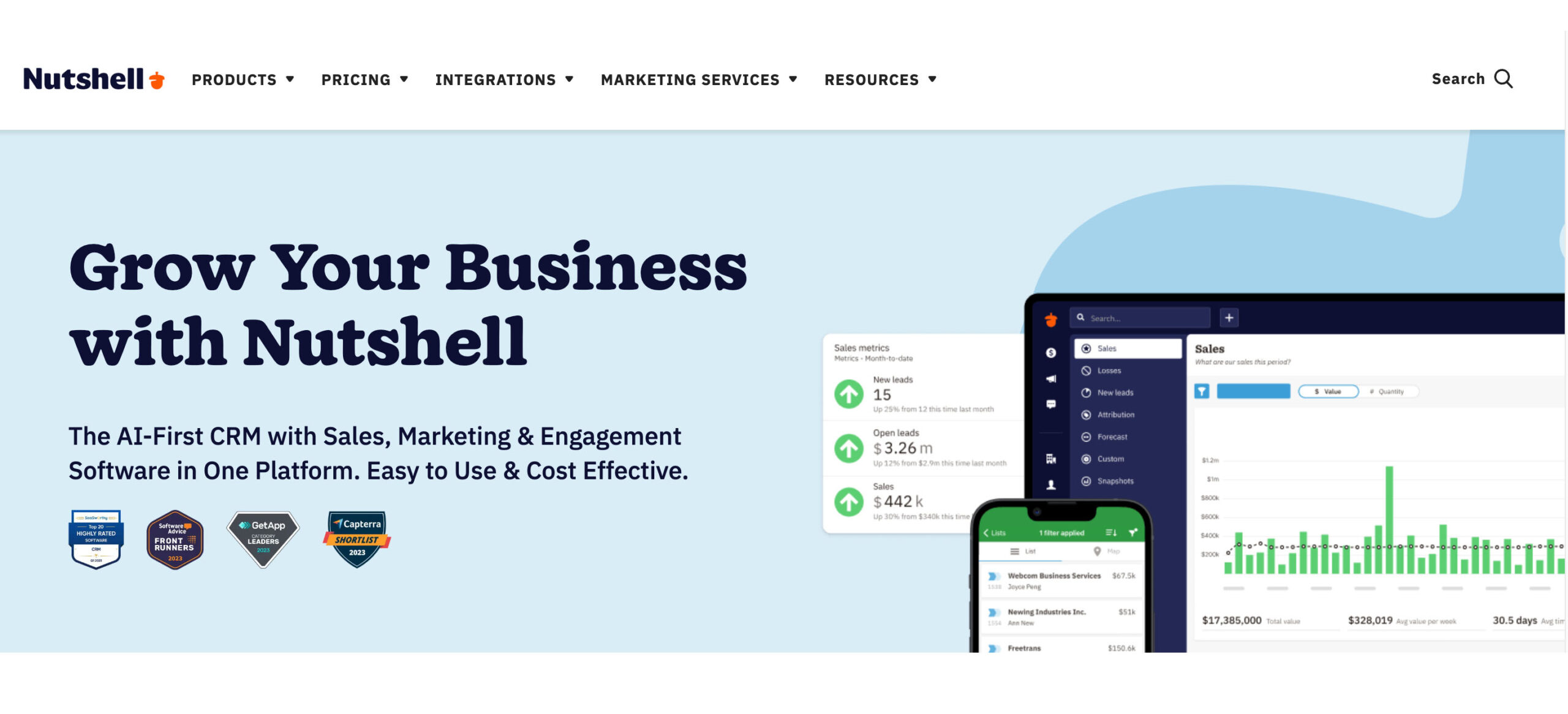
Small B2B manufacturing sales teams that want a simple CRM for contact management, pipeline tracking, email outreach, and reporting.
Key manufacturing CRM features:
User-friendly contact and pipeline management, sales automation, marketing and email automation, direct creation and tracking of quotes and invoices, and robust reporting and analytics. Includes features for team collaboration and integrations with various third-party apps.
Pros:
- Known for its ease of use and intuitive interface, making it accessible for new CRM users.
- Offers affordable and transparent pricing with free live support for all customers.
- Strong reporting capabilities for sales forecasting and performance tracking.
Limitation:
- Some users have reported that the mobile application’s user interface can be less intuitive.
- Workflow restrictions and integration issues have been noted by some users.
- Certain advanced features may incur additional costs.
Pricing:
Nutshell CRM offers several pricing tiers (billed annually for lower rates, monthly also available):
- Foundation: $13 per user per month
- Growth: $25 per user per month
- Pro: $42 per user per month
- Business: $59 per user per month
- Enterprise: $79 per user per month
Manufacturing fit:
Nutshell works well for manufacturers that need a straightforward sales CRM without heavy implementation.
Freshsales
Best for:
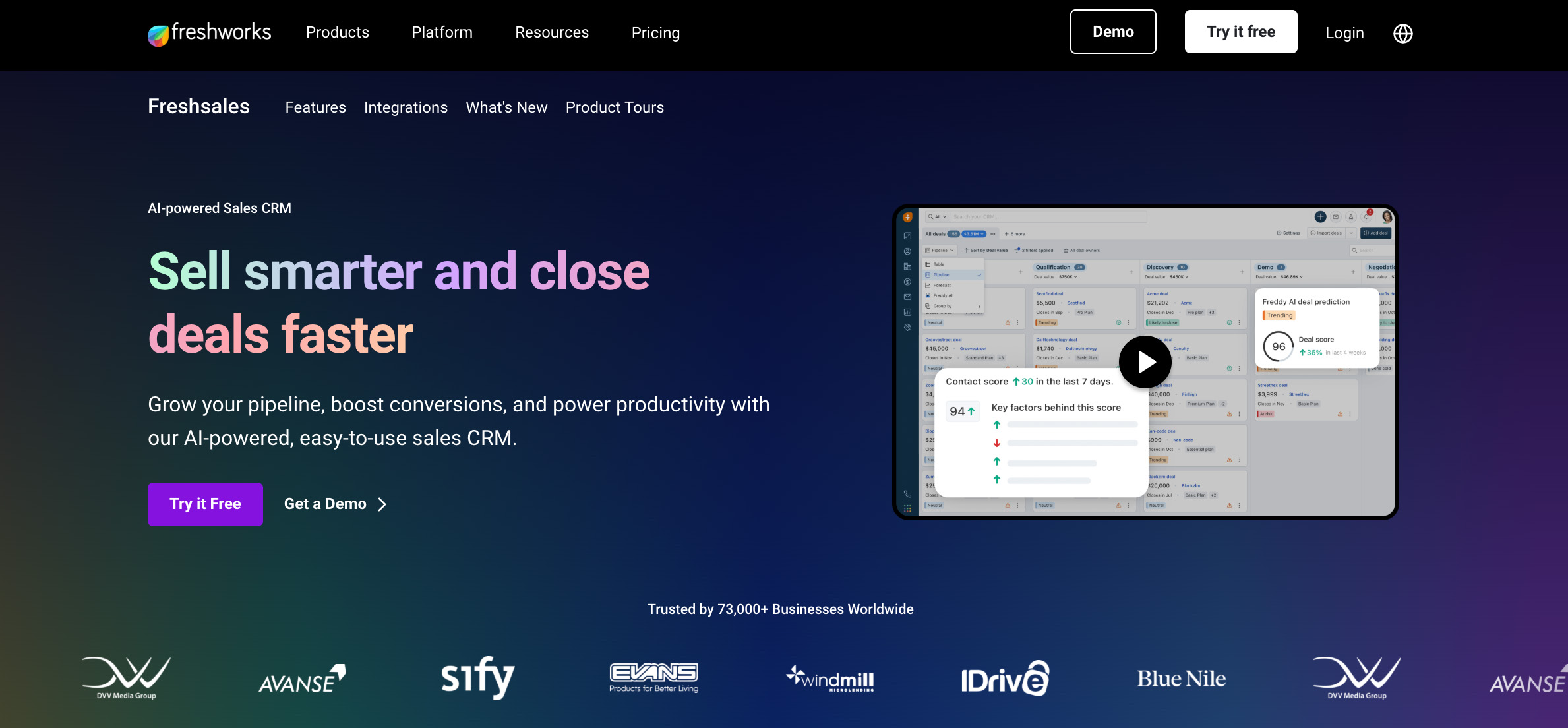
Small and mid-sized manufacturers that want an easy-to-use sales CRM with built-in communication tools, pipeline management, AI-assisted selling, and optional CPQ functionality.
Key manufacturing CRM features:
Lead and contact management, customizable sales pipelines, workflow automation, built-in phone and email, AI-powered lead scoring, reporting, mobile access, and optional CPQ for quotes, invoices, contracts, and sales documents.
Pros:
- Simple to adopt compared with enterprise CRMs
- Includes built-in communication tools and AI features that help sales teams prioritize leads and follow up faster.
Limitations:
- Freshsales is less manufacturing-specific than ERP-style platforms.
- Does not offer the same depth of production, inventory, accounting, or quote-to-cash customization as systems built around operational workflows.
Pricing:
Freshsales offers a free plan for up to three users. Paid plans start at $9 per user per month, with higher tiers available for more advanced CRM features.
Manufacturing fit:
Freshsales is a good fit for manufacturers that mainly need to organize leads, deals, follow-ups, and sales communication.
Thryv (previously LeadMaster)
Best for:
Small service-based businesses that want CRM, scheduling, billing, payments, reviews, and customer communication tools in one platform.
Key manufacturing CRM features:
Job scheduling, billing and invoicing, marketing automation.
Pros:
- Centralized tools for different business needs, quick and helpful customer service, customer engagement across channels.
Limitations:
- Some users have reported a steep learning curve in the beginning.
- A lack of automation surrounding billing and invoicing is another limitation of this CRM for the manufacturing industry.
Pricing:
Thryv offers three subscription plans:
- Kickstart: $646 per month
- Ignite: $881 per month
- Accelerate: $1,475 per month
Pricing may vary based on business size and features included.
Manufacturing fit:
Thryv can work for small manufacturers with service-heavy operations, but it is not built for production workflows, inventory complexity, distributor management, or manufacturing-specific sales processes.
Maximizer CRM
Best for:
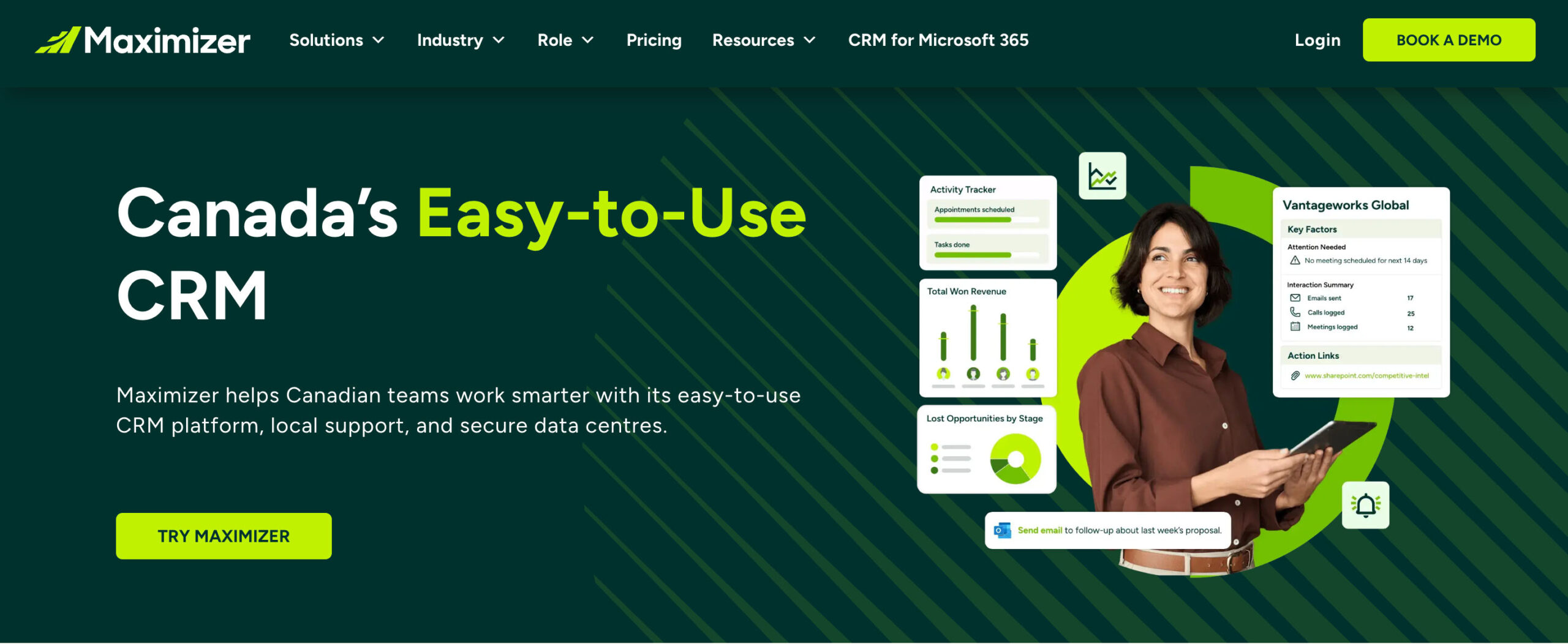
Relationship-driven teams, especially financial services or advisor-style businesses, that need structured client management, reporting, and sales activity tracking.
Key manufacturing CRM features:
Knowledge base management, support ticket management, goal setting/tracking for Canadian businesses.
Pros:
- Centralized sales data, ongoing sales team improvement, informed decision-making through customized reporting.
Limitations:
- Users have reported some limited capacities and some issues with syncing integrations.
Pricing:
Maximizer offers three subscription plans:
- Base: $65 per user per month (billed annually, minimum 3 users)
- Sales Leaders: $79 per user per month (billed annually, minimum 5 users)
- Financial Advisors: $79 per user per month (billed annually, minimum 3 users)
- On-premise pricing is available upon request
Manufacturing fit:
Maximizer can support contact management and sales tracking, but manufacturers will likely need additional tools for quoting, inventory, accounting sync, production workflows, and operational automation.
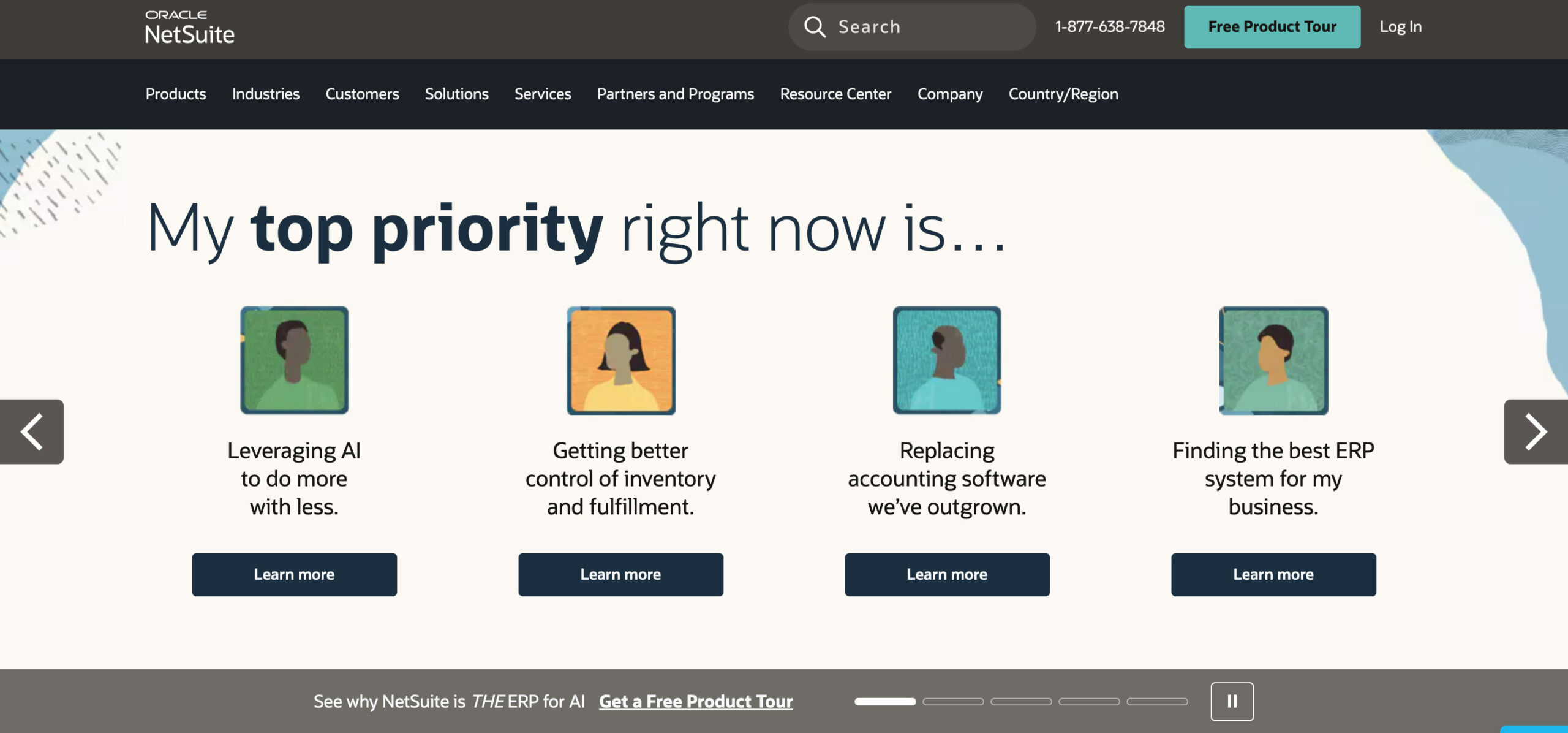
NetSuite CRM
Best for:
Mid-market and enterprise manufacturers that want CRM capabilities connected to a broader ERP system.
Key manufacturing CRM features:
Marketing automation, customer service management, partner relationship management.
Pros:
- Centralized view of customer data, visibility into sales pipeline and forecasts, streamlined marketing campaign management.
Limitations:
- Third-party integration can be challenging without a specialized support team.
- Many users have reported a steep learning curve.
Pricing:
Pricing for this manufacturing CRM is calculated on a custom basis.
Manufacturing fit:
NetSuite is a strong fit for manufacturers that need ERP-level financials, inventory, order management, and business-wide visibility.
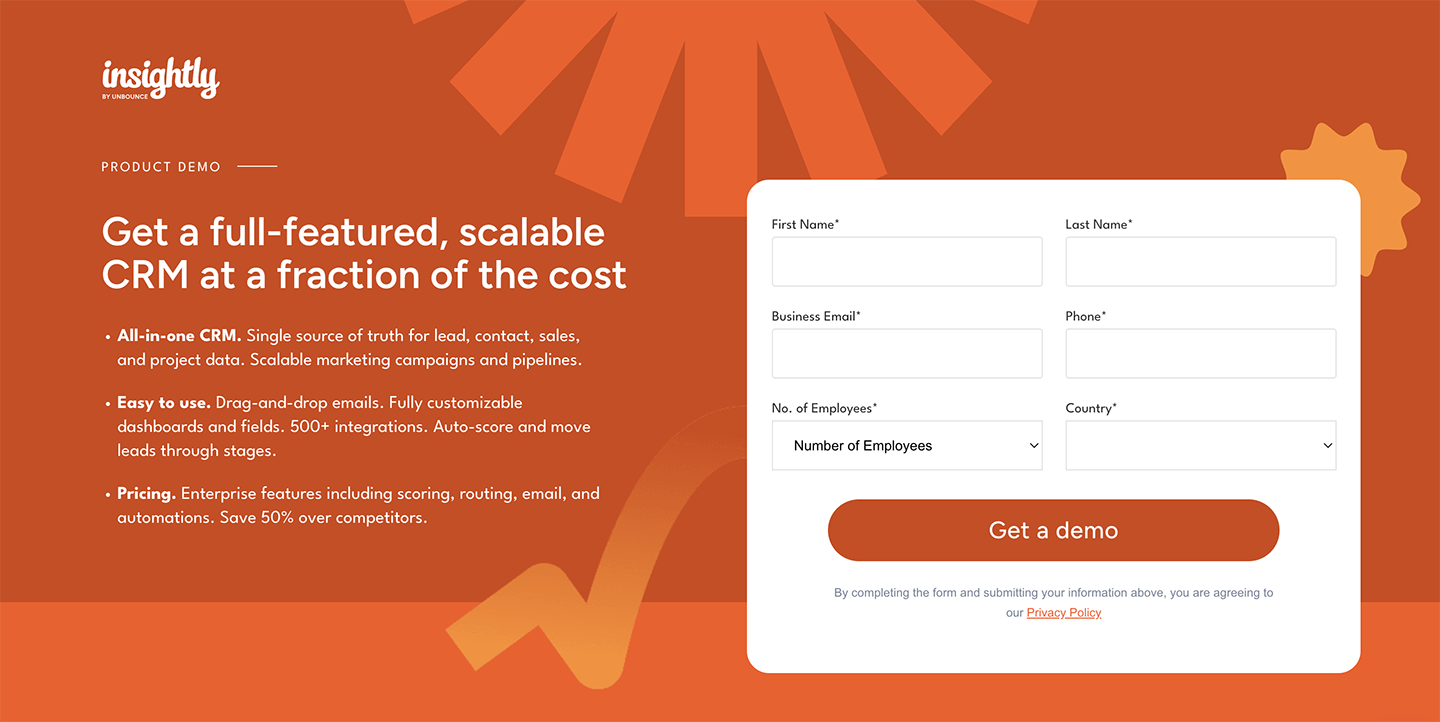
Insightly
Best for:
Manufacturers that need CRM plus project management for post-sale delivery, implementation, or customer work.
Key manufacturing CRM features:
Lead routing, advanced project management, built-in phone feature, integrations with over 250 apps.
Pros:
- Business cards easily scanned on mobile app, easy conversion of won opportunities into projects, customizable fields to control how you capture data.
Limitations:
- Insightly does not offer strong reporting.
- Customization is also limited, giving you only a high-level view of your business.
Pricing:
Insightly offers three subscription plans:
- Plus: $29 per user per month (billed annually)
- Professional: $49 per user per month (billed annually)
- Enterprise: $99 per user per month (billed annually)
Manufacturing fit:
Insightly fits manufacturers where deals turn into projects or ongoing customer work.
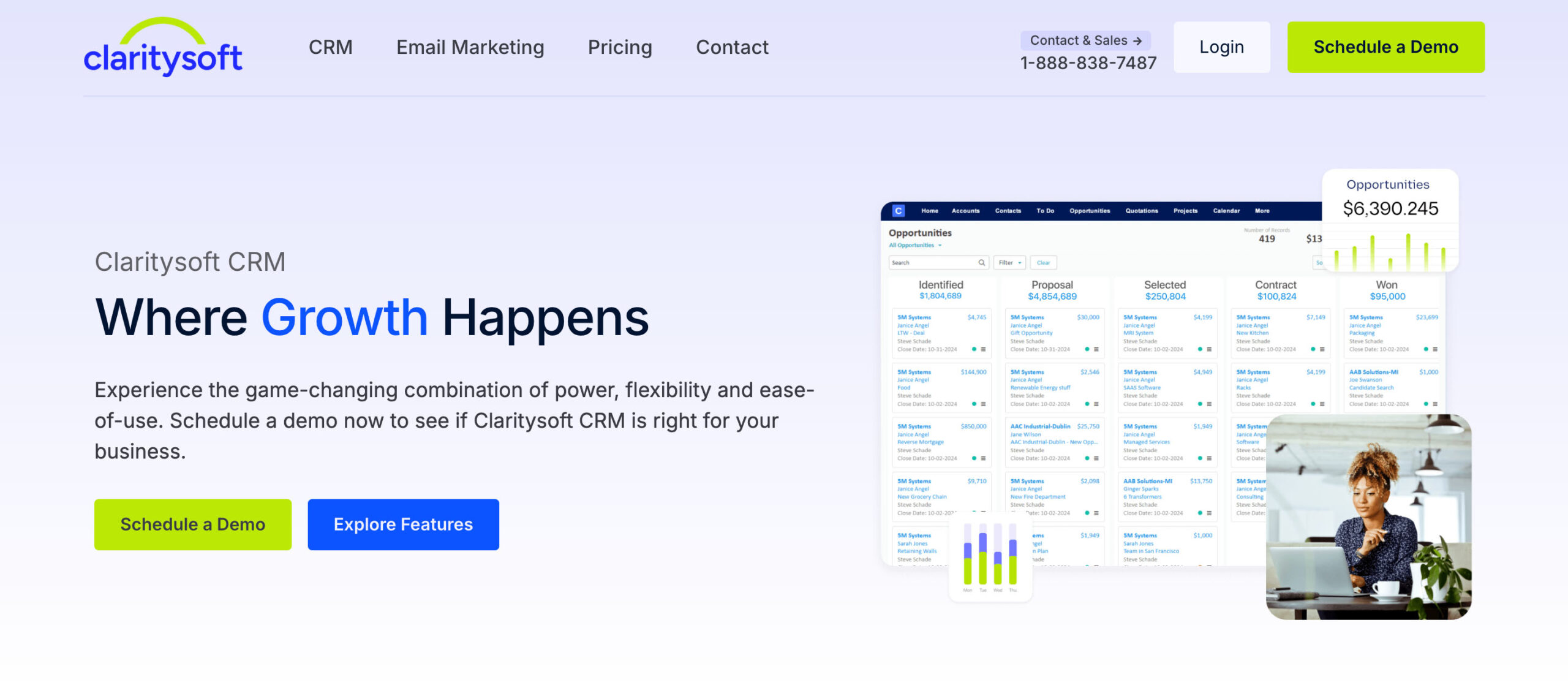
Claritysoft CRM
Best for:
Small and mid-sized manufacturers that want a straightforward, customizable CRM with contact management, pipeline tracking, dashboards, and email tools.
Key manufacturing CRM features:
Email marketing, contact and sales management, reporting and dashboards.
Pros:
- Easy to customize, powerful email integrations, pipeline management automation.
Limitations:
- Some of the most important features like workflow automation are not available in the lowest price tier.
- Some users have also reported glitches and slow speeds when running the software.
Pricing:
Claritysoft offers three subscription plans:
- Professional: $49 per user per month (billed annually)
- Accelerator: $59 per user per month (billed annually)
- Enterprise: $69 per user per month (billed annually)
There is a 3-user minimum for any subscription.
Manufacturing fit:
Claritysoft can work for manufacturers that need flexible sales tracking and reporting without enterprise complexity.
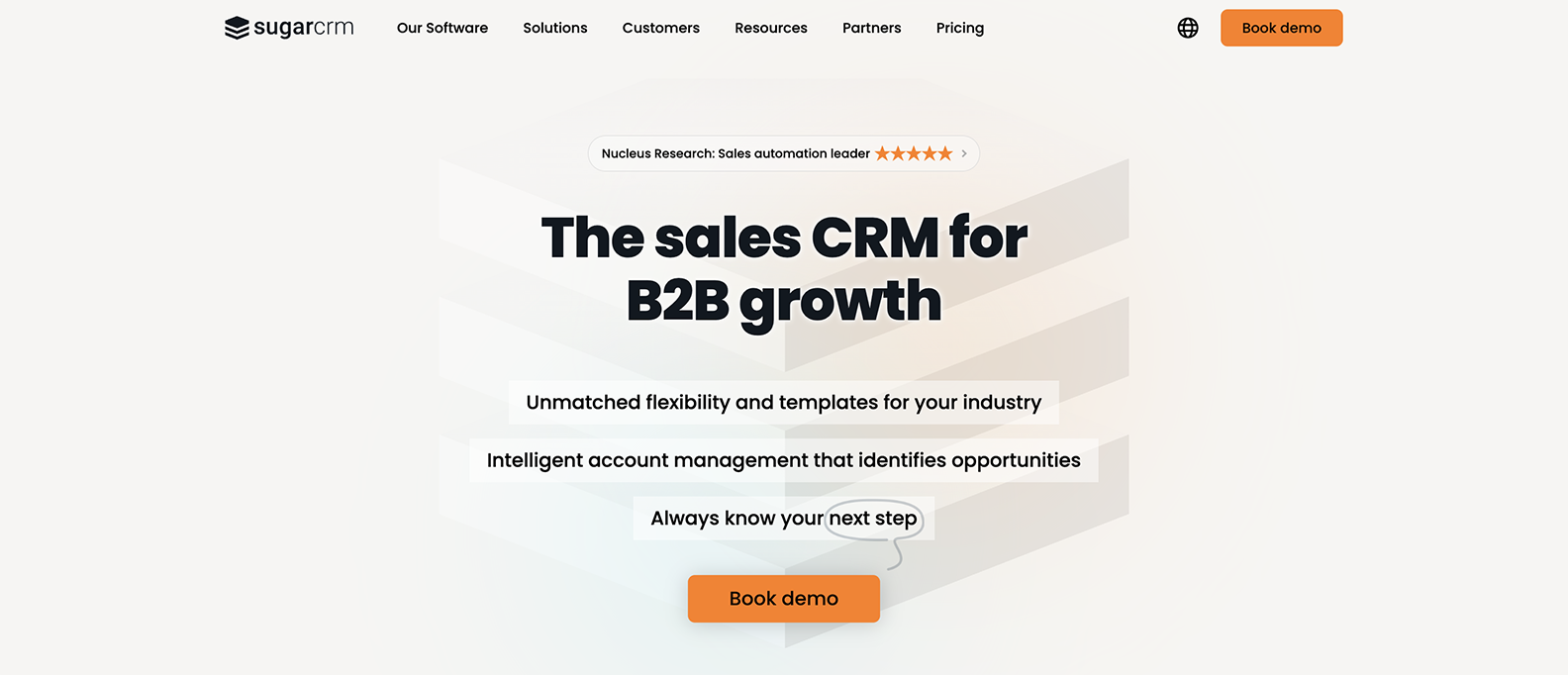
SugarAI (formerly SugarCRM)
Best for:
Mid-sized and larger manufacturers that need configurable sales processes, forecasting, reporting, and automation.
Key manufacturing CRM features:
Quote management, sales forecasting, reporting and dashboards, mobile app.
Pros:
- Intuitive marketing automation tools, affordable solution for small businesses, useful third-party integrations.
Limitations:
- Some users have expressed difficulties navigating the interface and customizing the platform.
Pricing:
SugarAIoffers the following subscription plans:
- Standard: $59 per user per month (billed annually, 10 user minimum)
- Advanced: $85 per user per month (billed annually, 10 user minimum)
- Premier: $135 per user per month (billed annually, 10 user minimum)
Manufacturing fit:
SugarAI can support manufacturers with complex sales cycles and customization needs.
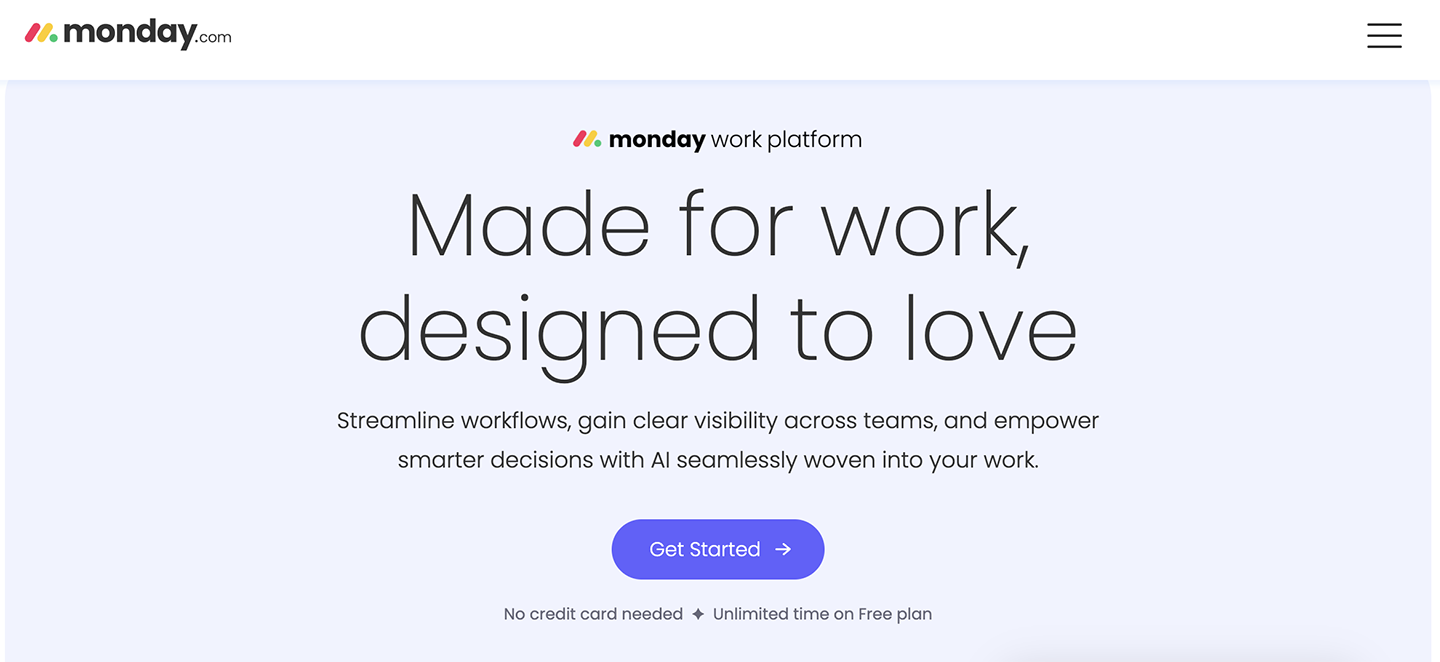
monday sales CRM
Best for:
Manufacturers that want a visual, collaborative CRM for tracking leads, deals, tasks, and team workflows.
Key manufacturing CRM features:
Contact and lead management, sales pipeline and forecasting, marketing automation.
Pros:
- Easy to personalize, intuitive user interface, great for collaboration and building engagement.
Limitations:
- Users report the platform lacks a good reporting feature and popular email integrations.
Pricing:
Monday sales CRM offers five subscription plans:
- Basic: $12 per user per month
- Standard: $17 per user per month
- Pro: $28 per user per month
- Enterprise: Custom pricing
Monday sales CRM also has a free trial.
Manufacturing fit:
Monday sales CRM is a good fit for manufacturers that value visual pipeline management and cross-team collaboration.
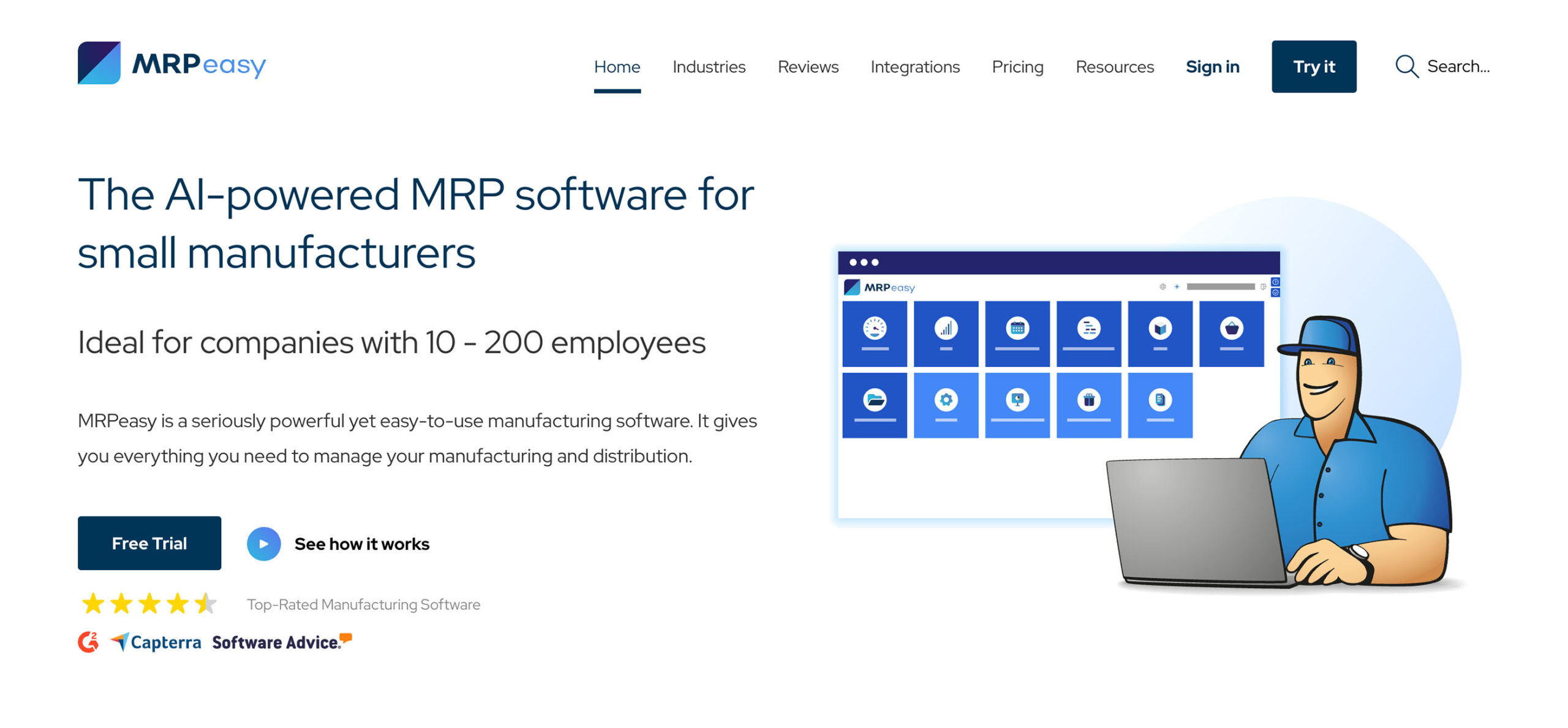
MRPeasy
Best for:
Small manufacturers that want lightweight ERP/MRP functionality with CRM, quoting, sales orders, inventory, purchasing, and production planning.
Key manufacturing CRM features:
CRM with quoting and sales orders, bill of materials and inventory tracking, production scheduling and planning, purchasing and supplier tracking.
Pros:
- Everything is in one place — no switching between tools.
- Sales and production teams stay aligned.
- Good for small manufacturers who need both CRM and ERP.
Limitations:
- Lacks a customer-facing service portal
- Less flexibility for custom workflows
- Does not offer muti-QuickBooks company sync
Pricing:
- Starter: $44.92 per user per month (for up to 10 users, then $79 for each additional user)
- Professional: $63.25 per user per month (for up to 10 users, then $79 for each additional user)
- Enterprise: $90.75 per user per month (for up to 10 users, then $79 for each additional user)
- Unlimited: $136.58 per user per month (2-10 users, $79 for each additional user beyond 10)
All prices billed annually.
Manufacturing fit:
MRPeasy is a strong fit for small manufacturers that need sales and production connected in one system.
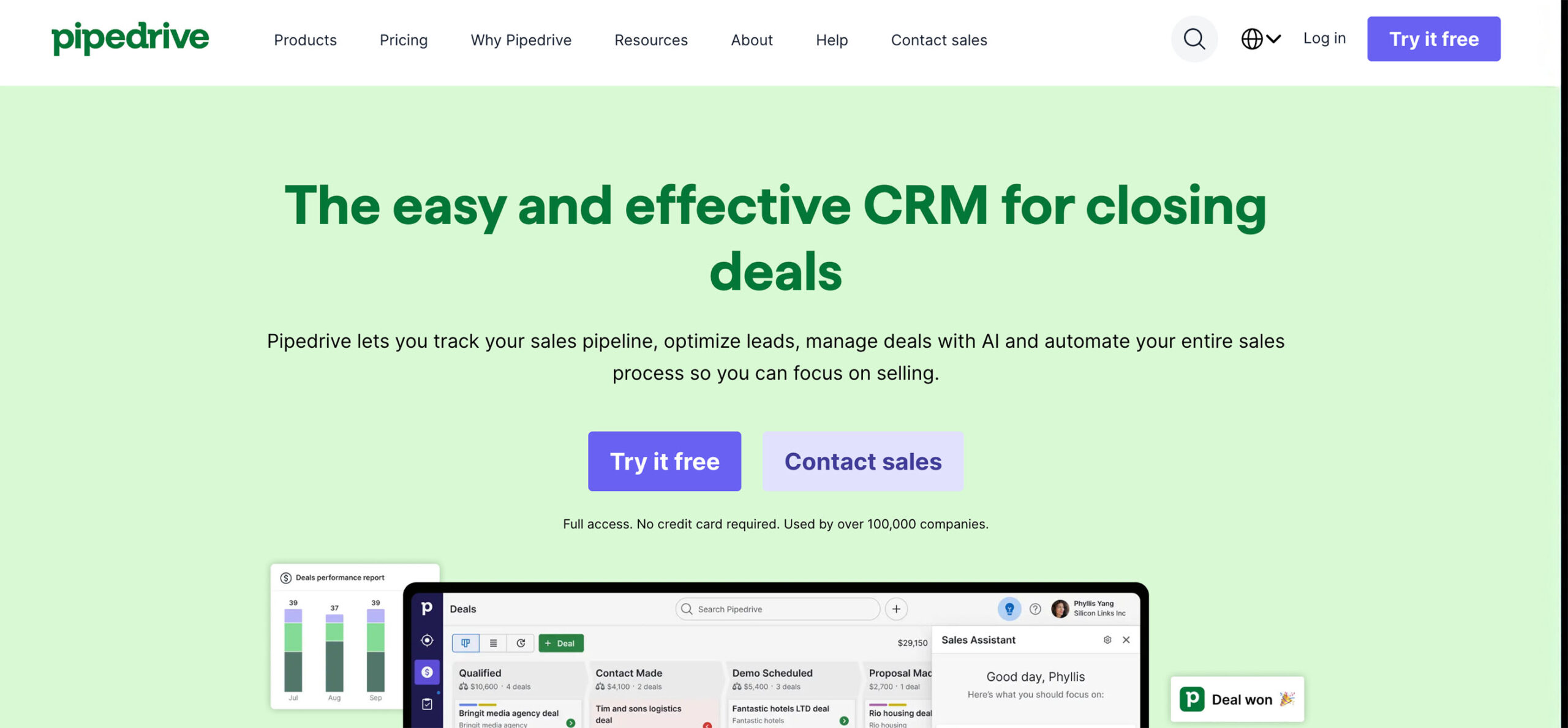
Pipedrive
Best for:
Small to mid-sized manufacturers that want a simple, visual CRM for managing deals, sales activities, follow-ups, and quote tracking.
Key manufacturing CRM features:
Pipedrive offers a drag-and-drop pipeline view, activity reminders and automations, quote tracking and document sharing.
Pros:
- Keeps quotes and deals moving without confusion.
- Quick to learn and simple to manage.
- Works well for small to mid-sized sales teams.
Pipedrive is best for manufacturers focused on selling, not complex production management.
Limitations:
- No customer self-service portal available for quotes, orders or payments.
- QuickBooks integration limited through Zapier or other connectors
- Multi-QuickBooks company sync not supported
Pricing:
- Lite: $14 per user per month (billed annually)
- Growth: $39 per user per month (billed annually)
- Premium: $49 per user per month (billed annually)
- Ultimate: $79 per user per month (billed annually)
Manufacturing fit:
Pipedrive is a good fit for manufacturers focused mainly on sales pipeline discipline.
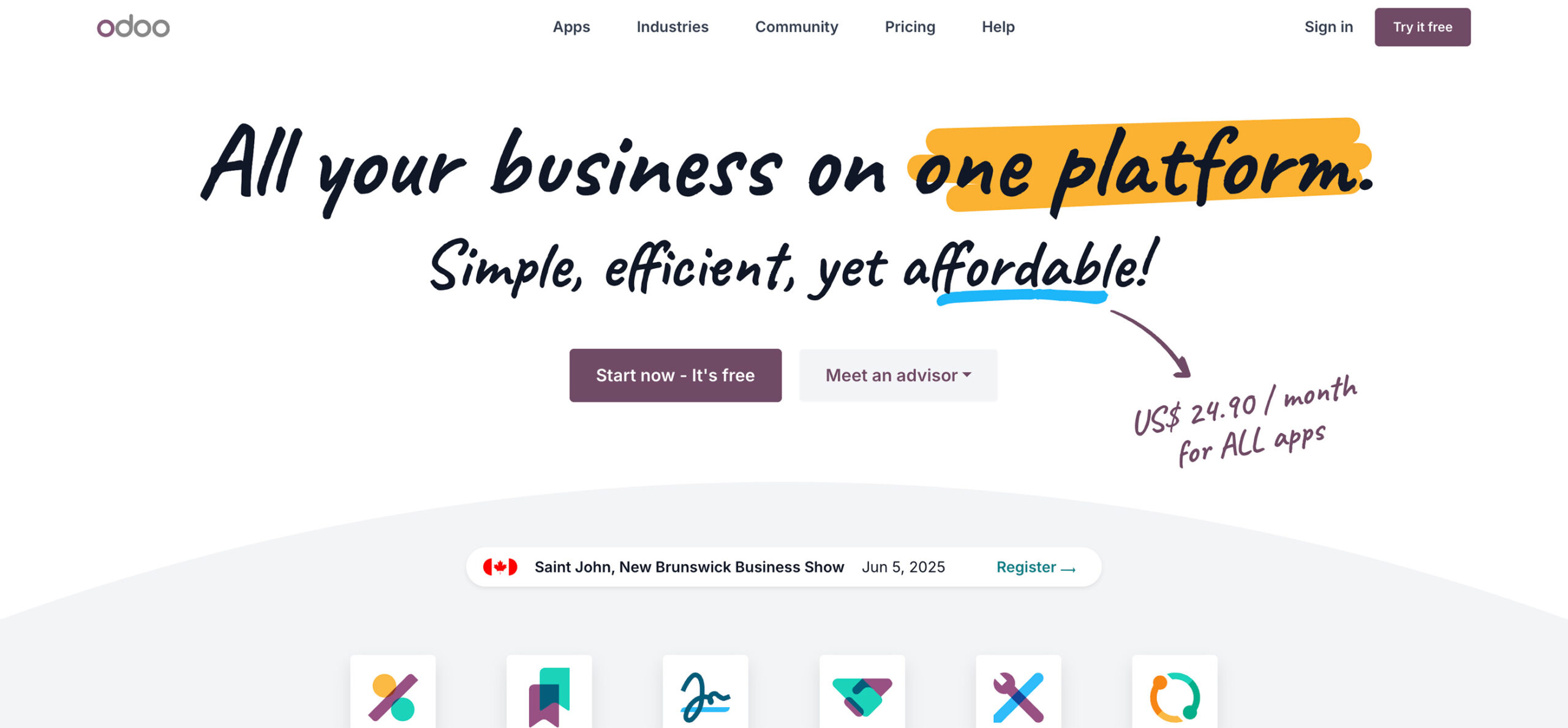
Odoo
Best for:
Manufacturers that want a modular business system with CRM, manufacturing, inventory, purchasing, accounting, and other operational apps.
Key manufacturing CRM features:
CRM with custom workflows, manufacturing and MRP modules, inventory and purchase tools and open-source with optional cloud hosting.
Pros:
- Build exactly the system you want.
- Use one platform for all departments.
- Great for businesses with technical teams.
Odoo is ideal for manufacturers that need deep customization and want one system for everything.
Limitations:
- No native QuickBooks integration
- Multi-Quickbooks company sync not supported
Pricing:
- Standard: $24.90 per user per month (billed annually)
- Custom: $37.40 per user per month (billed annually)
- Free plan available, limited to one app
Manufacturing fit:
Odoo is a strong fit for manufacturers that want one flexible system across departments and have the technical resources to configure it properly.
How do you choose the right CRM for your manufacturing business?
To choose the right CRM for manufacturing, evaluate how well each system supports your sales process, quoting workflow, customer data, accounting integration, reporting needs, and team adoption requirements.
Use these questions when comparing CRM options:
- Does the CRM support your quoting process?
- Does it connect with your accounting software?
- Can it support custom fields, screens, workflows, and approvals?
- Can sales, accounting, operations, and service teams use the same customer data?
- Does it reduce duplicate data entry?
- Can it scale across locations, product lines, entities, or teams?
- Does the vendor offer implementation support?
- Can the CRM manage repeat orders, customer-specific pricing, and account history?
- Does it give managers useful reporting without manual spreadsheet work?
- Will the CRM fit how your team already works, or force your team into a rigid process?
The right CRM should help your business improve speed, visibility, and accuracy across the full customer journey. It should not become another disconnected tool your team has to maintain.
How do you set up a manufacturing CRM?
To set up a manufacturing CRM, map your customer journey, define your sales and quoting stages, import clean customer data, connect accounting and operational tools, automate repetitive follow-ups, and train each team on the workflows they own.
- Map your customer journey. Document how leads become quotes, orders, invoices, repeat purchases, and service requests.
- Define your quote-to-cash stages. Include quote creation, approval, customer acceptance, order handoff, invoicing, and payment collection.
- Create custom fields. Add fields for product lines, customer type, distributor status, order frequency, pricing rules, and service requirements.
- Sync customer and transaction data. Connect your CRM with accounting software, ecommerce tools, forms, email, or other systems where customer data enters the business.
- Automate repetitive tasks. Trigger follow-ups, quote reminders, order confirmations, service tasks, and internal notifications.
- Set permissions by role. Give each team access to the information they need without exposing unnecessary accounting or operational data.
- Measure adoption and performance. Track quote turnaround time, follow-up completion, sales cycle length, close rate, and customer response time.
Our verdict: Which manufacturing CRM is right for you?
Start with your accounting setup, then follow the path that matches your situation.
Bottom line
Most QuickBooks-based manufacturers do not need an ERP. They need their CRM and their accounting data connected, with enough workflow flexibility to match how their sales and ops teams actually work. That is the problem Method CRM is built to solve. If that is your situation, it is worth starting there.
If you are genuinely evaluating enterprise platforms like Salesforce or NetSuite, the decision is less about features and more about implementation capacity. Those tools can do more, but only if you have the resources to configure and maintain them.
Frequently asked questions
What is the best CRM for manufacturing?
The best CRM for manufacturing is one that supports custom workflows, quote management, customer communication, reporting, automation, and accounting or ERP integration.
What is the difference between manufacturing CRM software and manufacturing CRM systems?
Manufacturing CRM software is the application a manufacturer uses to manage customer relationships, sales workflows, quotes, and service interactions. A manufacturing CRM system is the broader setup that includes the software, data, integrations, workflows, users, automations, and reporting processes around it.
What is a manufacturing sales CRM?
A manufacturing sales CRM is a CRM system focused on managing leads, quotes, sales opportunities, customer follow-ups, and sales order communication for manufacturing companies. It helps sales teams manage longer B2B sales cycles and coordinate with accounting, operations, and service teams.
Do manufacturers need CRM if they already use QuickBooks?
Manufacturers still need CRM if customer-facing teams manage leads, quotes, follow-ups, service requests, or sales workflows outside QuickBooks. QuickBooks manages accounting data, while a CRM gives sales, service, and operations teams a shared place to manage customer relationships and workflow activity.
What features should a manufacturing CRM include?
A manufacturing CRM should include contact management, lead tracking, quote and estimate management, workflow automation, reporting, mobile access, accounting integration, customer service tools, and customizable fields or workflows.
Can a manufacturing CRM help with quoting?
Yes. A manufacturing CRM can help teams create, track, approve, and follow up on quotes. A strong CRM also connects quote activity to customer records, sales opportunities, invoices, and accounting data.
Should manufacturers use CRM or ERP software?
Manufacturers often need both CRM and ERP software. CRM manages customer-facing workflows like leads, quotes, follow-ups, and service requests. ERP manages internal operations like production, inventory, procurement, and fulfillment.